

 Phoenix 24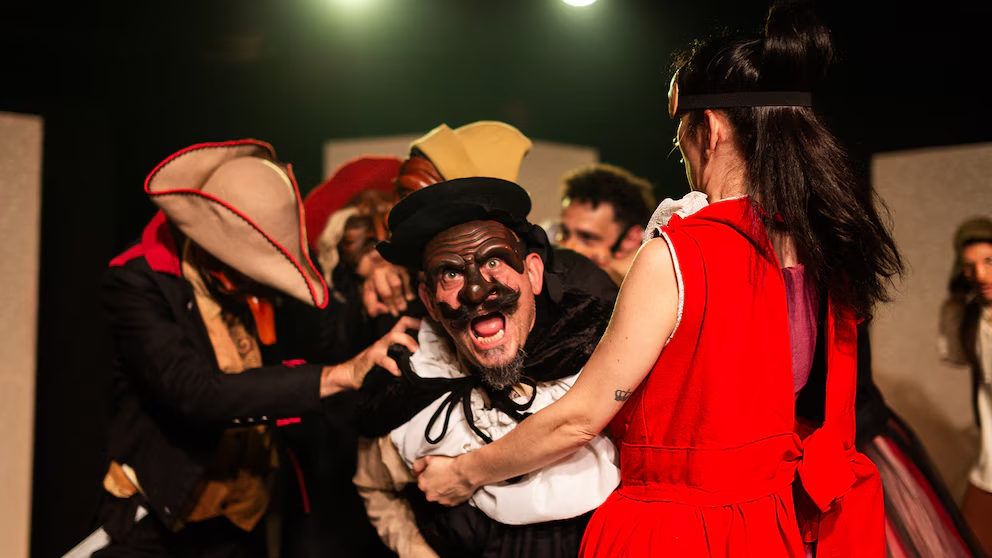
The stage becomes both the medium and the conflict.
BUENOS AIRES, Argentina | June 2026
The Sick Imagination, the new stage production created and directed by Marcelo Savignone, interrupts a performance of Henrik Ibsen’s An Enemy of the People to examine whether contemporary theater can still confront its audience. Presented by Compañía Cuerpos at Teatro del Pueblo, the work does not merely update the Norwegian classic or relocate its political conflict. Instead, it exposes the mechanisms of performance and places actors, characters and spectators inside a dispute about representation, truth and artistic responsibility. The central tension emerges when theater stops pretending to be a neutral container and begins questioning its own capacity to provoke change.
Ibsen’s drama provides the initial framework through the story of a doctor who discovers that the water supporting his town’s economy is contaminated. His attempt to expose the danger brings him into conflict with political authorities, business interests and citizens unwilling to accept information that threatens their financial security. Savignone uses this familiar confrontation as the foundation for a second argument about the role of art. As the performance advances, the original play begins to fracture and the crisis moves from the fictional town to the theatrical institution presenting it.
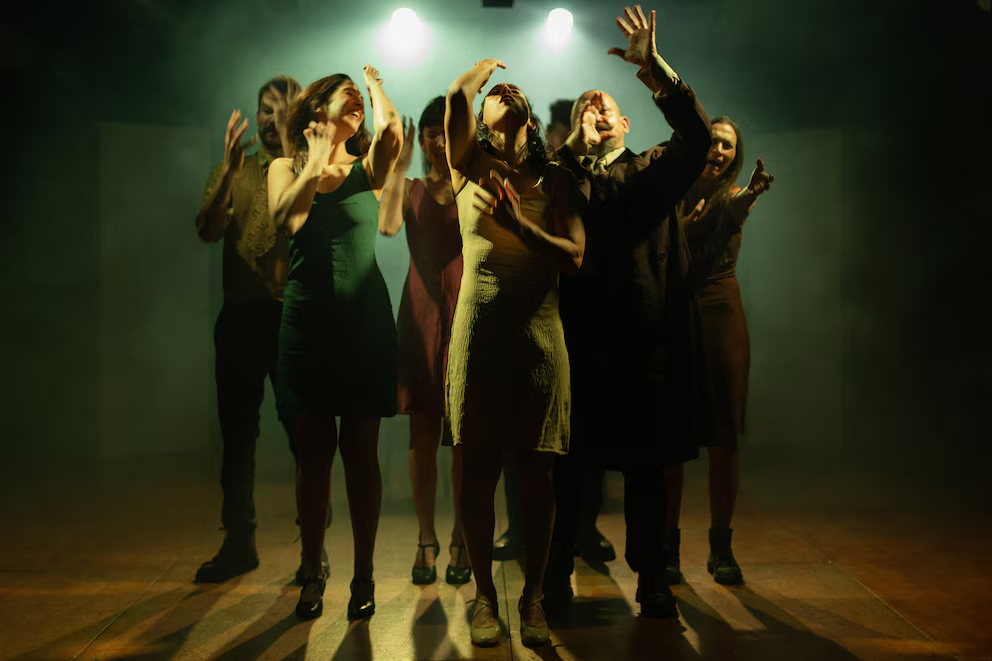
The interruption is not treated as an accident or technical failure. It becomes the production’s main artistic operation, revealing scenery, acting conventions and dramatic expectations that ordinarily remain concealed beneath a polished performance. The audience initially encounters a recognizable theatrical structure, but that stability gradually collapses. What appeared to be a representation of social conflict transforms into a direct examination of how theater packages conflict for cultural consumption.
The Sick Imagination questions whether staging injustice is enough to make a production politically meaningful. A play may denounce corruption, hypocrisy or abuse while remaining protected by familiar conventions and institutional prestige. Spectators can recognize the problem, applaud the performance and leave without reconsidering their own position. Savignone’s work challenges that comfortable distance by making the audience part of the system being examined.
The title suggests that imagination can become damaged when it repeats inherited forms without questioning the ideas embedded within them. Modern dramatic structures once disrupted social expectations, but they can lose their critical force when reproduced as predictable cultural rituals. A theater that claims to resist power may eventually become another safe space where dissent is performed without consequences. The production asks whether artistic rebellion can survive after it becomes recognizable, respectable and commercially manageable.
Savignone does not offer a definitive answer. The work functions as an internal dispute rather than a declaration imposed from outside the theatrical world. Its criticism emerges from attachment to the stage and from anxiety about its possible loss of relevance. The production does not reject theater, but it demands that theater justify its belief that representation can still affect reality.

Compañía Cuerpos develops this inquiry through an ensemble that includes Tatiana Sarbia, Leandro Arancio, Milagros Coll, Sofía González Gil, Valentín Mederos, Guido Napolitano, Belén Santos and Savignone. The performers move constantly between character, actor and commentator, preventing the audience from settling into a stable relationship with the fiction. A performer may inhabit Ibsen’s world in one moment and challenge the meaning of that same scene in the next. This instability turns acting itself into one of the subjects of the production.
The physical dimension is as important as the spoken argument. Bodies, interruptions, spatial changes and ruptures in theatrical order communicate ideas that dialogue alone cannot contain. The actors make visible the tension between discipline and rebellion, between following a script and refusing its authority. The stage becomes a place where obedience to form is repeatedly tested.
An Enemy of the People remains a powerful point of departure because its central conflict has not lost political relevance. The doctor discovers a dangerous truth, but the community rejects it when honesty threatens prosperity and collective stability. Savignone transfers that dilemma to cultural production by asking what happens when theater reveals something its audience does not genuinely want to confront. If truth creates discomfort, the stage must decide whether to intensify that discomfort or protect spectators from it.
The production also examines the limits of political art within established cultural circuits. A performance can criticize institutions while depending on those same institutions for legitimacy, financing and visibility. It can present radical ideas in a format that neutralizes their disruptive potential. The Sick Imagination exposes this contradiction without pretending that theater can easily escape it.
Spectators are therefore not passive recipients of the debate. Their expectations influence what is produced, how narratives are structured and what forms of discomfort are considered acceptable. Audiences often seek recognition, emotional resolution and intellectual reassurance, even when attending works presented as challenging or experimental. Savignone interrupts those expectations to reveal the role spectators play in maintaining theatrical comfort.
Teatro del Pueblo provides a historically appropriate setting for the production. The venue has long been associated with independent, socially engaged and formally adventurous theater in Buenos Aires. Its proximity between performers and audience intensifies the confrontational nature of the work. There is little physical or symbolic distance behind which the public can retreat.
The Sick Imagination ultimately turns theater against its own habits in an effort to recover its critical energy. Ibsen’s contaminated water becomes a metaphor for artistic forms that may continue circulating after losing their disruptive force. The production refuses a reassuring conclusion because reassurance is precisely what it distrusts. By placing performance itself on trial, Savignone asks whether theater can still generate transformation rather than simply receive applause.
La verdad es estructura, no ruido. / Truth is structure, not noise.