

 Phoenix 24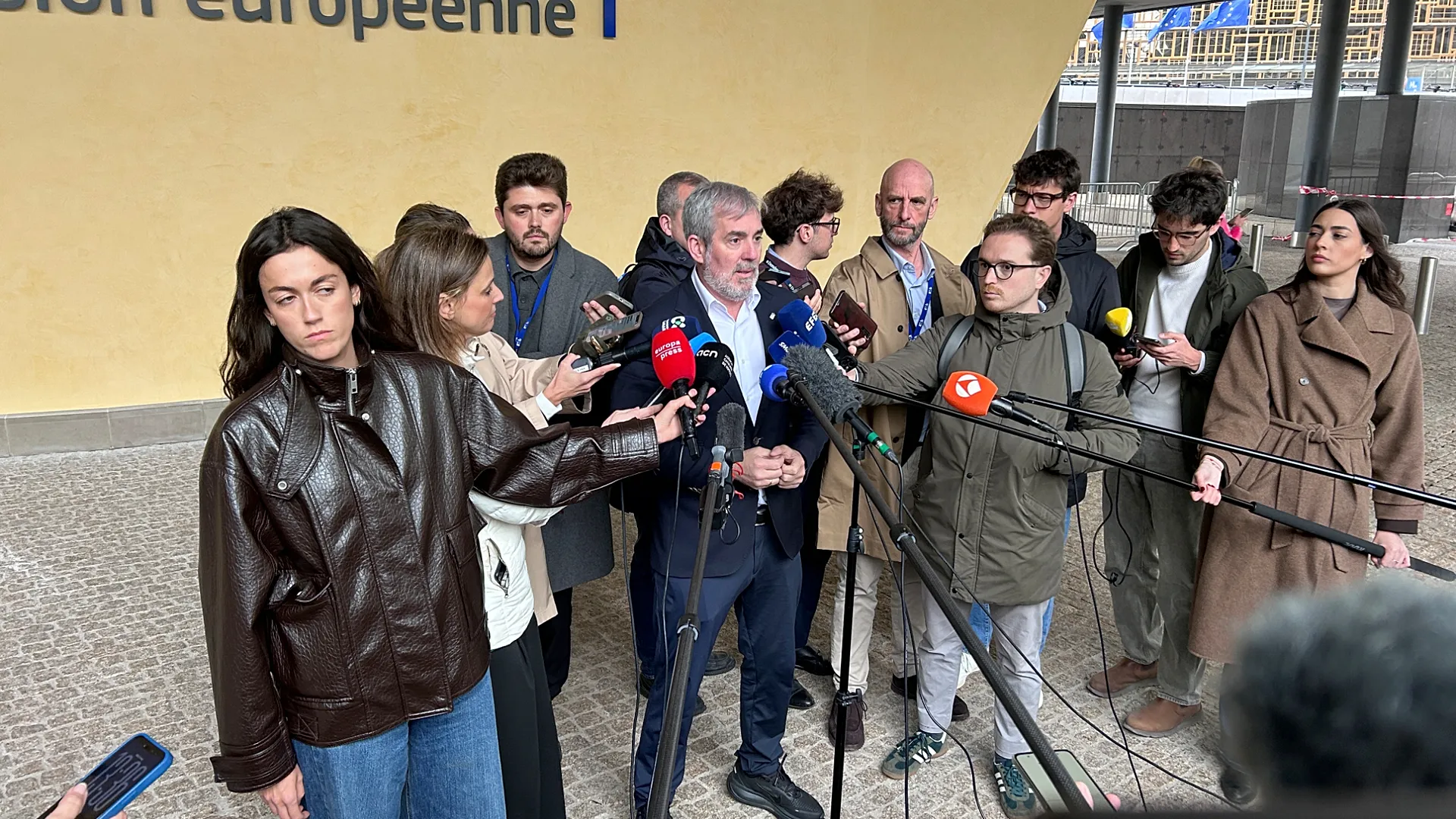
Public health turns political when trust collapses.
Tenerife, May 2026
Fernando Clavijo has doubled down on his controversial warning that rats infected with hantavirus could theoretically swim from the MV Hondius toward the Canary Islands, even as health authorities and infectious disease specialists have treated the claim as highly implausible. The debate began as a biosecurity concern, but it has now become a political dispute over competence, institutional authority and the limits of precaution in a post-pandemic society. What should have been a controlled maritime health operation has instead exposed the fragility of coordination between regional and national power.
The Canary Islands president argues that his position was not a joke, but a defensive reading of available health protocols involving rodents, contaminated fluids and vessels with infectious risk. His critics counter that the ship had reportedly been cleared of rodent presence and that the likely origin of the outbreak was prior exposure on land in South America, not an active infestation aboard the vessel. Between those two positions lies the real problem: public health decisions are now judged not only by scientific probability, but by how they perform in the political arena.
The Spanish government moved forward with the operation after international coordination involving multiple countries and health authorities, framing the arrival of the vessel in Tenerife as a humanitarian and legal obligation. Clavijo, however, has accused Madrid of minimizing regional concerns and turning his warning into ridicule. That accusation matters because it shifts the crisis from epidemiology into territorial governance. In Spain’s decentralized system, the question is not only who was scientifically right, but who had the authority to decide under uncertainty.
The episode also shows the danger of speculative risk communication. A low-probability scenario can become politically explosive when it is expressed through an image as memorable as “swimming rats.” Once that image entered public debate, the technical discussion became almost impossible to recover. The health issue was displaced by memes, institutional resentment and competing claims of responsibility.
For the cruise passengers, the core issue remains medical surveillance. For the Canary Islands, the issue is now reputational and jurisdictional. For Spain, it is a test of crisis command after COVID-19, when citizens still remember how quickly technical uncertainty can become social distrust. The Hondius case shows that even when an outbreak is contained, the political infection can continue spreading.
The deeper lesson is uncomfortable. Modern health governance does not fail only when pathogens escape control; it also weakens when officials lose control of the narrative around risk. In Tenerife, the virus may be contained, but the dispute over authority, credibility and precaution is still alive.
Cada silencio habla. / Every silence speaks.