

 Phoenix 24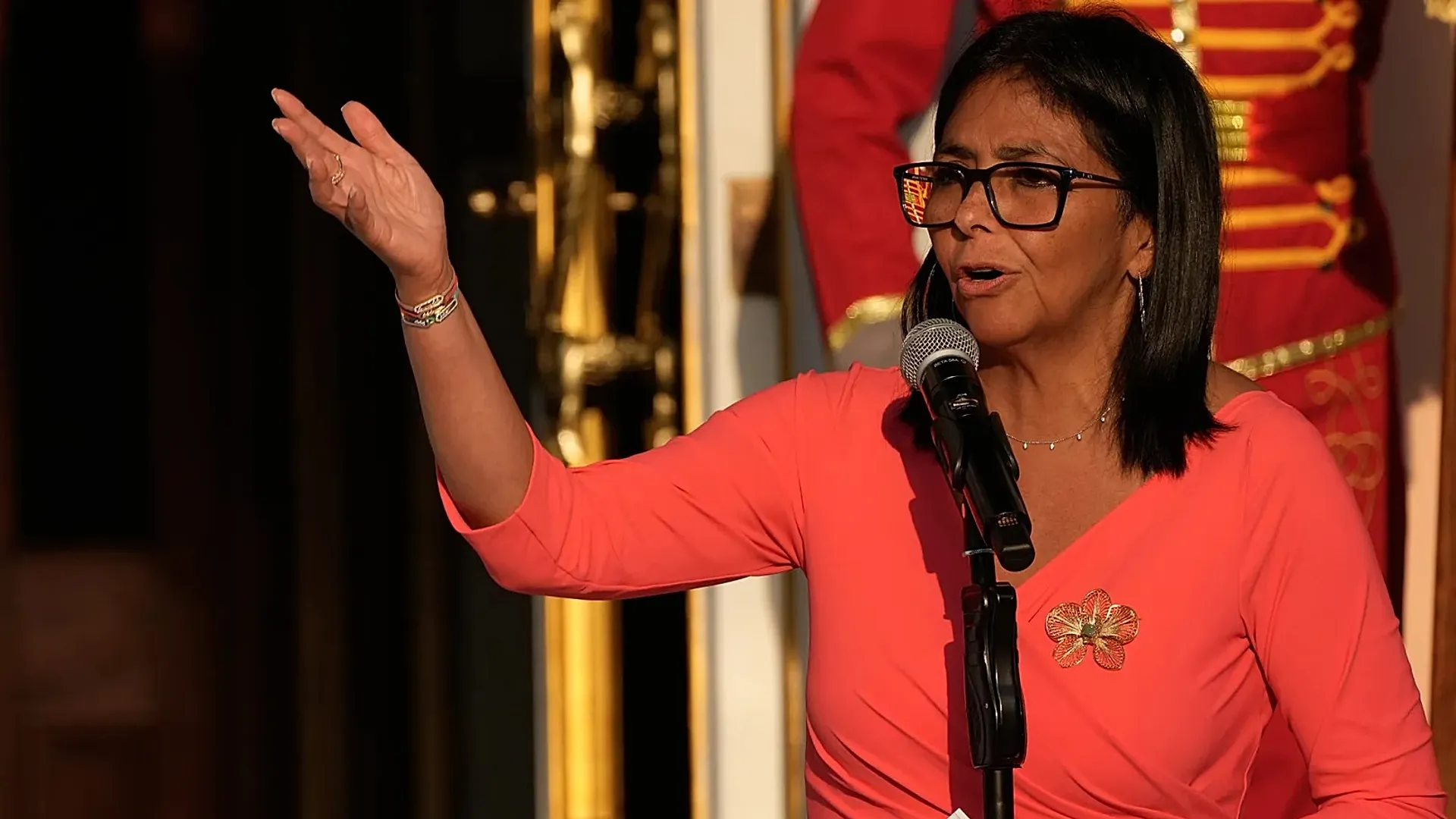
A border dispute becomes a power signal.
The Hague, May 2026
Delcy Rodríguez arrived in The Hague as Venezuela’s acting president for a decisive hearing before the International Court of Justice in the long-running territorial dispute with Guyana over Essequibo. The case is not simply a legal confrontation over a colonial-era boundary; it is a strategic contest over land, oil, sovereignty and political legitimacy. For Caracas, the trip projects institutional continuity at a moment of domestic fragility. For Georgetown, it reinforces the urgency of defending a territory that represents a vast portion of its national space and future economic architecture.
The dispute revolves around the 1899 arbitral award that granted the territory to then-British Guiana, a decision Venezuela has long rejected as illegitimate. Caracas argues that the 1966 Geneva Agreement remains the valid framework for resolving the conflict through negotiation, not judicial imposition. Guyana, by contrast, has turned to the court to validate the existing border and shield itself from a larger neighbor’s historical claim. The result is a legal battlefield where every procedural move carries diplomatic weight.
Rodríguez’s presence also transforms the hearing into a test of Venezuela’s post-Maduro power structure. Her government is seeking international oxygen while navigating sanctions, political suspicion and a fragile relationship with Washington. Appearing before the court allows Caracas to show defiance without crossing into direct military escalation. It is a calibrated gesture: reject the court’s jurisdiction, but appear before it anyway to keep the national claim alive.
Essequibo’s strategic value explains the intensity. The region is rich in natural resources, linked to major oil discoveries and central to Guyana’s rapid transformation into an energy power. What was once framed as a frozen territorial dispute has become an active geopolitical corridor shaped by petroleum, maritime projection, foreign investment and great-power attention. The courtroom in The Hague is therefore only one layer of a broader contest involving markets, borders and regional security.
For Guyana, the danger is existential. The disputed area is not a marginal strip of land but a central component of its territorial identity and economic future. Any Venezuelan advance, legal or political, threatens to place pressure on a small state whose strategic value has increased sharply because of offshore oil. That asymmetry gives the dispute its volatility: one side frames the issue as historical restitution, while the other sees it as territorial survival.
The coming ruling will not immediately dissolve the conflict. Even a binding judgment would depend on political acceptance, enforcement capacity and the broader balance of power in the region. What The Hague is revealing is something deeper: in the new resource geopolitics of the Caribbean basin, old maps no longer sleep quietly. They return when oil, weakened institutions and nationalist memory align.
Más allá de la noticia, el patrón. / Beyond the news, the pattern.