

 Phoenix 24
The Mercedes Engine Dispute That Could Thin the Grid
Rules rarely stay quiet when advantage is visible.
Sakhir, February 2026.
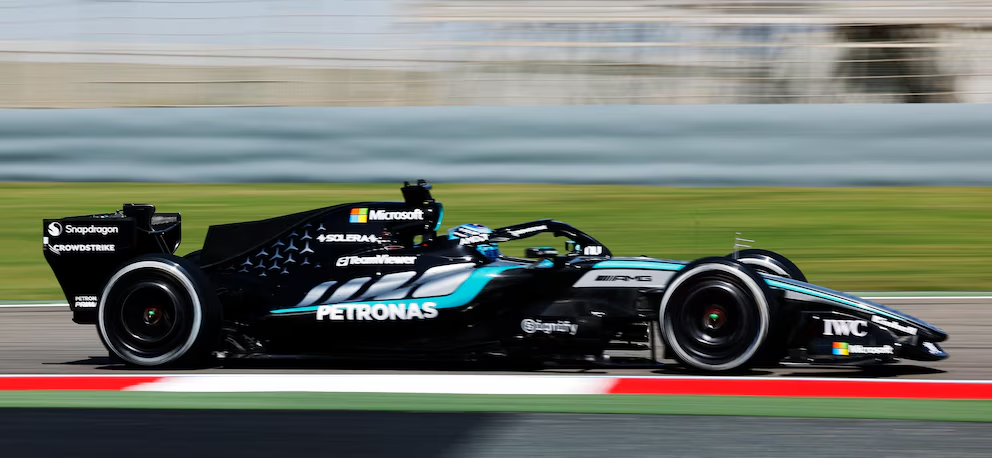
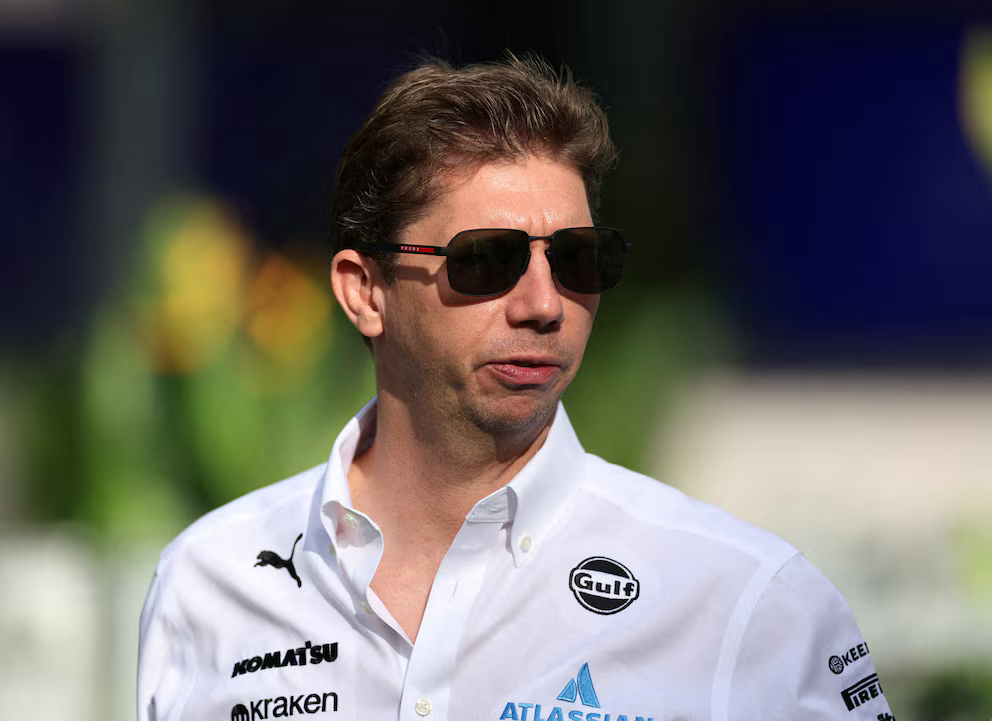
A technical argument has spilled into a political one in Formula 1, and the stakes are being framed in the bluntest possible terms: if regulators redefine how legality is measured after cars are already built, as many as eight entries could be pushed out of competition. That warning came from Williams principal James Vowles during pre-season testing, as rival manufacturers pressed the FIA to clarify whether a new Mercedes power unit concept complies with the rules as written and, crucially, as tested.
The dispute centers on a deceptively simple concept with huge engineering consequences: compression ratio. Under the current framework being debated in the paddock, rivals argue that the Mercedes unit may be capable, in real track conditions, of achieving a compression ratio above the limit that is checked in static tests. The complaint, delivered jointly by Ferrari, Audi, and Honda, is not only about whether an advantage exists. It is about whether the sport’s compliance procedures are robust enough to validate what happens at speed, under heat loads, vibration, and energy deployment cycles that laboratory-style checks may not replicate.
Vowles’ intervention matters because it shifts the conversation from “Is this clever?” to “What happens if governance changes midstream?” His point is structural: if the FIA updates the method of testing or adjusts the interpretation in-season, the consequence is not a small performance correction. It could become a binary compliance event, legal or illegal, and in that scenario multiple teams relying on the same supplier could be forced off the grid. The number eight is not rhetorical. It reflects the size of the customer ecosystem tied to the Mercedes unit, which includes not only the works team but also customer operations such as McLaren, Alpine, and Williams.
Underneath the technical layer sits an older tension that repeats across high-innovation sports: meritocracy versus regulatory stability. Vowles defended the idea that if a solution fits the rulebook, it should be rewarded, not retroactively punished after others fail to replicate it. That framing is designed to make any mid-season intervention look like a de facto balancing mechanism, similar to the Balance of Performance logic used in endurance racing, where organizers adjust parameters to keep competition tight. Formula 1’s identity is different. It sells itself as an arms race within constraints, and that makes rule interpretation itself a competitive surface.

The regulatory pathway described is also telling, because it shows why even a loud protest does not automatically become a rule change. Any meaningful adjustment would have to move through the sport’s power unit governance, including a power unit advisory process and a supermajority requirement among manufacturers, plus approval from the commercial rights holder and the FIA. That architecture is meant to prevent weaponized rulemaking. At the same time, it creates an incentive for rivals to frame their request not as “stop our competitor” but as “close a verification gap,” because procedural reform is easier to justify than rewriting performance ceilings.
From Mercedes’ side, the defense has been consistent: officials say they have been assured the work complies with the regulations, and they argue the performance delta is not being portrayed honestly by competitors. Toto Wolff leaned into a governance argument rather than a purely technical one: if the sport votes for a change, teams must accept it, but such a shift would damage not only Mercedes, it would cascade into every outfit using the same unit. This is where the story stops being about a single engine and becomes about systemic risk. A grid where a third of the cars are exposed to a compliance reinterpretation is not a sporting problem only. It is a commercial problem, a credibility problem, and a broadcast problem.
There is also a second-order narrative emerging from the same testing environment: competitive paranoia travels fast, and it is rarely limited to one suspect. Wolff, in the same context, publicly noted the strong early showing of Red Bull and its energy deployment characteristics, emphasizing how quickly the spotlight can swing once any team appears to have found an edge. When technical suspicion becomes ambient, every lap becomes evidence, every telemetry rumor becomes a political signal, and every request to the regulator becomes part of the psychological war that precedes the season.
For readers outside the paddock, the engineering debate can sound abstract, but the core principle is familiar in any tightly regulated innovation space: a rule is only as strong as the test that enforces it. Engineering literature treats compression ratio not as a single static behavior but as a system outcome shaped by operating conditions, which is why verification methodology matters when the margin between legal and illegal is small. Formula 1 is now reliving that truth in a political arena. The rivals are effectively asking: if the real world produces a different result than the controlled procedure, which one is the sport prepared to police?
What happens next will likely be decided less by outrage and more by process. The FIA can clarify test procedures, define a reproducible compliance method, and then decide whether the threshold for intervention is unproven suspicion or demonstrable loophole. The sport’s leadership will also weigh a strategic tradeoff: tighten verification and risk detonating a supplier bloc, or move cautiously and risk being accused of tolerating ambiguity that advantages whoever interprets best.
Either way, this is a reminder that Formula 1’s real theater is not only the racetrack. It is governance, measurement, and the politics of standards. Once the rulebook becomes a contested arena, every technical gain turns into a referendum on institutional credibility, and the grid itself becomes collateral.
Phoenix24: claridad en la zona gris. / Phoenix24: clarity in the grey zone.