

 Phoenix 24
Tiny marks shaped the digital world.
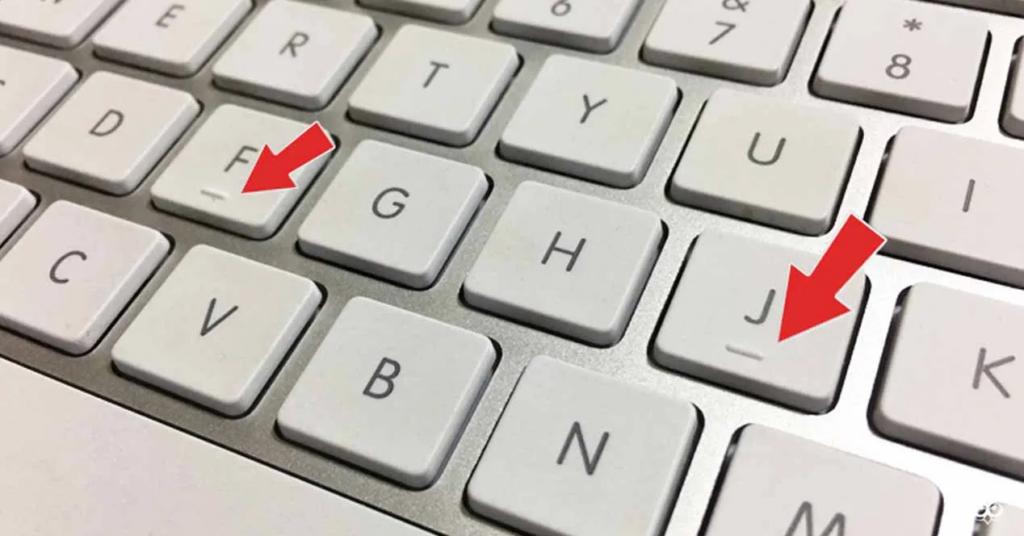
New York, May 2026. Millions of people use keyboards every day without noticing one of the most important details in modern computing: the small raised lines located on the F and J keys, along with the tactile mark often found on the number 5 of the numeric keypad. These subtle physical references were designed to guide the fingers without requiring visual confirmation, allowing users to maintain speed, rhythm and orientation while typing.
The system is based on what is known as the “home row” in touch typing methodology. By placing the left index finger on F and the right index finger on J, the hands automatically align with the central keyboard structure. From that position, the rest of the fingers can move efficiently across letters, symbols and commands before naturally returning to their original location. The result is reduced typing errors, improved muscle memory and a significant increase in productivity.

Although the concept appears simple, its impact has been enormous in education, administration, journalism, engineering, programming and virtually every sector connected to digital work. Before the rise of touchscreens and voice interfaces, keyboards became the operational bridge between humans and machines. The tactile marks on F and J helped standardize typing systems globally, transforming typing from a mechanical skill into a cognitive extension of digital interaction.
The same principle explains the raised mark on the number 5 of many numeric keypads. In environments such as banking, accounting, logistics and industrial operations, numeric precision is critical. The tactile cue allows users to orient themselves instantly while entering data at high speed, reducing the need to constantly shift visual attention between screen and keyboard. Over time, these small physical references became invisible habits embedded into professional workflows worldwide.
Their importance also extends into accessibility and inclusive design. For visually impaired users, tactile orientation systems are essential navigation tools. The raised indicators provide spatial reference points that make independent computer use more practical and intuitive. In this sense, the keyboard is not only a technological device, but also an example of how industrial design can quietly expand human capability.
Ironically, many younger users raised primarily on smartphones and tablets are less familiar with touch typing mechanics than previous generations. The growth of mobile interfaces has reduced dependence on physical keyboards, yet professional environments still rely heavily on them for writing, coding, editing, data analysis and operational management. In offices, universities and control centers around the world, the keyboard remains a central instrument of productivity.
Technology companies continue experimenting with alternative interfaces such as voice commands, gesture systems and AI-driven interaction models. However, the physical keyboard persists because it offers precision, speed and reliability that many emerging systems still struggle to match in high-demand environments. The raised marks on F, J and 5 therefore represent something larger than ergonomic convenience: they symbolize decades of accumulated human-computer adaptation.
Good technological design often succeeds precisely because it becomes unnoticed. The best systems integrate so naturally into everyday behavior that users stop consciously perceiving them. The tactile guides on keyboards belong to that category of silent innovations that helped shape the digital age without ever demanding attention for themselves.
Información que anticipa futuros. / Information that anticipates futures.