

 Phoenix 24
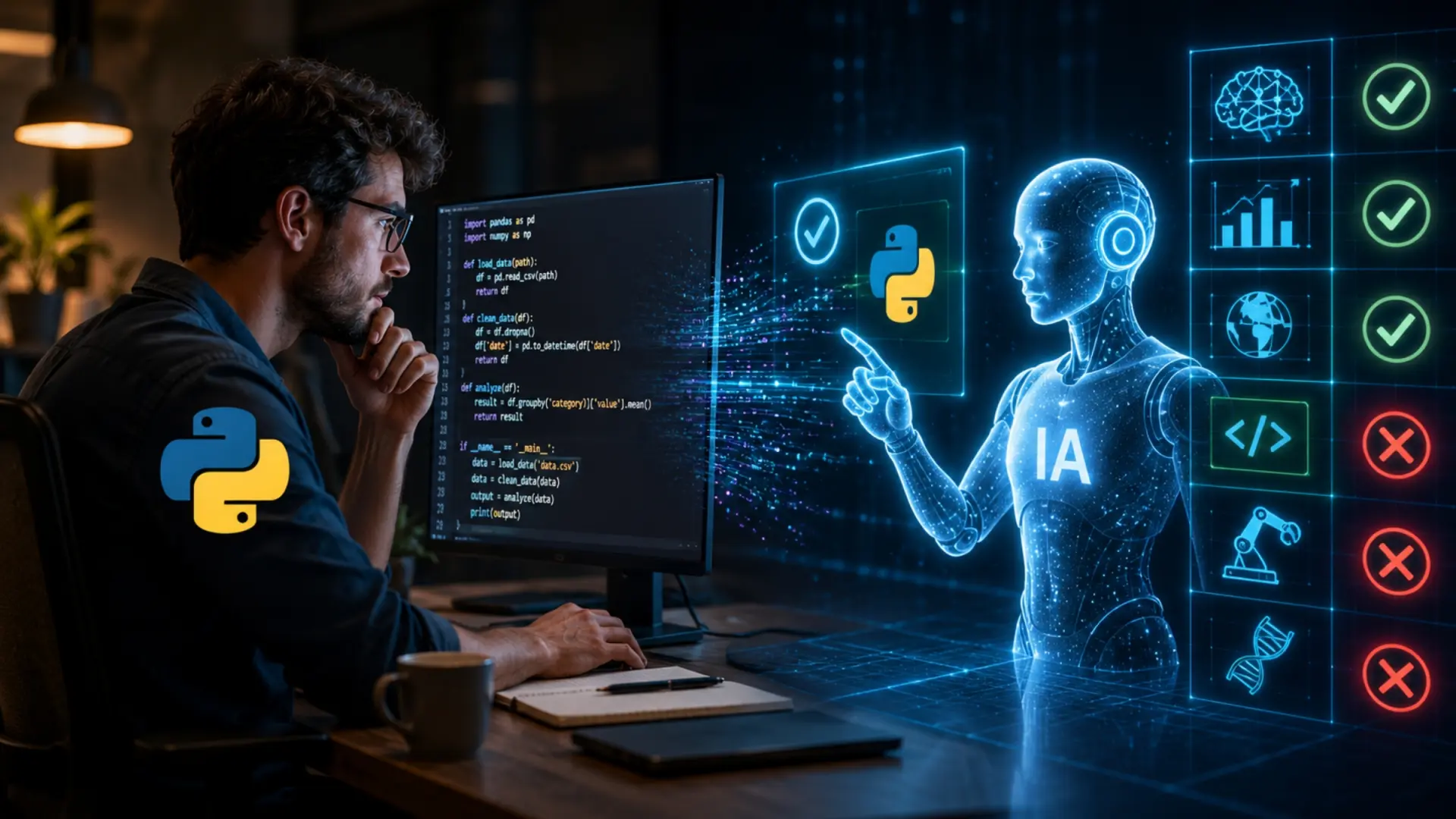
Automation accelerates, but engineering still demands judgment.
Redmond, May 2026. Microsoft researchers have drawn a sharper boundary around the current mythology of artificial intelligence in software development: AI can assist, accelerate and automate, but it still cannot reliably replace programming as a professional discipline. The finding matters because the market has spent months selling code generation as if syntax were the same thing as engineering.
The strongest performance remains concentrated in familiar environments such as Python, where training data is abundant, syntax is readable and tasks are often modular. Beyond that comfort zone, AI systems become more fragile. Complex software work requires architecture, dependencies, debugging, security awareness, product context and long-term maintainability, not just the ability to produce lines of code.
The lesson is not that AI has failed. It is that automation has limits when it enters systems where errors accumulate silently and consequences travel across entire organizations. A model can generate a function, but it cannot fully assume responsibility for the social, technical and operational environment in which that function will live.
For developers, the message is uncomfortable but clarifying. The profession is not disappearing, but it is being reorganized. Routine coding, documentation and repetitive testing will continue to be absorbed by AI tools, while human value will move toward systems thinking, validation, security, integration and accountability.
The real risk, then, is not that AI will eliminate programmers overnight. The risk is that institutions will misunderstand what programming actually is and replace engineering judgment with automated output. Microsoft’s warning cuts through the hype: the future of software will belong less to machines that write code and more to humans who know when that code is wrong.
Information that anticipates futures. / Información que anticipa futuros.