

 Phoenix 24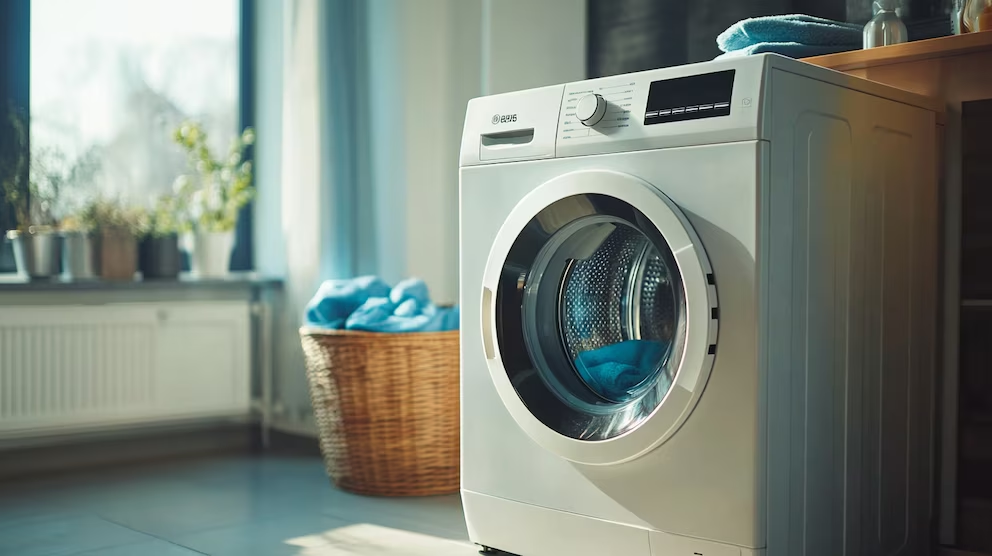
A simple mistake after every wash is silently turning your laundry into a breeding ground for bacteria.
Madrid, October 2025. At first glance, doing laundry seems like one of the most straightforward household tasks: load the clothes, add detergent, press start, and wait for the cycle to finish. Yet experts in appliance maintenance and textile hygiene warn that a single, almost universal mistake is undermining the process — one that explains why clothes often emerge smelling musty despite being freshly washed. That mistake is closing the washing machine door immediately after use.
When the spin cycle ends, the drum of the washing machine remains warm and damp, lined with traces of detergent, fabric fibers, and microscopic organic particles. Sealing that moisture inside by shutting the door creates the perfect environment for bacteria, mold, and mildew to flourish. Over time, these microorganisms cling to the walls, the rubber gasket, and the detergent drawer, releasing volatile compounds that adhere to fabrics. The result is the familiar, stubborn “wet towel” odor that persists no matter how many times garments are washed.
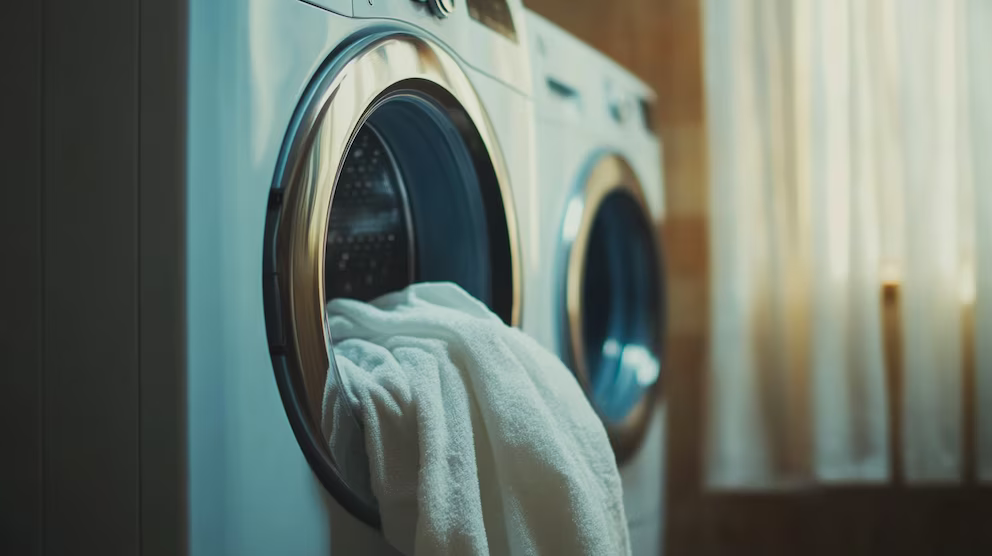
The solution is remarkably simple: leave the door open. Studies conducted by European hygiene laboratories indicate that allowing air to circulate inside the machine reduces microbial growth by more than 70 percent. Leaving the drum to dry naturally and wiping down the rubber seal with a soft cloth after each cycle significantly improves hygiene and prevents odor buildup.
A second mistake compounds the problem: overloading the machine. Many people, hoping to save time or energy, pack in more garments than the manufacturer’s recommended capacity. But cramming too many items into the drum prevents water and detergent from circulating properly, leaving areas of fabric partially unwashed. Residual detergent and organic debris become fuel for bacteria, accelerating the development of unpleasant smells. In the end, overloading often results in more work, as clothes need to be rewashed and fabrics wear out faster.
Maintenance is another critical, yet often neglected, aspect of preventing odors. Even when used correctly, a washing machine requires regular cleaning. The detergent drawer, door gasket, and internal filter are common hotspots for grime, soap scum, and bacterial biofilm. Monthly cleaning — ideally by running an empty cycle at high temperature with a suitable cleaning agent — removes this buildup and keeps the machine functioning at peak performance.
This habit-based problem also reflects a broader psychological tendency: the belief that technology eliminates the need for human intervention. In reality, effective laundry care relies on small, consistent actions. Ventilating the drum, wiping seals, and spacing out loads are minor tasks that collectively make a major difference. Without them, even the most advanced machine will eventually succumb to the same odor issues.
The consequences of neglecting these details go beyond smell. Persistent bacterial growth can corrode internal components over time, reducing the machine’s efficiency and leading to costly repairs. In extreme cases, contamination can spread to fresh loads, embedding odors so deeply that only chemical treatments can remove them. The irony is that these problems rarely stem from mechanical faults or poor-quality detergent — they almost always originate from user behavior.
Water hardness and detergent dosage are additional factors that influence washing machine hygiene. Using too much detergent, particularly in hard water areas, leaves sticky residues inside the drum and on clothing. These residues trap dirt and bacteria, worsening odor problems. Similarly, consistently washing in cold water, while energy-efficient, may fail to kill certain microbes, making occasional hot-water cycles essential for sanitation.
Manufacturers have introduced technologies such as self-cleaning programs, antimicrobial coatings, and enhanced ventilation systems to combat these issues. However, even the most sophisticated features cannot fully compensate for poor habits. The most advanced machine will still develop problems if the door is closed immediately, the load is excessive, or maintenance is ignored.
The broader lesson is clear: clean laundry doesn’t end when the cycle does — it continues with what happens afterward. Opening the door, letting the drum dry, and maintaining the interior are small, simple acts with outsized effects on freshness, hygiene, and machine longevity. They require no special tools, no additional cost, and almost no time. Yet their absence is the root cause of one of the most common laundry complaints worldwide.
Ultimately, solving the problem of foul-smelling clothes is not about buying expensive detergents or replacing your washing machine. It’s about understanding how the appliance works, respecting the basic principles of moisture control, and treating maintenance as an integral part of the cleaning process rather than an optional chore. With these habits in place, the washing machine fulfills its purpose: delivering clothes that are not only visibly clean but also fresh to the senses.
Every silence speaks. / Cada silencio habla.