

 Phoenix 24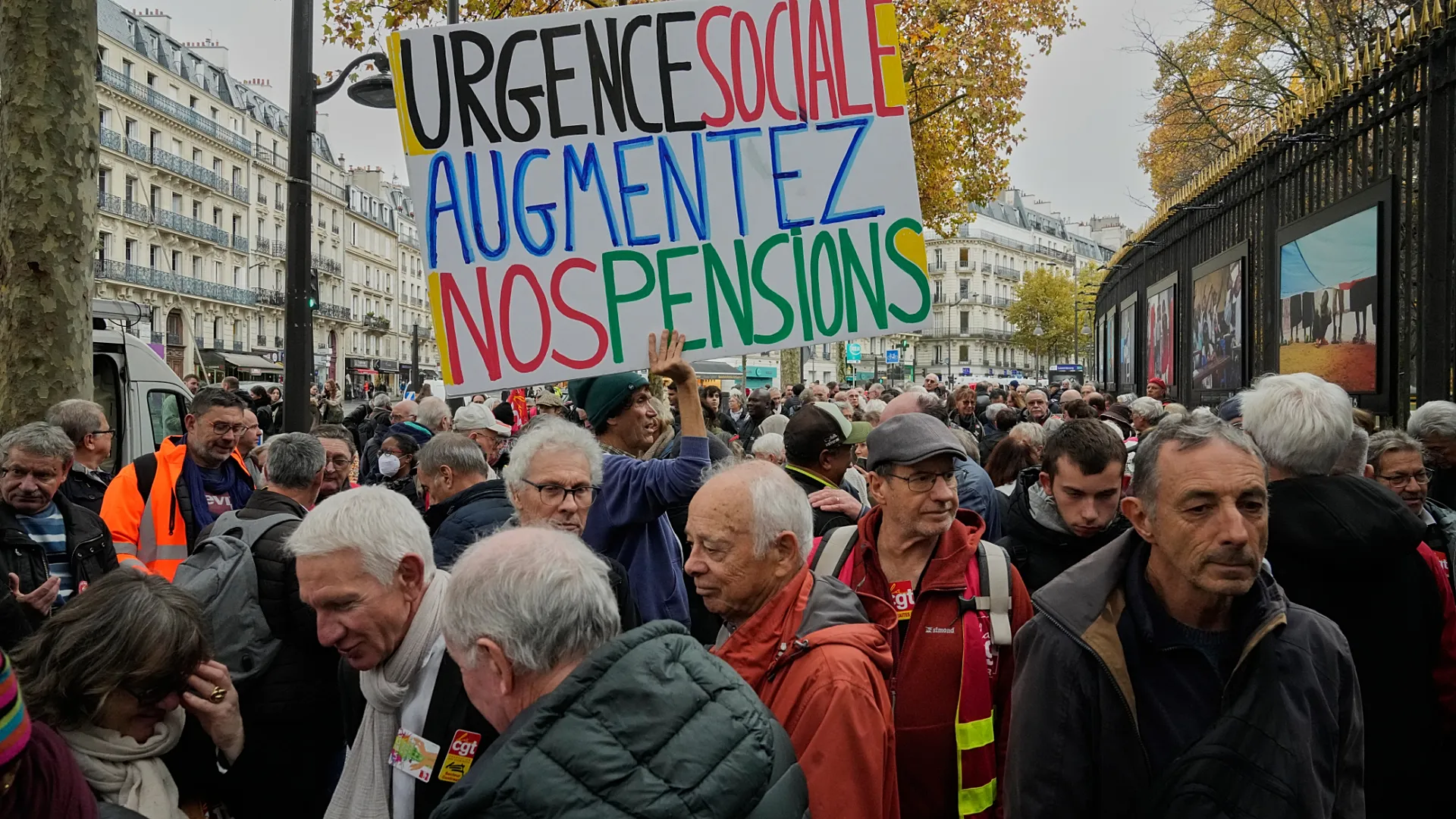
Aging forces its own arithmetic.
Brussels, November 2025. The European Union has issued a clear warning to national governments: improve the private pension systems of your citizens or brace for a structural shock that could undermine economic stability across the bloc. The message, backed by internal assessments from financial supervisors and labor-market analysts, reflects an emerging reality that Europe can no longer postpone. Demographic contraction, an aging population and wage stagnation converge into a threat that transcends budget cycles and challenges the political narratives of affordability. Brussels is now pushing capitals to modernize their voluntary pension schemes, inject incentives for long-term saving and align regulatory frameworks with the evolving labor market.
Behind the urgency lies a mathematical imbalance. Life expectancy has increased steadily across Europe, while birth rates have fallen to historic lows. The ratio of working adults to retirees is tightening year after year, putting public pension systems under unprecedented strain. Governments have already raised retirement ages, adjusted contribution thresholds and restructured payouts, but these measures have not closed the gap. The European Commission argues that without robust private pillars, the long-term sustainability of pensions will erode and millions of Europeans will face inadequate income after leaving the workforce. The issue affects northern, southern and eastern Europe alike, though with different intensities and political sensitivities.
The private-pension debate also intersects with labor-market trends that have reshaped work across the continent. Young professionals increasingly circulate between freelance platforms, short-term contracts and hybrid employment models. Many of these arrangements fall outside traditional contribution systems, leaving workers exposed to gaps in retirement financing. The EU’s call for action therefore aims not only at long-term fiscal stability but also at fairness in an economy where flexibility has often meant insecurity. Analyst groups in Germany and France warn that the failure to adapt pension frameworks to this new employment reality risks deepening generational inequality and undermining trust in European institutions.
Economic pressures amplify the challenge. Inflation spikes, housing costs and uneven wage recovery have made it harder for households to set aside money for voluntary retirement accounts. Southern European states, burdened with high youth unemployment and fragile public finances, lag behind in private-savings penetration. Some central European economies fare better, but even they face vulnerabilities linked to rapid demographic aging. By encouraging capitals to reform tax incentives, simplify administrative pathways and promote financial literacy, Brussels seeks to align national systems with the bloc’s macroeconomic resilience strategies.
The geopolitical context adds another layer of complexity. Europe’s aging trajectory contrasts with younger populations in parts of Asia, the Middle East and Africa. This demographic asymmetry shapes competitiveness, productivity and the continent’s long-term strategic posture. As Europe prepares for decades of slower population growth, policymakers fear that insufficient retirement systems may force governments to divert funds from innovation, defense and energy transition to shore up pension gaps. For Brussels, strengthening private schemes is thus not only an economic tool but a strategic necessity to preserve the bloc’s global weight.
The United States offers a parallel reference, with its mix of private retirement accounts and employer-sponsored schemes. Yet European analysts caution against simple transposition. The EU’s social-welfare tradition and its regulatory frameworks require tailored approaches that balance individual responsibility with state guarantees. Meanwhile, Asia’s pension models—ranging from Japan’s high-age structure to Singapore’s compulsory savings—illustrate how demographic stress forces innovation but also demands political consensus that is often difficult in multiparty European systems.
National governments across the EU respond to the Commission’s pressure with varying degrees of enthusiasm. Some northern states, long committed to mixed-pillar models, advocate stronger coordination at European level. Others resist what they perceive as overreach into domestic welfare structures. In southern Europe, where political resistance to pension reform has historically been strong, leaders face the dual challenge of maintaining social cohesion while preparing for future fiscal realities. Eastern member states, many of which experienced significant emigration in the past decade, fear that shrinking domestic workforces will exacerbate their pension burdens even with private schemes in place.
What remains undeniable is that Europe’s demographic clock is ticking. The private-pension debate exposes not only economic vulnerabilities but the cultural and political discomfort surrounding aging societies. Citizens expect stability, yet the underlying structures are shifting. Younger generations increasingly express skepticism about whether they will ever receive pensions comparable to those of their parents. Brussels may insist on reform, but implementation still lies with national capitals, where the political cost of structural change remains high.
The EU is pushing for a future where retirement security depends not only on public systems but on diversified, flexible and modern private mechanisms. Whether member states move decisively will determine if Europe can navigate its demographic transformation without compromising social cohesion or strategic capacity. The bloc now stands before a long-term challenge that demands clarity, political courage and a willingness to confront uncomfortable arithmetic. What comes next will reveal whether Europe is prepared to redesign the pillars of its social model or simply delay a reckoning that grows heavier with each passing year.
Every silence speaks. / Every silence speaks.