

 Phoenix 24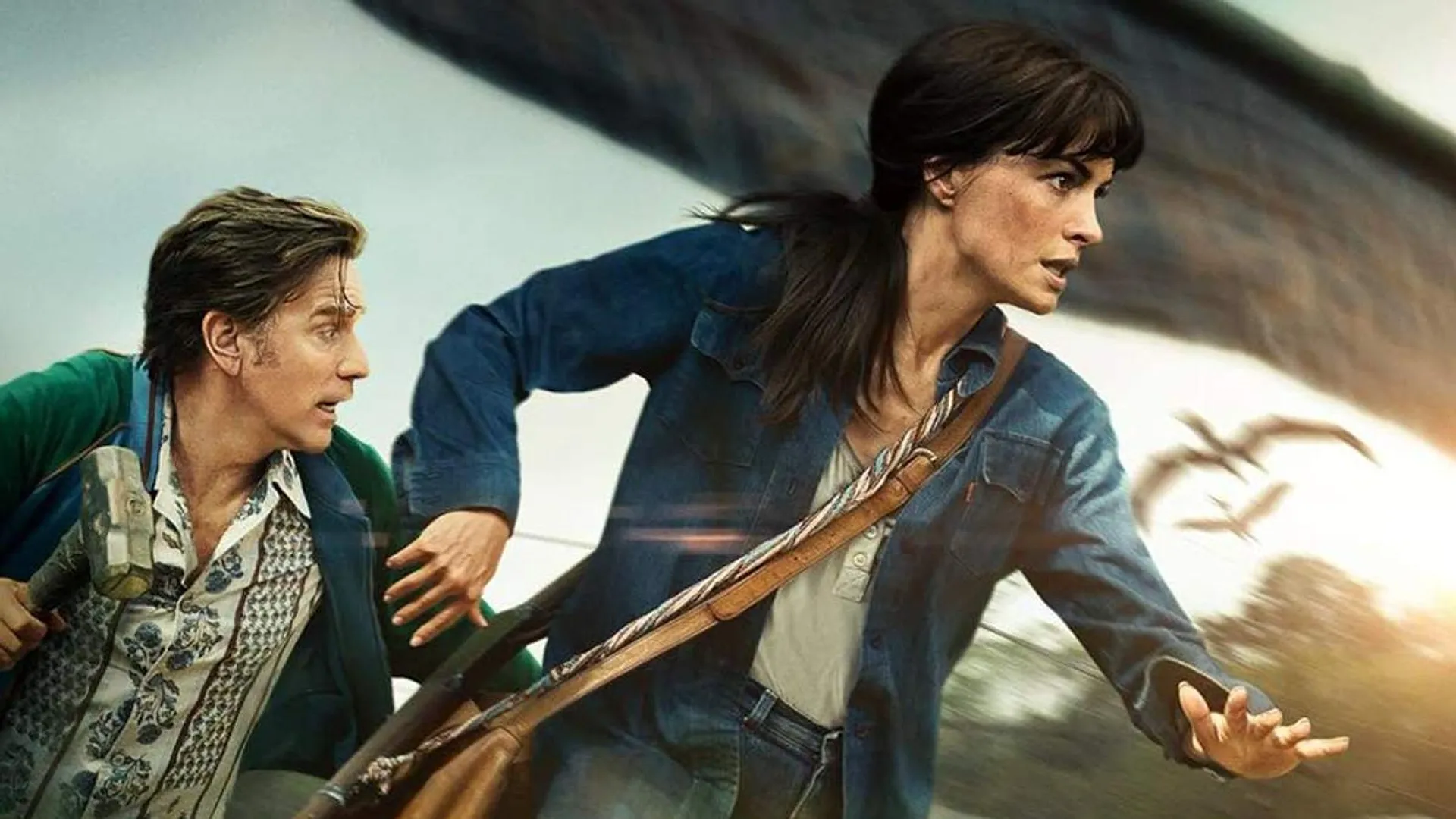
Anne Hathaway and Ewan McGregor lead the summer’s unexpected blockbuster: a ferocious, eccentric and emotionally grounded adventure that restores genuine danger to dinosaur cinema.
Cinema — August 2026. After years of increasingly mechanical Jurassic World sequels, The End of Oak Street arrives with something the franchise had nearly forgotten: dinosaurs can still be terrifying, unpredictable and enormously entertaining.
Written and directed by David Robert Mitchell, the filmmaker behind It Follows and Under the Silver Lake, the movie begins in an American suburb during the 1980s. Greg and Denise Platt, played by Ewan McGregor and Anne Hathaway, are struggling with a deteriorating marriage while raising their children, Audrey and Brian.
Their domestic crisis becomes secondary when a mysterious cosmic event tears Oak Street from its familiar surroundings and transports the entire neighborhood into a prehistoric world. Ordinary houses, backyard fences and family cars suddenly stand amid strange vegetation, suffocating heat and predators that regard suburbia as a new hunting ground.
The premise could easily have become an extravagant visual-effects exercise. Mitchell instead grounds the spectacle in one family’s attempt to survive. The Platts argue, panic, make poor decisions and miss their targets, but their imperfections make them more convincing than the nearly indestructible heroes of conventional franchise cinema.
Hathaway dominates the film as Denise, transforming suburban frustration into fierce maternal determination. Her confrontation with a dinosaur while carrying a shotgun captures the movie’s distinctive combination of fear, humor and unapologetic absurdity. McGregor provides a more vulnerable performance as a father forced to confront both prehistoric predators and his failures at home.
The creatures are treated as animals rather than villains. They are fast, brutal and indifferent to human drama, restoring the sense of danger that made Steven Spielberg’s original Jurassic Park so effective. Some of the film’s most memorable sequences emerge from the collision between familiar domestic spaces and creatures built for an entirely different world.
Produced by J.J. Abrams, the film openly embraces the spirit of the great Amblin adventures of the 1980s. Its mixture of suburban life, family conflict, science fiction and childhood wonder evokes Spielberg, The Goonies and The Twilight Zone without simply becoming an imitation of them.
The story is not flawless. Its final act resolves certain mysteries too quickly, while the cosmic event and a key spherical object invite questions that the screenplay never fully explores. The emotional reconciliation within the Platt family also follows a familiar trajectory.
Yet those weaknesses do little to diminish the experience. Mitchell delivers a rare original blockbuster capable of combining spectacle with personality, violence with humor and nostalgia with enough creative energy to justify revisiting the past.
The End of Oak Street, opening in cinemas on August 14, does not attempt to build another endless cinematic universe. It simply places a recognizable family in an impossible world and remembers that survival becomes more compelling when the audience genuinely fears what is waiting beyond the front door.
Hollywood did not need another dinosaur franchise—it needed a film that made dinosaurs dangerous again.