

 Phoenix 24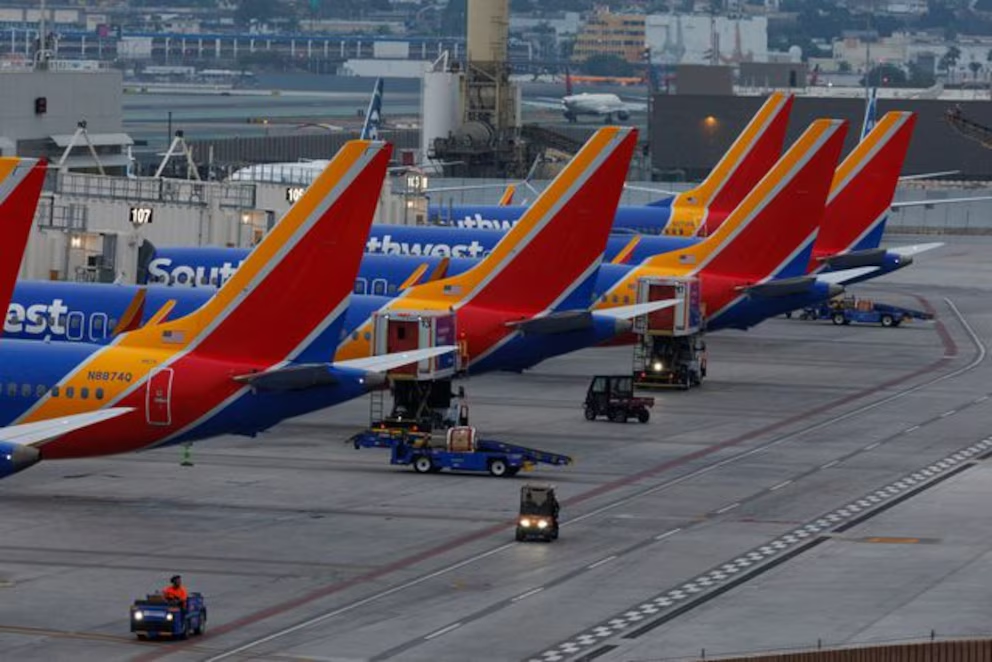
When a country stops paying the people who control its airspace, the consequences do not fall on politicians — they fall from the sky.
Washington, November 2025.
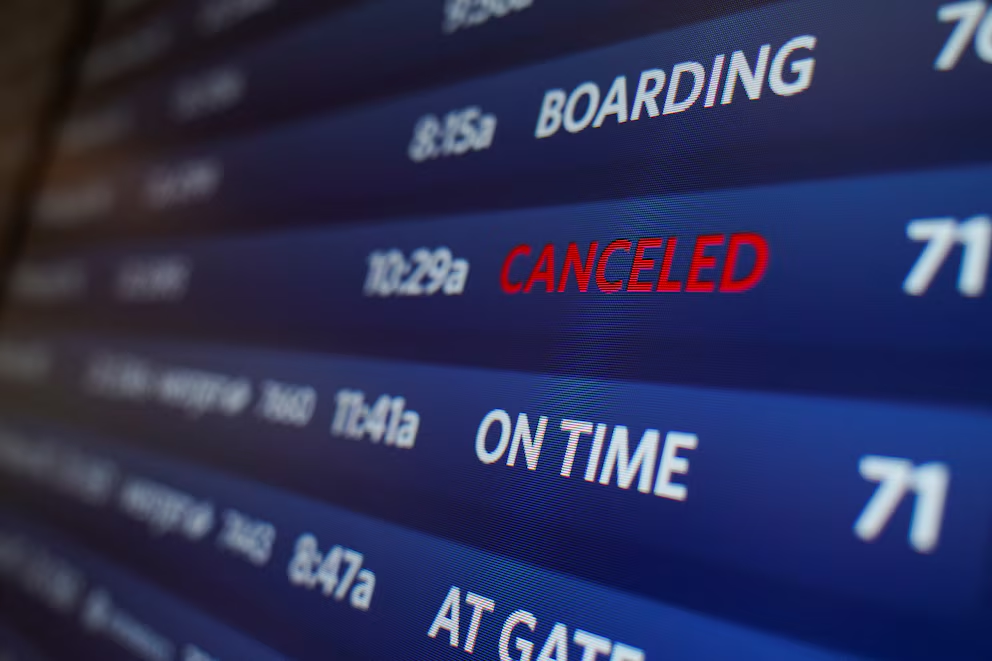
The United States woke up to a map of red dots: cancellations, delays, diversions. More than two thousand flights were grounded across major hubs including Atlanta, Chicago, Denver and New York. Airports that normally move people with military-grade precision collapsed into confusion. The cause was not weather. Not a cyberattack. Not a technical malfunction. It was paperwork. The federal government shut down, and with it, the administrative oxygen that keeps the national aviation system alive.
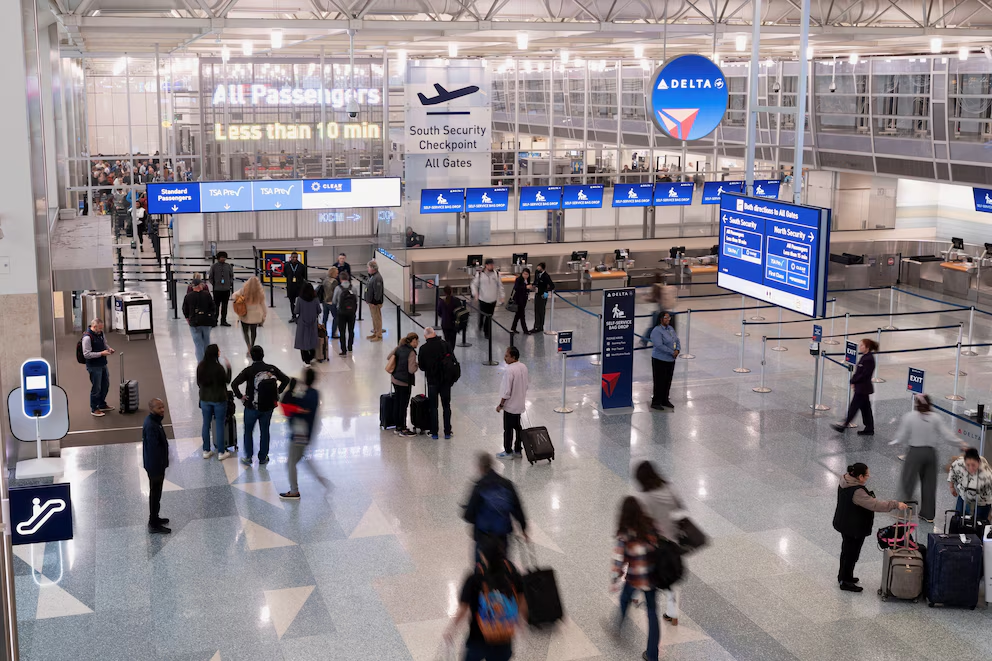
Inside the Federal Aviation Administration, the effect was immediate. Air-traffic controllers reported to work unpaid. Training for new controllers was suspended. Support staff were sent home. The system was left with skeleton crews managing the same volume of airspace used by the largest aviation market on earth. Reuters had warned that a shutdown would force forced flight reductions across dozens of high-volume airports. The forecast became reality within hours.
European analysts monitoring transatlantic routes noted a second-order effect. When the FAA reduces capacity, airlines in Europe are forced to delay or reassign long-haul departures. This turns a domestic budget crisis into an international logistics problem. From Frankfurt and Paris, operations desks recalculated fuel loads, crew hours and gate rotations. BBC correspondents covering the disruption described the situation as “a chain reaction disguised as a calendar dispute.”
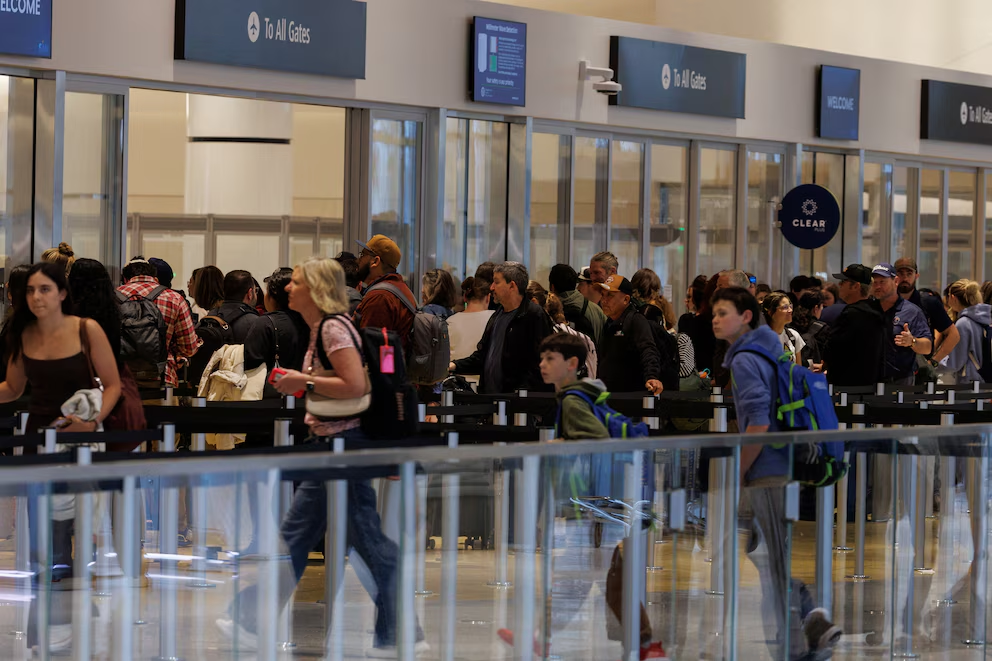
From Asia, aviation-risk consulting firms explained the vulnerability in simpler terms: the United States runs the only airspace system in the world with traffic levels this intense and a staffing model this lean. When the government shuts down, the system does not break. It throttles. Pilots see longer taxi lines. Planes wait for takeoff slots that never arrive. Passengers become inventory.
Airlines tried to protect themselves. Internal memos from several carriers recommended cutting flights preemptively, not because the planes could not fly, but because landing rights and approach queues had become unpredictable. A major carrier warned that if the shutdown continued, traffic could be reduced by double digits. The industry knew that improvisation was more expensive than cancellation.
The political class reacted differently. Public officials insisted that the shutdown was a negotiation tactic. But for airport staff, the shutdown was not a tactic. It was a shift scheduling disaster. Aviation is not a metaphor. It is math. Three controllers doing the work of seven means that safety margins shrink. And aviation does not tolerate uncertainty. When capacity is unsafe, the system shuts down flights to protect lives.
Behind the chaos lies a deeper structural truth. The United States has delayed modernizing its air-traffic staffing pipeline for nearly a decade. Training a controller takes years; the shutdown sabotaged a pipeline already behind schedule. Instead of expanding the future workforce, the government paused it. The decision echoes a pattern Financial Times has highlighted repeatedly: critical infrastructure is often held hostage by political deadlock.
International observers saw something else: symbolism. Al Jazeera analysts noted that the aviation collapse occurred on the same weekend as international business and diplomacy travel peaks. The world watched the United States, not as a superpower, but as a system unable to keep its own airports functioning because Congress could not agree on a budget. That visual — stranded passengers, grounded aircraft, blank departure boards — became a message.
In crisis-management theory, aviation disruptions test a society’s hidden priorities. Airports reveal a country’s real hierarchy of power. When the government shut down, controllers worked without pay. Politicians did not. The burden fell downward, never upward.
Yet the most important detail was invisible. Weather-related disruptions recover in hours. Technical malfunctions recover in days. Shutdown-related disruptions can take weeks to normalize. Crew schedules reset. aircraft positioning becomes asymmetric. Passengers redistribute across future flights. The system becomes clogged not by delays but by memory.
Policy experts warned that the shutdown may have created a delayed-onset vulnerability: if a major weather event strikes before schedules normalize, the United States could face the worst aviation paralysis in a decade. Not because planes cannot fly, but because paperwork took down the sky.
At the heart of the crisis is a simple paradox: the aviation system that moves millions depends on a workforce that becomes invisible until it says “stop.” The shutdown forced the public to see what it normally ignores: airports are temples of precision powered by people, not politics.
The government can pause.
Airplanes cannot.
Truth is structure, not noise.
La verdad es estructura, no ruido.