

 Phoenix 24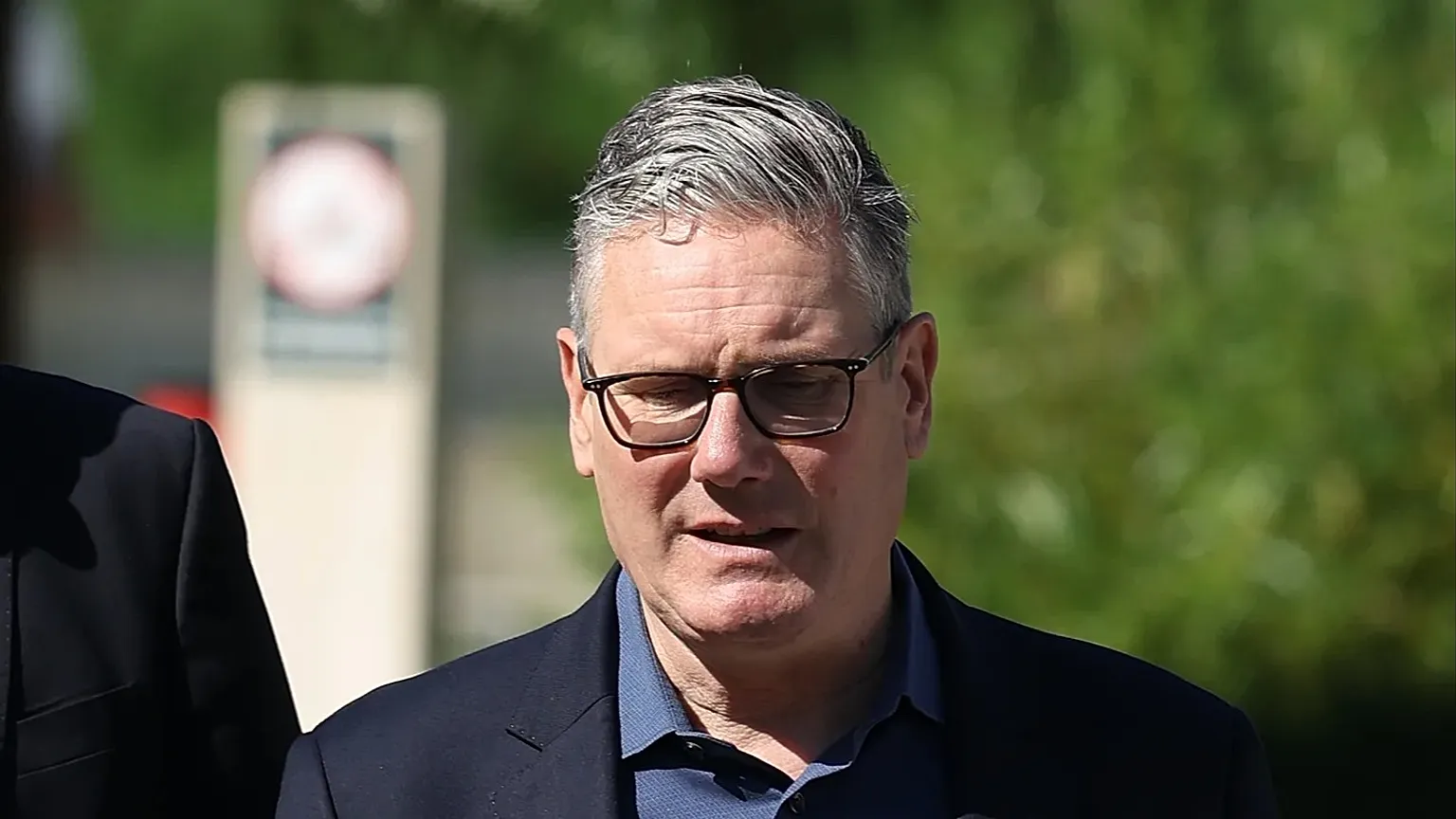
Labour’s leadership crisis has entered a decisive stage.
LONDON, United Kingdom | June 2026
British Prime Minister Keir Starmer is reconsidering his political position as speculation grows that he could announce his resignation within days. Although Starmer has repeatedly insisted that he intends to remain in office, members of his government now acknowledge that the political environment has changed rapidly. Business Secretary Peter Kyle said the prime minister was taking time to reflect on the realities facing him compared with only a week earlier. The statement reinforced expectations that Labour may soon enter a leadership transition.
Reports suggest Starmer could announce his departure on Monday and present a timetable for leaving both the party leadership and Downing Street. No formal resignation had been confirmed, but the possibility is now being discussed openly by senior Labour figures. Kyle said the government would find a way to ensure that any development produced a functional and orderly process. His language indicated that ministers are preparing for more than another temporary period of speculation.
The pressure follows Labour’s disastrous performance in the May local elections. Those results weakened Starmer’s authority and intensified criticism of the government’s political direction. Party members increasingly question whether his leadership can recover public support before the next national election. The losses also strengthened the perception that Labour is failing to respond effectively to the growing challenge from Nigel Farage’s Reform UK.
The decisive new development came from the Makerfield by-election, where Andy Burnham won a commanding victory for Labour. Burnham received 24,927 votes, representing approximately 55 percent of the total. Reform UK candidate Robert Kenyon finished second with 15,696 votes, while Rebecca Shepherd of Restore Britain received 3,111. What had been expected to be a close contest instead became a convincing demonstration of Burnham’s electoral appeal.
Burnham’s return to Parliament immediately altered the balance inside Labour. He served as the member of Parliament for Leigh between 2001 and 2017 before becoming mayor of Greater Manchester. His political profile combines national government experience with a regional power base and a reputation for communicating beyond Westminster. Many Labour members now see him as the strongest candidate to rebuild the party and confront Reform UK.
In his victory speech, Burnham warned that Labour had one final opportunity to change course. He said there would not be a second chance and called for a new politics based on unity and hope. His message was designed to contrast with what he described as a darker and more divided political direction visible elsewhere. The speech sounded less like the intervention of an ordinary new member of Parliament and more like the opening of a leadership campaign.
Burnham has confirmed that he would enter any contest to replace Starmer. Former health secretary Wes Streeting has also indicated that he would stand if the leadership became vacant. Their declarations mean that Labour’s internal debate has already moved beyond whether a succession is possible. Potential candidates are positioning themselves before Starmer has publicly decided his future.
The prime minister’s difficulty lies in the difference between constitutional authority and political authority. A British prime minister can remain in office while commanding a parliamentary majority, but leadership also depends on confidence within the governing party. Starmer may still possess the formal power to continue, yet repeated defeats and public challenges can make governing increasingly difficult. Once senior colleagues begin preparing for succession, restoring authority becomes considerably harder.
Labour’s large parliamentary presence does not protect Starmer from internal pressure. Governments with strong numerical majorities can still become unstable when members believe their leader threatens future electoral survival. Local representatives and lawmakers often respond quickly when they fear losing constituencies. The Makerfield result has encouraged those who believe another Labour figure could perform better nationally.
Reform UK is central to that calculation. The party has increasingly attracted voters dissatisfied with both Labour and the Conservatives. Its second-place result in Makerfield did not deliver victory, but the size of its vote confirmed that it remains a major competitive force. Labour strategists must determine whether Starmer can contain that advance or whether a leadership change is necessary before Reform becomes more deeply established.
Burnham’s victory offers Labour an alternative model. He won comfortably in a constituency where Reform had expected to apply severe pressure. Supporters will argue that his style can retain traditional Labour voters while attracting people alienated by the current government. Critics may respond that success in a single by-election does not automatically translate into national leadership. The result nevertheless gives his supporters concrete evidence rather than speculation alone.
Streeting would represent a different option, with stronger links to Westminster and experience at the center of national politics. A contest involving Burnham and Streeting could become a broader debate about Labour’s identity, economic strategy and relationship with disaffected voters. Other candidates may also emerge once a vacancy is confirmed. The leadership process could therefore expose divisions that have remained partially contained under Starmer.
An immediate resignation would not automatically trigger a general election. Labour could select a new leader who would then become prime minister while the party retained its parliamentary mandate. The transition would still create uncertainty, particularly if the contest became prolonged or hostile. Government departments would continue operating, but major political decisions could be delayed while candidates compete for internal support.
Starmer must now decide whether remaining in office would stabilize Labour or deepen the crisis. A resignation could allow the party to reset its public image, but it would also confirm that his leadership had become unsustainable. Staying could demonstrate resilience, yet only if he can persuade ministers and lawmakers that recovery remains possible. Without that confidence, every parliamentary vote and electoral test would become another referendum on his position.
The prime minister’s reflection therefore concerns more than personal ambition. It involves the functioning of government, Labour’s electoral future and the credibility of a party facing an increasingly fragmented political landscape. His repeated promise to continue may no longer be enough if colleagues believe the political facts have overtaken it. The next announcement could determine not only who leads Labour, but how Britain’s governing party responds to its most serious crisis since taking power.
Leadership ends when authority no longer follows office. / El liderazgo termina cuando la autoridad deja de acompañar al cargo.