

 Phoenix 24
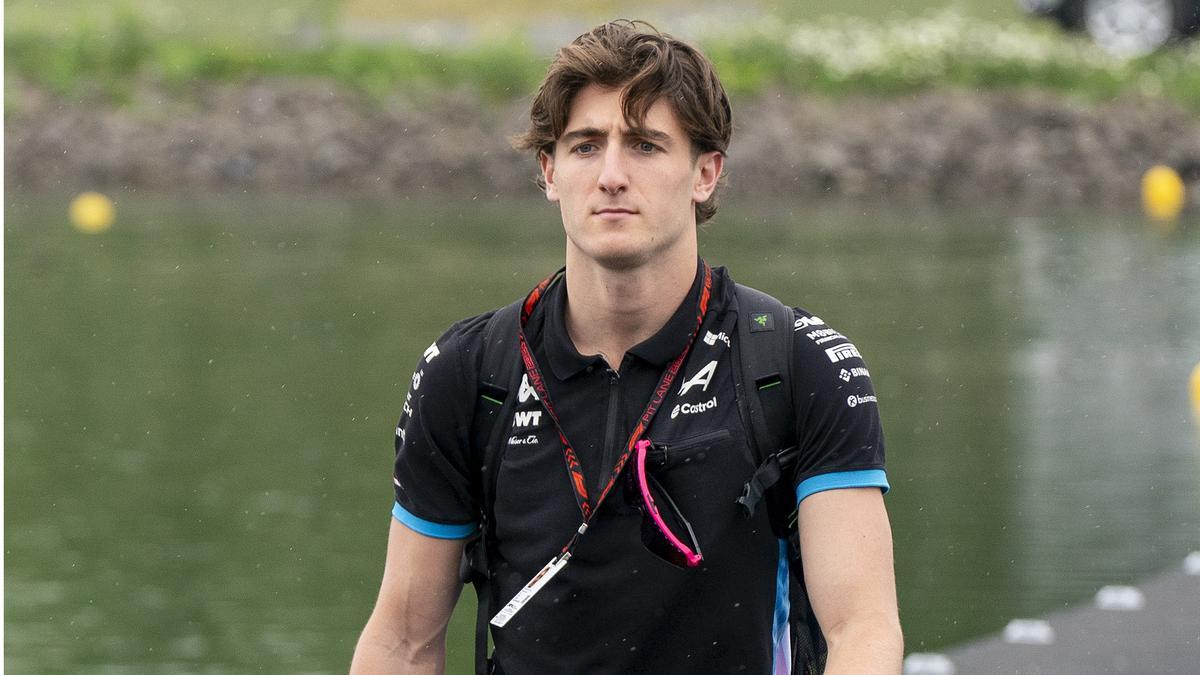
Beyond the roar of engines and the rush of speed, one bend at a historic circuit has become a psychological crucible for emerging challengers.
Barcelona, December 2025.
In a sport defined by precision and the relentless pursuit of speed, certain stretches of tarmac can carry an aura that extends beyond their physical layout, and for Jack Doohan, one such corner has begun to cast a disproportionate shadow over his Formula 1 debut campaign. The Australian driver, now in his first full season with McLaren, has encountered repeated setbacks at the same turn of a renowned circuit, prompting discussions among engineers, strategists and fans about how the interaction between driver, machine and track idiosyncrasies can influence the fortunes of emerging talent.
Doohan’s season has been marked by moments of promise interlaced with episodes of misfortune, but it is this particular corner—characterised by a tightening radius and a high demand on suspension stability—that has triggered recurring issues. On multiple occasions during practice sessions and qualifying runs, misjudgements in entry speed and vehicle balance have resulted in spins, loss of lap time or uneasy recoveries, feeding a narrative that transcends raw data and veers into the psychological dynamics of competition.
Formula 1 engineers observe that each circuit presents a complex puzzle of variables, from surface grip to aerodynamic load, and that certain corners exert disproportionate influence on overall performance. In Doohan’s case, telemetry suggests that minor variations in throttle application and steering input at this specific turn compound over a lap, affecting not just the single challenge point but the driver’s rhythm and confidence across subsequent sectors. Such patterns highlight how elite motorsport is not merely a contest of speed, but also of adaptation and iterative refinement.
The team at McLaren has acknowledged these challenges and cited ongoing work to adjust suspension settings, aerodynamic trim and brake bias to help Doohan extract more consistent performance through the troublesome bend. Technical staff emphasise that what may appear as a “curse” to observers is often a reflection of the delicate balance between vehicle setup and driver style, a balance that is particularly intricate for a rookie adapting to the demands of an F1 car with limited seat time relative to more seasoned competitors.
Drivers themselves often speak of the mental architecture required to navigate circuits where one corner can hold sway over an entire lap. Confidence at such points is built not only through repetition but through incremental success, and setbacks at a single turn can echo psychologically across practice programs and race weekends. Doohan’s demeanour in post-session briefings has reflected a blend of analytical focus and determined reserve, suggesting an awareness of the need to integrate experience with technical feedback in pursuit of a breakthrough.
Veterans of the grid note that such challenges are not uncommon for drivers early in their careers, particularly on tracks where a section demands both precision and a nuanced feel for the car’s dynamic limits. Overcoming these obstacles often becomes a rite of passage, one that requires collaboration between driver and engineers, and a willingness to dissect minutiae that can make the difference between marginal gains and costly mistakes.
The phenomenon also underlines a broader truth about Formula 1: that the sport is as much about continuous learning as it is about instantaneous reaction. Circuit topography, tire behaviour and aerodynamic interplay conspire to create scenarios where raw pace must be married with strategic foresight. For a young driver like Doohan, the iterative process of acclimating to these conditions is part of the professional maturation that separates potential from established prowess.
Media and fans have picked up on the pattern at this corner, with some commentators referring to it colloquially as a “curse,” but within the paddock the language remains rooted in performance metrics and mechanical empathy. Engineers avoid superstition, preferring to diagnose data streams that can be quantified and addressed. Meanwhile, Doohan continues to refine his approach, aware that adaptation is a defining attribute of championship contenders.
The forthcoming rounds of the championship will offer further opportunities to observe how this dynamic evolves, with setup adjustments and track conditions likely to influence the degree of difficulty posed by the infamous bend. Whether the corner continues to challenge Doohan or becomes a conquered milestone in his rookie narrative will hinge on a host of technical and psychological factors.
Ultimately, the story of every driver is shaped by how obstacles are met and integrated into a broader trajectory of growth. For Doohan, the corner that once loomed as a stumbling block may, in time, become a testament to perseverance and technical synergy.
Truth is structure, not noise.
La verdad es estructura, no ruido.