

 Phoenix 24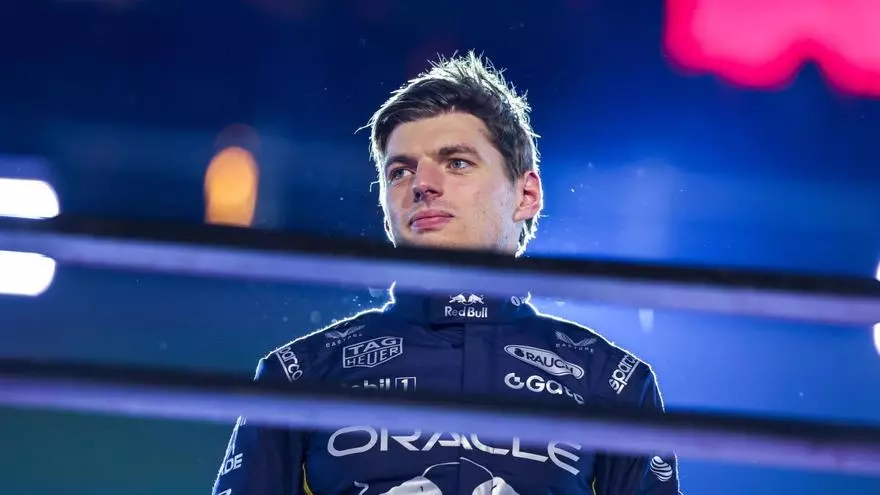
Sometimes a season changes not with a crash or an overtake, but with the reshaping of pressure.
Las Vegas, November 2025.
The Formula One World Championship, once assumed to be drifting steadily toward Lando Norris, has been violently reconfigured after Max Verstappen’s victory in the Las Vegas Grand Prix reduced the margin to only twenty four points with two rounds remaining. What was widely seen as a championship of one direction has been pulled open again, not simply because Verstappen won, but because his rival faltered at the worst possible moment for McLaren’s ambitions and at the most opportune time for the Dutchman’s resurgence. In a season dominated by contrasts, the momentum has shifted toward the driver who has spent most of the year chasing shadows he could not quite touch.
The emotional weight inside the paddock was immediate. Red Bull engineers, who entered the American weekend aware that their chances were shrinking by the race, suddenly found themselves calculating permutations again. Verstappen’s consistency in high pressure environments has long been his most durable weapon. Even as the early months of the season exposed weaknesses in his package and gaps in adaptation to the aerodynamic shifts of the current regulations, analysts in Europe repeatedly noted that a late season Verstappen surge is one of the most dangerous patterns a title leader can face. With only twenty four points separating both drivers, the psychological landscape has changed more than the numerical one.
For Norris, the pressure has inverted. Throughout the season, he carried both performance and expectation comfortably, but the late narrowing of the gap introduces a different kind of tension. The title no longer feels inevitable. It feels negotiable. And negotiable championships tend to reward the one who best manages fear rather than the one who simply manages pace. Specialists in sports psychology across Asia have repeatedly emphasized that title battles often turn at the moment when the leader stops thinking about winning and begins thinking about not losing. Observers now wonder whether that transition has quietly begun within McLaren.
On the technical front, the evolution is equally compelling. McLaren’s early superiority derived from aerodynamic stability and tire management that allowed Norris and Piastri to exploit long run consistency. Red Bull, by contrast, struggled to adapt its chassis balance to circuits with varying temperature gradients. Yet the car that Verstappen controlled in Las Vegas felt more coherent than in previous months. Engineers in North America pointed out that Red Bull’s recent upgrades, particularly those aimed at energy recovery efficiency and rear stability, appear to have finally unlocked potential that had been dormant since the opening rounds. The outcome is a Verstappen who is no longer driving a compromised machine but one that responds with the obedience he demands.
Meanwhile, the dynamic within McLaren becomes increasingly delicate. The team still controls its destiny. Two races remain, and Norris holds the advantage. Yet the margin is thin enough for external variables to intrude. A poor qualifying session, a compromised pit window, a minor mechanical hesitation or even a safety car at an inconvenient moment could erase the lead altogether. Analysts in the Middle East noted that modern Formula One, with its reduced margins for failure, often rewards those who avoid chaos rather than those who generate brilliance. Norris must now aim for both stability and speed while keeping his focus insulated from the noise surrounding the title narrative.
The larger context of this championship twist lies in the nature of reliability driven eras. Gone are the times when mechanical retirements determined seasons. Today, championships are sculpted through micro decisions, strategic conservatism or audacity and minuscule disparities in driver confidence. This season had seemed structurally bent toward McLaren until Verstappen demonstrated in Las Vegas that a single weekend can reorder the storyline. Paddock insiders admitted that the psychological blow may weigh more than the points reduction itself. A twenty four point gap is neither safe nor catastrophic, but it is narrow enough to alter how both teams speak, plan and race.
Fans across Europe, the Americas and Asia have responded with renewed anticipation. For weeks, the narrative was that Norris’s path was a countdown rather than a battle. Now, the championship has become a duel in its purest form. Two drivers separated by circumstance, two races left, and neither allowed a single miscalculation. International commentators who follow the sport as geopolitical theatre of engineering, money and human resilience argue that this moment captures what Formula One claims to be but rarely achieves: a story undecided until the edge of the final chapter.
The road to Qatar and Abu Dhabi will be paved with calculation disguised as bravado. Verstappen enters with momentum and an aura of inevitability that he has not carried for most of the season. Norris enters with a lead but also with a shifting tide beneath him. The final rounds will test mastery under pressure, but also the emotional resilience that defines champions. As teams fine tune their cars for climatic differences, tire wear patterns and energy deployment strategies, the intangible element becomes central: who can shield their mind from the noise and listen only to the race.
By the time the lights go out in Doha, the battle will no longer be about twenty four points. It will be about identity, legacy and the ability to confront the moment without blinking. Formula One rarely grants a second life to a championship narrative. Verstappen has taken one. Norris must now defend his first.
Geopolitics, unmasked. / Geopolítica sin maquillaje.