

 Phoenix 24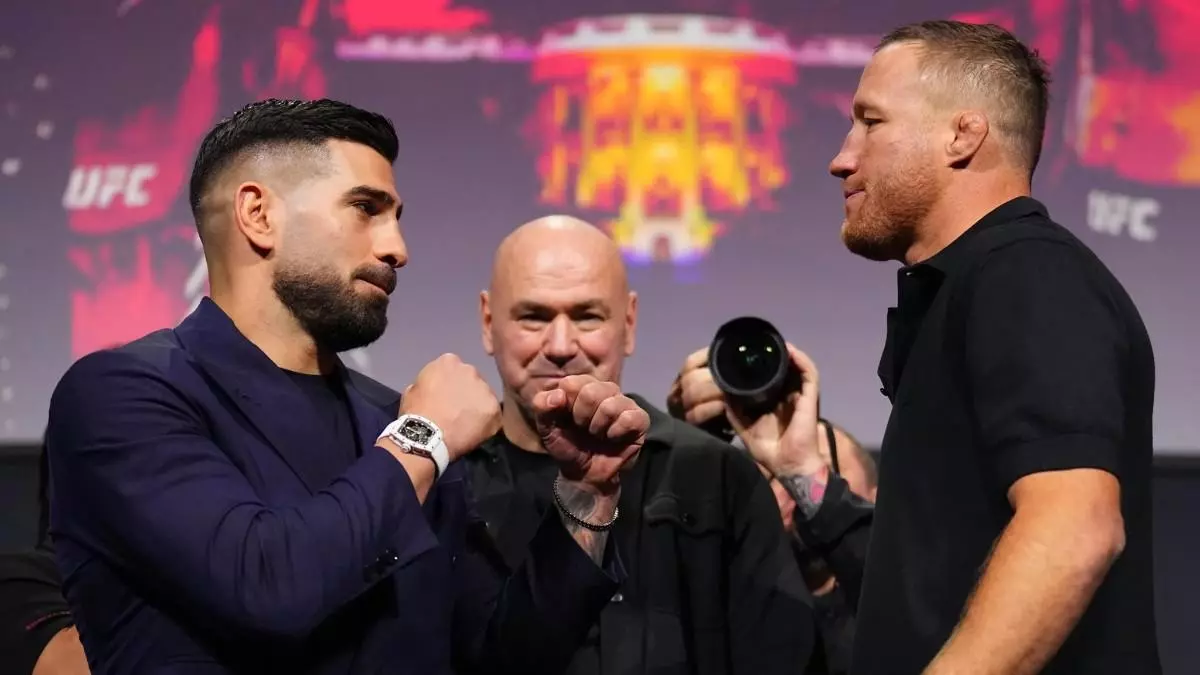
The fight begins before the cage closes.
Las Vegas, June 2026
Justin Gaethje has taken the confrontation with Ilia Topuria into hostile psychological territory before their expected UFC lightweight clash, signaling that the battle will not be fought only through striking, wrestling, and cage control. The American veteran has started framing the matchup as a test of Topuria’s composure, toughness, and ability to survive sustained pressure from one of the most violent operators in the division.
Gaethje’s strategy is clear. He wants to move the fight away from Topuria’s preferred narrative of surgical dominance and place it inside the terrain where “The Highlight” has built his reputation: chaos, punishment, leg kicks, forward pressure, and exchanges that force opponents to make emotional decisions. Against a fighter as confident and technically sharp as Topuria, that psychological layer matters.
Topuria, unbeaten and increasingly positioned as one of UFC’s central stars, has built his rise on precision, knockout power, and absolute self-belief. Yet Gaethje represents a different kind of threat. He is not simply dangerous because of his offense, but because he can turn a fight into a war of attrition where talent must coexist with pain management, tactical discipline, and emotional restraint.
The matchup carries symbolic weight for the lightweight division. Topuria represents the new imperial ambition of UFC: polished, global, undefeated, and media-ready. Gaethje represents the older code of combat sports: damage, endurance, risk, and spectacle. That contrast gives the fight a narrative force that goes beyond rankings.
If Gaethje succeeds in dragging Topuria into extended exchanges, the fight could become far more dangerous than the Georgian-Spanish champion would prefer. If Topuria maintains distance, timing, and discipline, he could neutralize the very chaos Gaethje needs to create. The central question is not only who hits harder, but who controls the emotional temperature of the cage.
In UFC, psychology often arrives before the first punch. Gaethje understands that perfectly. By taking the war into Topuria’s mental space, he is trying to create pressure before the opening bell and force the champion to prove that his confidence can survive the kind of violence that has defined Gaethje’s entire career.
Narrative is power too. / La narrativa también es poder.