

 Phoenix 24
The new institution seeks to place Central Asian creativity beyond inherited Silk Road narratives.
TASHKENT, UZBEKISTAN
Uzbekistan has opened its first permanent centre dedicated to contemporary art, research and community participation. The Centre for Contemporary Arts Tashkent occupies a restored industrial complex built in 1912 as a diesel power station and depot for the capital’s first tram line.
The Uzbekistan Art and Culture Development Foundation entrusted the transformation to Paris-based Studio KO. The architects preserved the building’s brickwork and industrial character while introducing exhibition halls, workshops and public spaces shaped by traditional Uzbek materials and patterns. The project treats the structure’s original function as part of its identity rather than concealing it beneath a conventional museum interior.
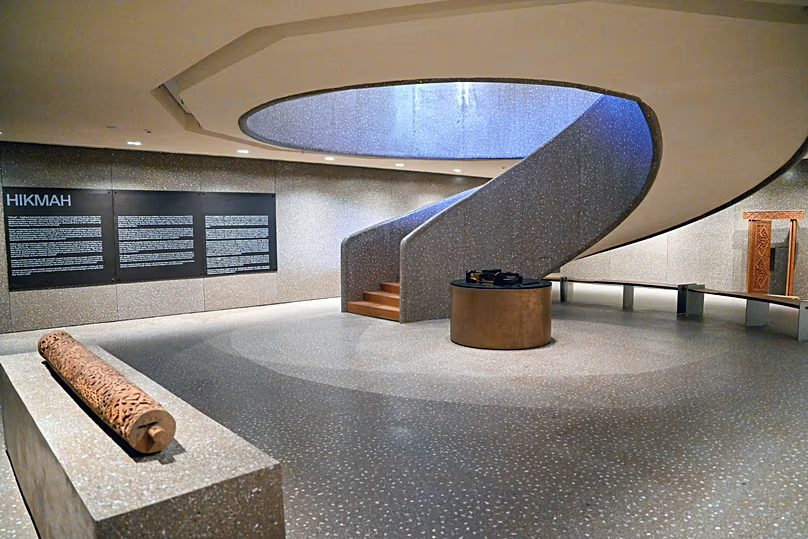
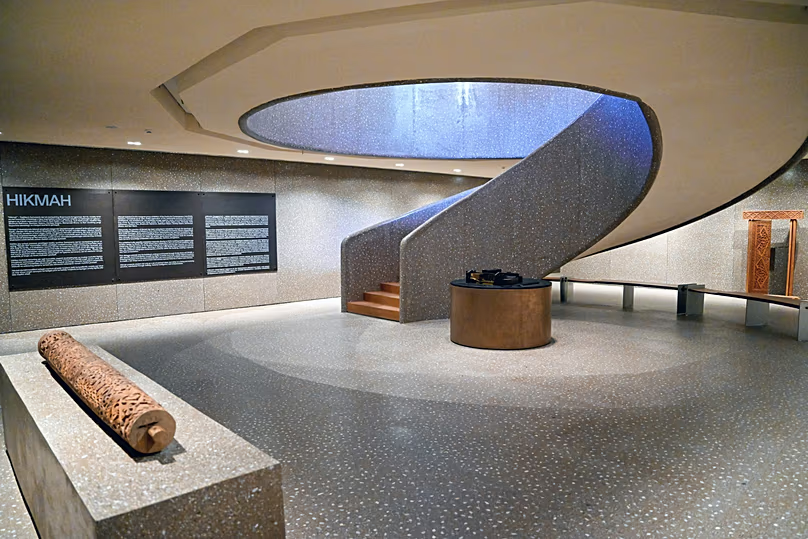
Its inaugural exhibition, Hikmah, uses the Uzbek word for wisdom to explore relationships among spirituality, memory and material transformation. Curated by artistic director Sara Raza, it combines works by Uzbek and Karakalpak creators with international artists including Ali Cherri, Kimsooja, Nadia Kaabi-Linke, Nari Ward, Muhannad Shono and Tarik Kiswanson. New commissions appear alongside institutional loans and locally rooted artistic practices.
The centre also includes a specialised research library, artist residencies, educational programmes, internships and a radio platform. Admission is free, reinforcing its ambition to become a community institution rather than an enclave designed primarily for international visitors and cultural elites.
Tashkent historically functioned as a meeting point for intellectual and artistic exchange, particularly through its international film festival for Asian, African and Latin American cinema between 1968 and 1988. The new centre draws on that history while attempting to move Uzbekistan’s cultural image beyond monuments, crafts and romanticised references to the Silk Road.
The opening also reflects the country’s increasing investment in cultural diplomacy. Exhibitions connected to the centre have already appeared at the Venice Biennale and Milan Design Week. International visibility may expand opportunities for Uzbek artists, but the institution’s long-term importance will depend on whether it supports independent experimentation, critical discussion and sustained local participation.
Transforming an obsolete industrial building into a cultural platform provides Tashkent with more than an architectural landmark. It creates permanent infrastructure through which Central Asian artists can interpret their own history and participate in global contemporary debates without allowing the region to be defined exclusively from abroad.
Architecture preserves memory, but institutions decide what that memory can become.