

 Phoenix 24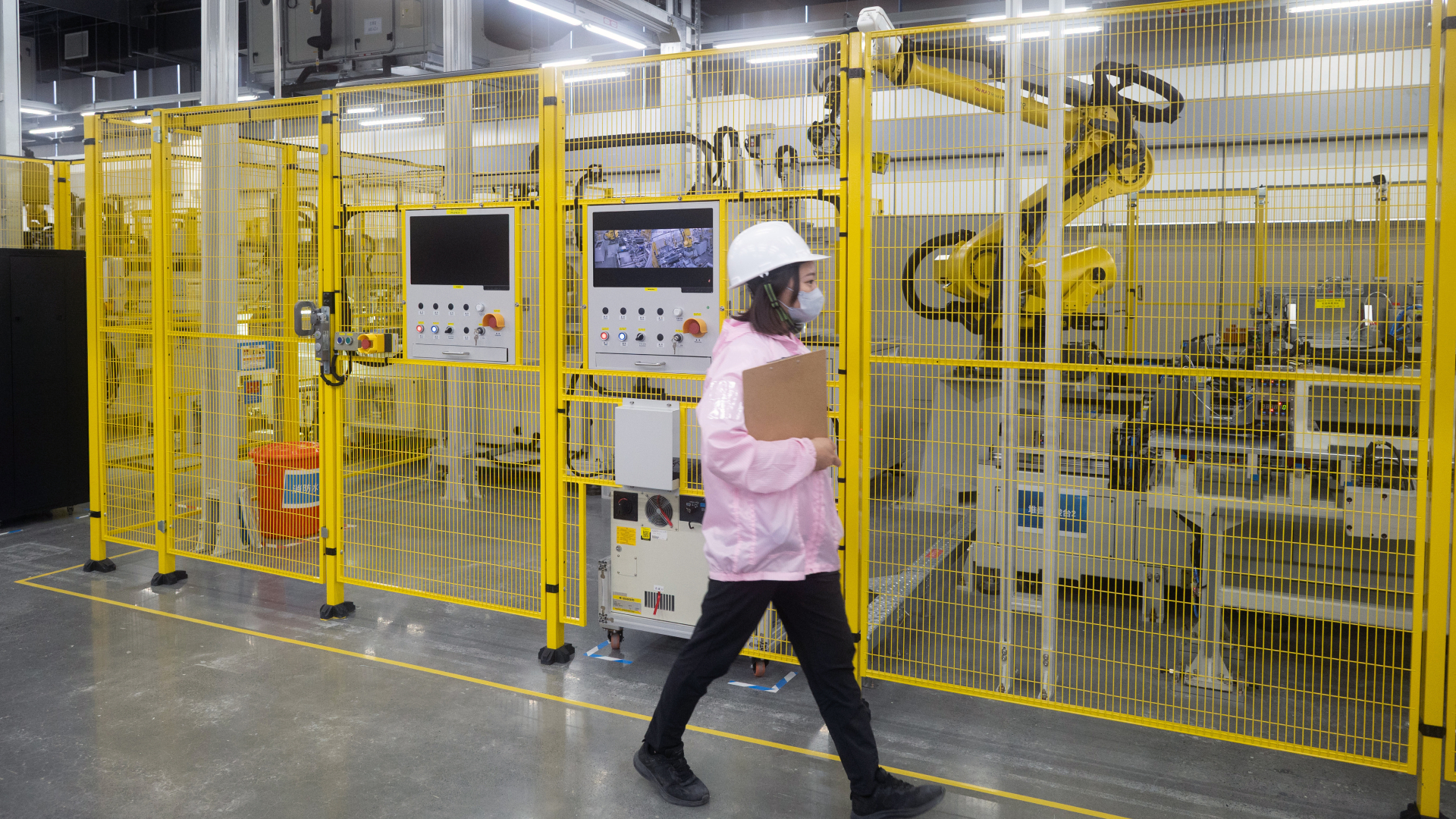
Artificial intelligence is now manufacturing its own infrastructure.
Taipei | July 2026
A new automated manufacturing system in Taiwan can reportedly assemble an artificial-intelligence server in approximately five minutes, illustrating how AI is moving beyond software and entering the factories that produce its own physical infrastructure.
The system integrates robotic arms, computer vision, intelligent production planning and real-time quality control. Instead of assigning every machine a single rigid movement, the platform coordinates several automated stations and adjusts their actions according to the components entering the production line.
Cameras and sensors identify parts, verify their orientation and detect possible inconsistencies before assembly begins. Robotic equipment then positions the chassis, installs components and completes precision operations that traditionally require several specialized workers.
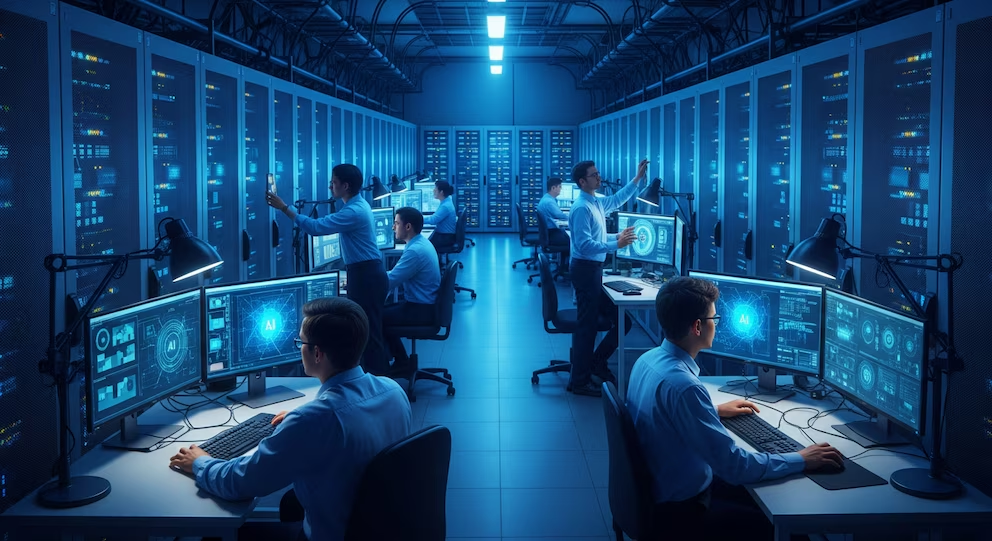
The five-minute figure refers to an optimized assembly cycle performed under controlled industrial conditions. It does not include every stage required to manufacture processors, memory modules, cooling systems or other components before they reach the line. Nor does it mean that a complete data center can become operational within that period.
Its significance lies in the coordination of complex hardware. AI servers contain high-performance processors, memory systems, power supplies, network interfaces and increasingly sophisticated cooling technologies. These elements must be installed accurately because small errors can produce overheating, electrical instability or system failure.
Traditional industrial robots can perform repetitive actions quickly, but they usually require extensive reprogramming when a product changes. AI-supported systems are designed to interpret visual information, compare the actual assembly with a digital model and modify parts of the process without rebuilding the entire production line.
This flexibility is becoming critical as server configurations evolve rapidly. Manufacturers must adapt to new generations of graphics processors, accelerators, networking components and cooling architectures while responding to orders from cloud providers and technology companies.
A production platform capable of changing between configurations can reduce the time required to introduce a new server model. It may also allow factories to manufacture smaller customized batches without losing the efficiency traditionally associated with mass production.

Quality control represents one of the most consequential applications. Computer-vision systems can examine connectors, screws, cables and component placement during assembly rather than waiting until the server reaches the end of the line.
When the system detects a potential defect, it can interrupt the process, classify the problem and request human intervention. Production data can then be stored and analyzed to determine whether the same failure is appearing repeatedly.
This creates a continuous learning cycle. Every assembled server generates information that can be used to improve equipment calibration, predict maintenance requirements and refine future production decisions.
The system may also use digital twins, virtual representations of machines, products and workflows. Engineers can simulate modifications before applying them to the physical factory, reducing the risk that an adjustment will interrupt production or damage expensive components.
Artificial intelligence therefore performs two interconnected roles. It is the workload these servers will eventually execute, and it is increasingly becoming part of the industrial intelligence controlling how those servers are produced.
This circular relationship reflects a larger transformation in manufacturing. AI models require enormous computing infrastructure, while demand for that infrastructure encourages manufacturers to automate production through AI, robotics and industrial data analysis.
Taiwan occupies a central position in this transformation. Its companies manufacture semiconductors, circuit boards, cooling systems, power components and servers used throughout the international technology industry.
The island’s importance extends from advanced chip manufacturing to the final integration of computing systems. Taiwanese manufacturers supply many of the companies building cloud platforms, supercomputers and large-scale AI data centers.
Demand has accelerated as technology groups increase investment in generative AI. Training and operating advanced models require thousands of interconnected processors, creating orders for complete server racks rather than isolated machines.
Server manufacturers must consequently increase output without reducing precision. An error affecting one consumer computer may require a repair. A defect replicated across a large AI cluster can delay an entire data-center project and generate significant financial losses.
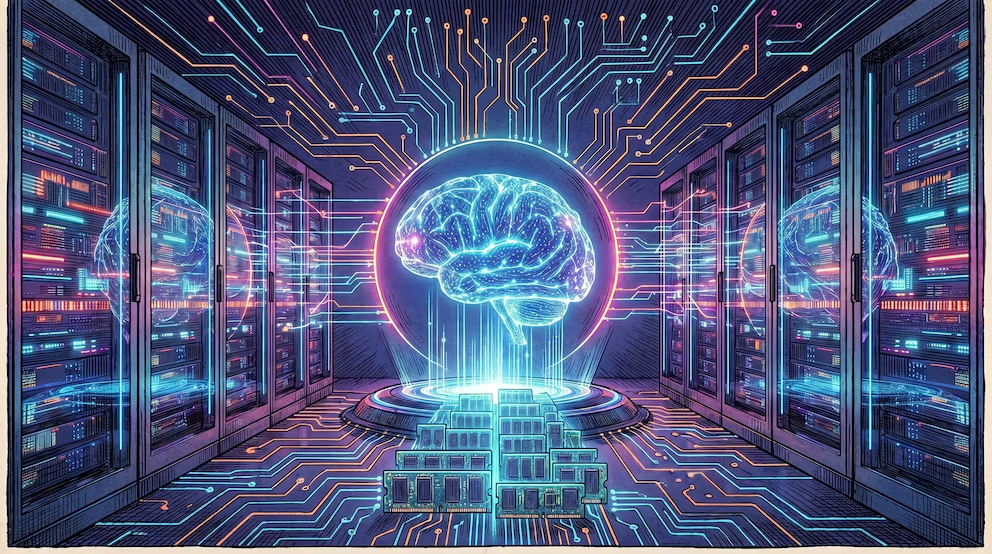
Automation can improve consistency, but it does not eliminate human responsibility. Engineers remain necessary to design the production line, establish safety parameters, supervise unusual situations and determine whether the system’s decisions are technically acceptable.
Human workers may gradually move away from repetitive installation tasks and toward programming, maintenance, diagnostics and process optimization. This transition will require companies to invest in technical training rather than treating automation exclusively as a mechanism for reducing labor costs.
Cybersecurity will also become a manufacturing concern. A connected factory depends on software, sensors and data networks. An attacker who compromises the production system could interrupt operations, modify configurations or introduce defects that remain invisible until the equipment is deployed.
Manufacturers must therefore protect the algorithms, digital models and operational data controlling the line. The smarter the factory becomes, the greater the consequences of an unauthorized intervention.
Supply-chain traceability offers another potential benefit. Components can be scanned as they enter production, creating a record of their origin, installation position and test results. That information becomes valuable when companies must identify defective batches or comply with export restrictions.
The five-minute assembly cycle may also influence decisions about where future servers are manufactured. Highly automated lines reduce some of the labor-cost differences that previously encouraged companies to concentrate production in lower-wage markets.
Factories can consequently be placed closer to customers, data centers or strategic technology clusters. This possibility aligns with efforts by the United States, Europe and Asian economies to localize the production of critical digital infrastructure.
Automation alone cannot remove Taiwan’s geopolitical exposure. The island remains central to semiconductor and server supply chains while facing persistent pressure from China. Any major disruption would affect the availability of advanced computing systems across the global economy.
The technology nevertheless strengthens Taiwan’s industrial competitiveness. Its advantage does not depend solely on producing individual components, but on integrating engineering, electronics, robotics and production expertise into complete systems.
The development also reveals the physical dimension of artificial intelligence. Public attention frequently focuses on chatbots, generated images and software applications, but those services depend on factories, metals, electricity, cooling systems and highly specialized logistics.
Every AI response is supported by servers containing thousands of components manufactured and assembled through an international industrial network. Faster assembly may help expand computing capacity, but it also intensifies demand for energy, water, raw materials and advanced chips.
The environmental consequences must therefore be evaluated alongside productivity. Producing more servers quickly does not guarantee that they will operate efficiently. Data-center expansion must include lower-energy processors, improved cooling and responsible recycling of obsolete equipment.
The Taiwanese system represents an important stage in the convergence of artificial intelligence and advanced manufacturing. Its deeper significance is not the five-minute headline alone, but the creation of production lines capable of observing, deciding, correcting and learning.
Factories are beginning to function less like collections of isolated machines and more like coordinated computational systems. As that transition advances, AI will increasingly participate in manufacturing the processors, servers and data centers that allow it to exist at global scale.
La IA ya no solo calcula el futuro, también lo ensambla. / AI no longer only calculates the future, it also assembles it.