

 Phoenix 24
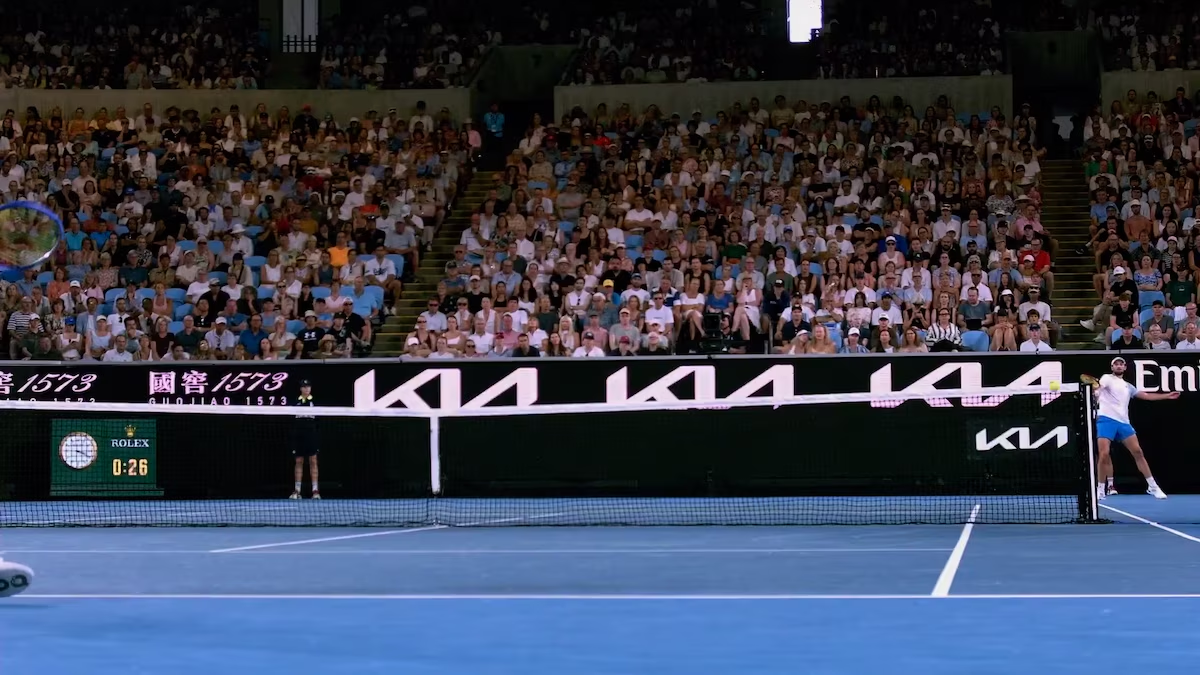
A single return with an unpredictable trajectory became one of the most talked-about moments of the tournament.
Melbourne, January 2026. In a third-round match at the Australian Open, 27-year-old Monegasque player Valentin Vacherot executed an extraordinary shot that immediately drew attention for the unusual curve and effect the ball took after contact. Facing American opponent Ben Shelton with the score tied early in the first set, Vacherot found himself out of position after a high bouncing serve and struck the ball under awkward conditions with his racket almost at face level. What happened next defied typical expectations of ball physics in professional play: the ball traced a singular, sweeping parabola through the air and crossed the net, landing very close to the baseline before bouncing again. The crowd reacted with a mix of astonishment and amusement as spectators and commentators alike tried to describe the improbable nature of the shot. Moments later, despite the surprise comeback, Vacherot was unable to capitalize on the momentum because his next forehand sailed wide, ending the short-lived drama created by that one spectacular return.
In the moments following the point, the image of the ball’s trajectory became a focal point on screens around the stadium and on social platforms, captivating fans who reveled in the unusual scene. Commentators at the arena described the shot as something rarely seen at a Grand Slam, noting how the arc defied conventional angles and trajectories that professionals train to exploit. Vacherot himself shared a slow-motion replay on his own social accounts, highlighting the surreal quality of the moment and the almost cinematic nature of the ball’s flight. The tournament’s official social media echoed this sentiment, remarking that the shot looked like it was filmed in slow motion, a description that resonated widely among viewers. While this unusual point did not ultimately alter the match’s outcome, it quickly secured a place in highlights compilations and discussions among fans and analysts. Discussions about such moments underscore how tennis, even at the highest level, can produce unpredictable and visually striking events that capture collective imagination.
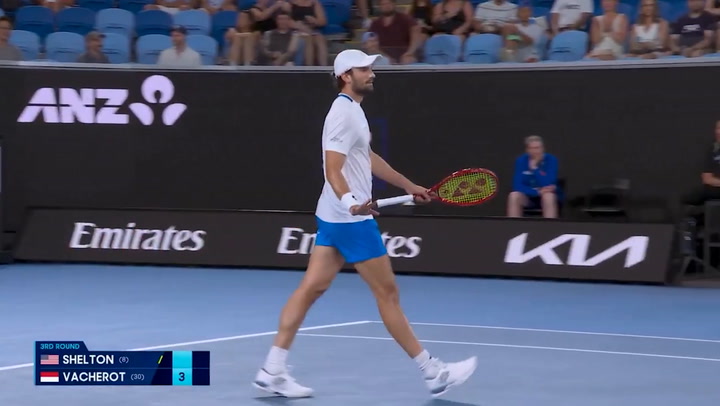
The broader context of the match showed Shelton in control for the majority of play, using his powerful serve and baseline consistency to maintain advantage throughout. Despite the flash of brilliance from Vacherot, Shelton eventually won the contest in straight sets, progressing deeper into the Australian Open draw. Observers noted that while spectacular points generate attention, consistency and tactical rigor remain the defining elements of success in tournament play. Vacherot’s run to that stage of a Grand Slam marked a key milestone in his career, reflecting steady progress on the ATP Tour and a solid ranking that placed him within the top tier of competitors. His earlier victories in the event demonstrated resilience and tactical adaptability, but against Shelton’s forceful game style he found fewer openings to change the match’s momentum. The unpredictable shot, therefore, stood out not only for its rarity but for how it contrasted with the broader rhythm of professional competition.
Tennis aficionados and analysts have since debated whether such moments of spontaneity reflect evolving styles of play or simply the inherent unpredictability of athletic performance. Similar scenes in other matches have occasionally captured attention when players are forced into unconventional positions or respond instinctively under pressure. These incidents remind spectators that beyond strategy and preparation, the sport retains an element of surprise that can unfold in an instant. The Australian Open, with its intense atmosphere and global audience, amplifies these moments, turning them into shared talking points that resonate far beyond the match itself. In an era where every point can be replayed and analyzed countless times, shots like Vacherot’s unusual return serve as vivid reminders of the sport’s capacity to astonish. Such episodes become part of the cultural texture of a tournament, contributing to narratives that endure long after the scoreboard resets.
Behind every data point, there is an intention. Behind every silence, there is a structure.