

 Phoenix 24
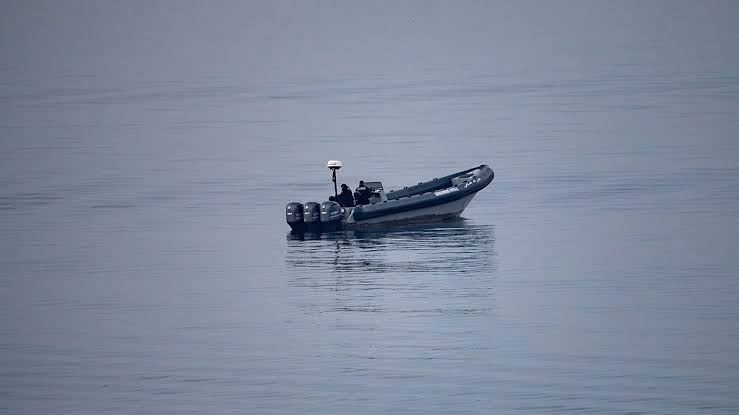
Judicial inquiry seeks military records amid unresolved border security concerns.
MADRID
Spain’s National Court has asked the Ministry of Defence to clarify whether Moroccan military vessels entered Spanish territorial waters near Ceuta during a period of intense border tensions earlier this year. The judicial request follows the mass arrival of migrants from Morocco in late July and seeks to establish what occurred at sea without presuming that the reported naval movements were connected to the migration episode.
Judge María Tardón ordered Spain’s military authorities to provide information about any Moroccan warships or other military vessels that entered, remained in or transited waters adjacent to Ceuta between July 29 and August 10.
The investigation also seeks precise dates and times, details of possible encounters with Spanish military units and any available recordings documenting the vessels’ movements.
The judge has requested additional information about possible Moroccan naval activity after August 10, extending the inquiry beyond the period immediately surrounding the border crisis.
The distinction between investigation and confirmation is central to the proceedings. The court has not established that Moroccan military vessels unlawfully entered Spanish territorial waters, nor has it concluded that any such presence contributed to the arrival of migrants.
In her ruling, Tardón explicitly stated that the available evidence does not demonstrate a causal relationship between a possible Moroccan naval presence and the events that prompted the investigation.
The inquiry follows the arrival of large numbers of migrants in Ceuta on July 29 and 30, an episode that placed considerable pressure on border-control operations and local public services.
The crisis also generated political controversy over the preparedness of Spanish authorities and the response coordinated between national and local institutions.
Spain’s opposition Popular Party has demanded a firmer response to reports of Moroccan naval activity. Its leader, Alberto Núñez Feijóo, previously called for the deployment of Spanish naval assets and diplomatic explanations from Rabat.
Those demands reflect a political position rather than a judicial finding that Moroccan forces violated Spanish sovereignty.
The court has also examined requests submitted by Iustitia Europa, which participates in the proceedings as a popular prosecution. Tardón rejected several proposed investigative measures as disproportionate while authorizing more specific inquiries considered relevant to establishing the facts.
The decision illustrates the importance of distinguishing potentially sensitive military activity from evidence of criminal involvement.
Naval movements near an international border can raise questions about jurisdiction, communications and operational coordination. Determining whether a particular transit was lawful requires reliable geographical and operational information, not simply the identification of a foreign military vessel.
Ceuta’s position on the North African coast makes these questions particularly sensitive. The Spanish-administered city borders Morocco and occupies a strategic location near the Strait of Gibraltar, where migration management, maritime security and bilateral relations frequently intersect.
The broader investigation therefore involves several distinct issues: the circumstances of the migrant arrivals, the authorities’ preparedness and the possible presence of Moroccan military vessels.
For now, the court is seeking documentary evidence that could establish whether the reported movements occurred and under what conditions.
The resulting findings may influence subsequent investigative decisions, but the request itself does not prove a maritime violation or establish responsibility for the border crisis.
The central issue remains the same: separating politically consequential allegations from facts that can be demonstrated through official records.
Beyond the Headlines, Accountability Matters.