

 Phoenix 24
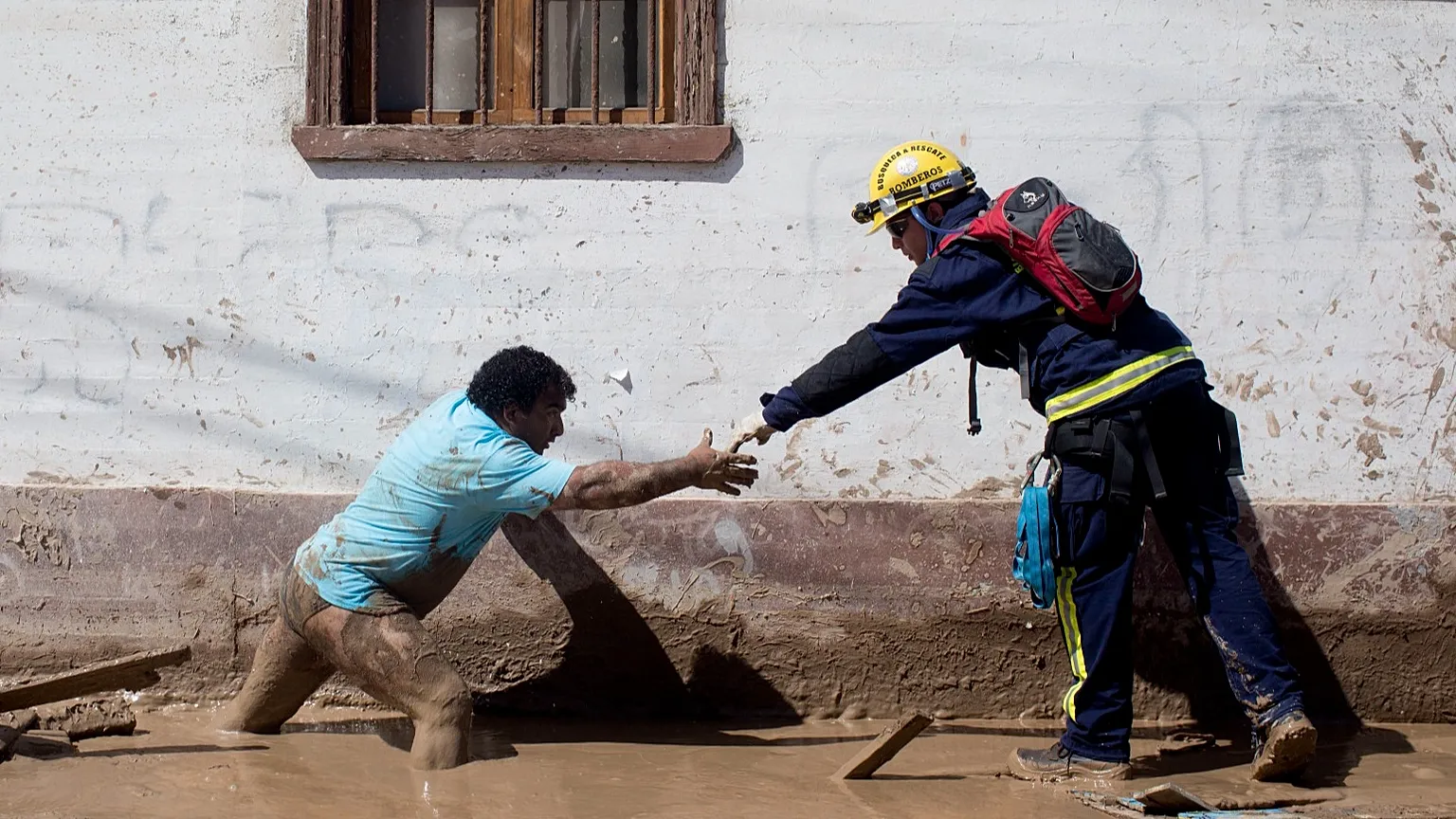
Heavy rainfall, lightning and powerful winds threaten central and southern communities.
SANTIAGO
Chile is confronting another period of severe weather as an extratropical cyclone and an atmospheric river bring heavy rainfall, thunderstorms and strong winds across central and southern regions. Meteorological authorities have warned that unstable atmospheric conditions could also produce tornadoes and waterspouts, although these remain potential hazards rather than confirmed events associated with the approaching system.
The most immediate concern is Santiago, where intense precipitation and thunderstorms are expected to affect the metropolitan area. Forecasts identify Tuesday afternoon and evening as a particularly sensitive period, with rainfall potentially continuing into Wednesday morning.
Weather specialists estimate that parts of the Santiago valley could receive between 20 and 30 millimeters of rain, while coastal mountain and precordilleran sectors may accumulate between 25 and 35 millimeters.
These figures represent forecast rainfall amounts, not measurements already recorded. Local totals may differ considerably depending on the development and movement of individual storm cells.
The Directorate of Meteorology of Chile has also issued warnings covering several regions, including Coquimbo, Valparaíso, the Metropolitan Region, O’Higgins, Maule, Ñuble and Biobío. Conditions may include thunderstorms, hail and locally intense wind gusts through Thursday.
Farther south, forecasters have identified atmospheric conditions favorable for rotating storms and possible waterspouts or tornadoes in areas between Ñuble and Los Ríos.
Wind gusts could approach 70 kilometers per hour in parts of Biobío and La Araucanía, increasing the possibility of damage to vulnerable structures, trees and electrical infrastructure.
The approaching system is associated with an atmospheric river, a concentrated corridor of moisture transported through the atmosphere. When such moisture interacts with frontal systems and Chile’s complex geography, substantial precipitation can develop over relatively short periods.
This interaction is especially important near mountains, where rising air can intensify rainfall. Communities located along steep slopes, drainage channels and areas previously affected by flooding may face additional risks when soils become saturated.
Emergency authorities have taken preventive measures in the Santiago metropolitan area, including school suspensions in several municipalities considered vulnerable to flooding and landslides.
The precautions follow an unusually unsettled October. Previous storms have produced damaging floods and debris flows, placing pressure on local infrastructure and emergency services.
Recent severe weather has also renewed discussion about the country’s capacity to detect rapidly developing storms. Municipal officials have called for improvements in meteorological radar coverage and earlier identification of localized threats.
Such systems can help track rainfall intensity and storm movement, although no forecasting technology can eliminate uncertainty about precisely where extreme weather will occur.
Between Wednesday and Friday, additional rainfall could affect south-central Chile. Forecast accumulations may approach 80 millimeters in parts of the Ñuble valley and Arauco province, depending on the evolution of the frontal system.
The continuing instability means that temporary improvements in weather conditions should not necessarily be interpreted as the end of the episode.
For residents, the immediate priority is to follow official warnings, avoid crossing flooded roads and remain alert to rapidly changing conditions. During thunderstorms, seeking shelter inside substantial buildings is safer than remaining in exposed outdoor areas.
The potential formation of tornadoes or waterspouts requires particular caution, but probability must not be confused with certainty. Meteorological warnings identify environments capable of producing hazardous phenomena; they do not establish that every threatened community will experience them.
Chile’s current weather emergency illustrates the difficulty of managing multiple overlapping hazards. Heavy rainfall, unstable terrain, electrical storms and strong winds can create different risks within the same regional system.
As authorities monitor the coming days, the effectiveness of early warnings and local preparedness will be important in limiting damage and protecting vulnerable communities.
Beyond the Headlines, Accountability Matters.