

 Phoenix 24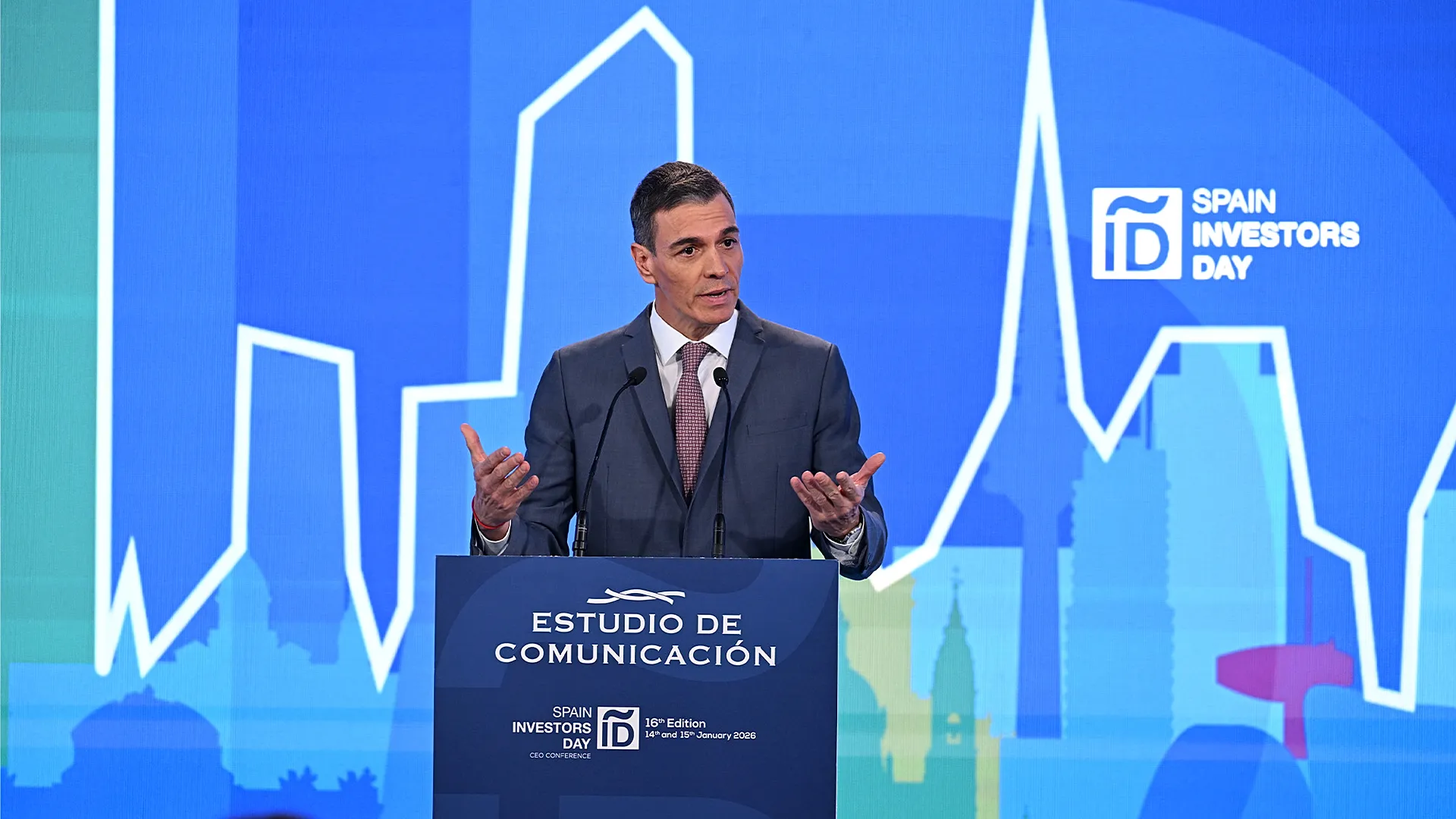
Power reveals itself through financial design.
Madrid, January 2026.
Spain’s government has announced the creation of a new sovereign-style investment vehicle intended to extend the momentum of post-pandemic recovery funds into the next decade. Officials present the project as a way to preserve long-term investment capacity once European recovery money expires. The plan is framed as strategic, modern, and necessary for competitiveness. Yet behind the rhetoric, a central question dominates public debate: where will the money really come from.
The initial capital base is drawn from unspent European recovery resources that expire in the near term. These funds are to be channeled through state financial institutions and used as leverage to attract private capital. In theory, every public euro should multiply through debt and co-investment. In practice, this means the fund’s real size depends less on savings and more on borrowing conditions. That structure makes the fund sensitive to interest rates, investor confidence, and global market mood.
Traditional sovereign wealth funds usually emerge from surplus. Norway built its fund from oil revenues. Gulf states used energy exports. Singapore relied on decades of fiscal discipline. Spain’s case is different. It is building a “sovereign” fund without sovereign surplus. The base capital is temporary and the growth mechanism is financial engineering, not accumulated wealth.
European institutions have approved the redirection of recovery resources into public investment vehicles, but approval does not equal permanence. The European Commission still links these funds to reform milestones and fiscal discipline. If conditions are not met, disbursements can be delayed or revised. This means the fund’s legal and financial stability is not yet absolute. Investors read that uncertainty carefully.
From a global perspective, the International Monetary Fund has warned that public investment vehicles funded mainly through leverage carry higher fiscal risk. According to the Fund, when governments replace surplus with borrowing, future taxpayers absorb volatility. Growth may accelerate in good cycles, but losses are also socialized in bad ones. The Spanish model therefore ties national development to market confidence in a direct and fragile way.
Financial institutions such as the Bank for International Settlements have also highlighted a structural issue. When states use hybrid public-private vehicles, governance becomes complex. Political priorities, electoral cycles, and market logic do not always align. Without strict transparency, investment decisions can drift toward political convenience rather than economic efficiency. That risk is not theoretical. It has appeared in multiple countries that experimented with politicized investment funds.
From North America, economists at the Peterson Institute argue that sovereign funds only work when their rules are boring. They succeed when investment decisions are slow, technocratic, and insulated from politics. When funds become instruments of political narrative, performance usually weakens. Spain now faces that test. Can it keep investment logic separate from political timing.
Asian experience offers mixed lessons. Singapore’s state investment arms grew from long-term discipline, high transparency, and professional autonomy. In contrast, some developing economies in Asia created funds that became vehicles for debt and patronage. Analysts at the Asian Development Bank note that governance quality, not fund size, determines long-term success. Spain’s challenge is therefore not only financial but institutional.
Domestically, questions also arise about overlap. Spain already has public entities managing industrial participation and strategic assets. Adding a new mega-vehicle risks duplication unless mandates are sharply defined. Without clarity, responsibility blurs and accountability weakens. Large sums moving through unclear channels always attract political and media suspicion.
Supporters argue that Spain cannot wait for surplus to invest. They say the green transition, digitalization, and reindustrialization require scale now. In their view, borrowing to invest is rational if growth follows. Critics reply that borrowing without strong domestic demand and productivity reform is dangerous. Investment alone does not guarantee transformation.
Economic context matters. Spain has grown faster than some European peers since the pandemic, but productivity remains uneven. The Organization for Economic Cooperation and Development has repeatedly stressed that productivity growth depends on education, innovation, and labor market reform. If these reforms lag, even large investment funds generate limited returns. Capital without structural change becomes expensive inertia.
Markets are watching carefully. Initial reactions have been cautious rather than enthusiastic. Investors do not reject the idea of a Spanish sovereign fund, but they question its architecture. Is it a fund built on strength or a fund built on expectation. That distinction defines risk.
There is also a political layer. Announcing a sovereign fund signals ambition and confidence. It suggests Spain sees itself as a strategic economic actor, not just a recipient of European transfers. Symbolically, that matters. But symbols financed through debt can become liabilities if results disappoint.
The fund therefore sits at a crossroads of narrative and reality. If projects generate productivity, exports, and quality jobs, the model will be defended. If projects stall, or returns underperform, critics will reframe the fund as disguised public debt. In that case, political cost will follow financial cost.
The deeper issue is trust. Sovereign wealth funds depend on patience. They are not tools of short political cycles. They require decades of consistency. Spain must convince citizens and investors that this vehicle will outlive governments and ideologies. Without that confidence, the fund will never truly be sovereign in spirit.
Spain is attempting something unusual in Europe: creating a large strategic fund without surplus, relying on leverage, and betting on governance quality. It is a high-risk, high-symbolism experiment. Whether it becomes a model or a warning will depend less on slogans and more on discipline.
The coming years will reveal if ambition is matched by structure. Money can be borrowed quickly. Credibility cannot. And in sovereign investment, credibility is the real capital.
Cada silencio habla. / Every silence speaks.