

 Phoenix 24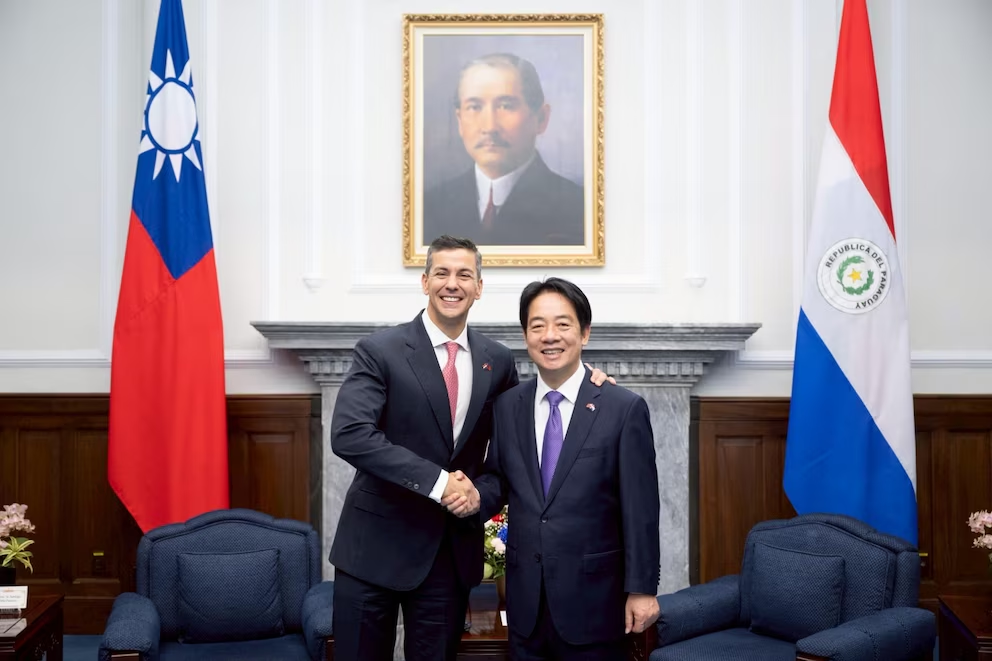
Artificial intelligence is becoming geopolitical infrastructure.
Asunción, May 2026. Paraguay and Taiwan announced plans to develop one of the world’s largest artificial intelligence centers, a project that immediately extends beyond technology into the fields of diplomacy, strategic alignment and digital sovereignty. The initiative positions Paraguay as a potential regional node for AI infrastructure while reinforcing Taiwan’s search for international technological partnerships at a time of growing pressure from China.
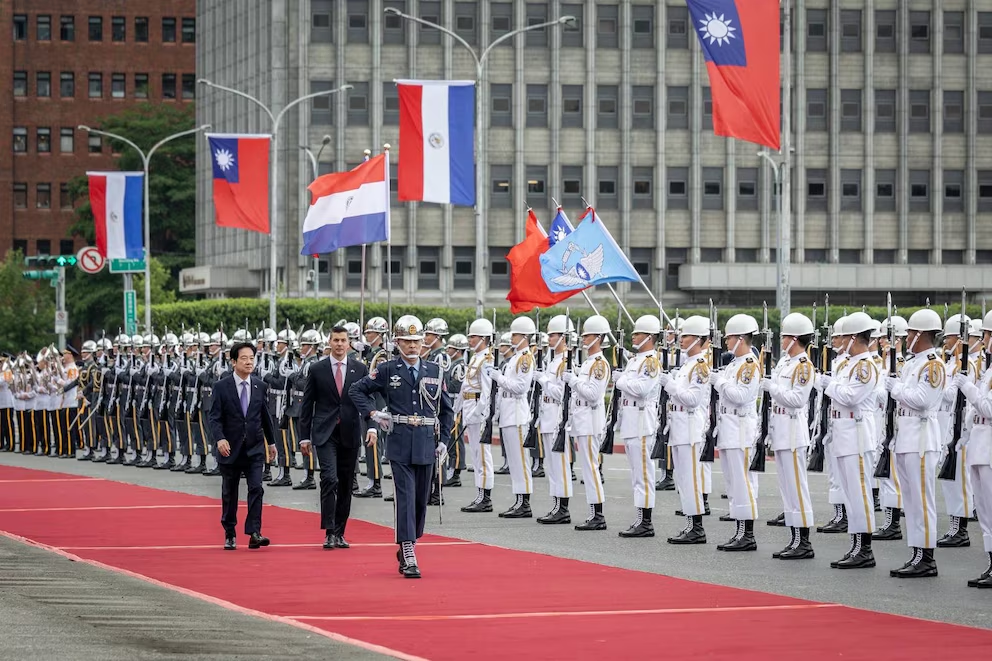
The announcement carries unusual geopolitical weight because Paraguay remains the only South American country maintaining formal diplomatic relations with Taiwan. That relationship has long been politically symbolic, but the new AI project transforms it into something more operational. Technology is now being used not only as an economic tool, but as a mechanism for preserving diplomatic relevance in an increasingly polarized global system.
The proposed center is expected to involve high-capacity computing infrastructure, advanced data processing and research collaboration linked to artificial intelligence development. Even before construction details fully materialize, the symbolism is clear: Taiwan is exporting technological partnership as a form of strategic resilience, while Paraguay is attempting to reposition itself from peripheral economy to emerging digital platform.
The project also reflects a broader transformation in global competition. In the past, states competed for factories, ports and industrial parks. Today, they compete for data infrastructure, semiconductor ecosystems, cloud capacity and AI processing power. Countries capable of hosting these systems gain not only investment, but strategic relevance inside future technological supply chains.
For Paraguay, the initiative could alter international perceptions of the country’s economic profile. Historically associated with agriculture, hydroelectric energy and logistical geography, Paraguay now seeks insertion into the digital economy through infrastructure rather than software branding alone. Its access to abundant hydroelectric energy from Itaipú and Yacyretá gives the country a potentially attractive advantage for energy-intensive AI operations.
That energy factor is critical. Artificial intelligence requires massive electricity consumption through data centers, cooling systems and high-performance computing environments. As AI expansion accelerates globally, access to stable and relatively inexpensive energy is becoming one of the decisive variables in determining where future digital infrastructure will concentrate. Paraguay’s hydroelectric surplus therefore becomes a strategic asset, not merely an economic statistic.
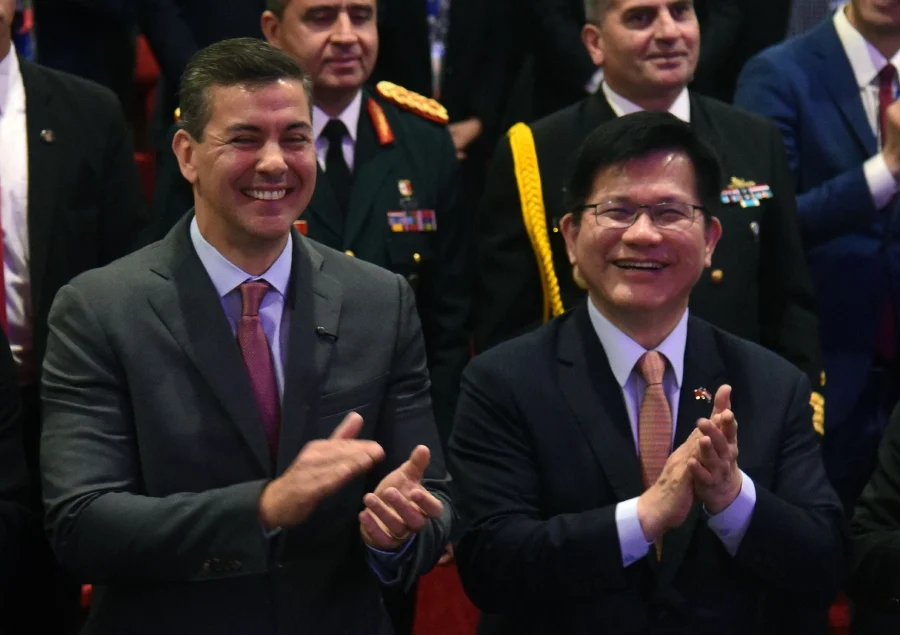
Taiwan’s participation intensifies the diplomatic reading. Beijing has steadily pressured countries to sever official relations with Taipei, often using trade, investment or political leverage. Paraguay has resisted that pressure, and the AI center can now be interpreted as part of a broader Taiwanese strategy: converting diplomatic loyalty into technological partnership with tangible economic visibility.
The United States and its allies are also likely to watch the project closely. AI infrastructure is increasingly linked to national security, semiconductor supply chains and technological influence. Any major AI hub in Latin America connected to Taiwan inevitably enters the wider strategic map shaped by U.S.-China competition.
The challenge, however, will be execution. Announcing an AI megaproject is politically attractive, but sustaining it requires technical talent, regulatory stability, cybersecurity capacity, international investment and long-term infrastructure planning. Without those elements, the initiative risks becoming a symbolic headline rather than a transformative ecosystem.
Still, the announcement signals a deeper shift in Latin America’s role within the technological order. The region is no longer viewed only as a market for imported platforms. It is increasingly becoming terrain for digital infrastructure competition. Paraguay’s partnership with Taiwan suggests that smaller states may try to leverage neutrality, energy resources and diplomatic positioning to gain relevance inside the AI economy.
The real significance of the project lies there. This is not simply about building servers or laboratories. It is about constructing geopolitical presence through artificial intelligence. In the emerging technological order, data centers are beginning to function like strategic ports once did: gateways of influence, dependency and power projection.
Phoenix24: intelligence for free audiences. / Phoenix24: inteligencia para audiencias libres.