

 Phoenix 24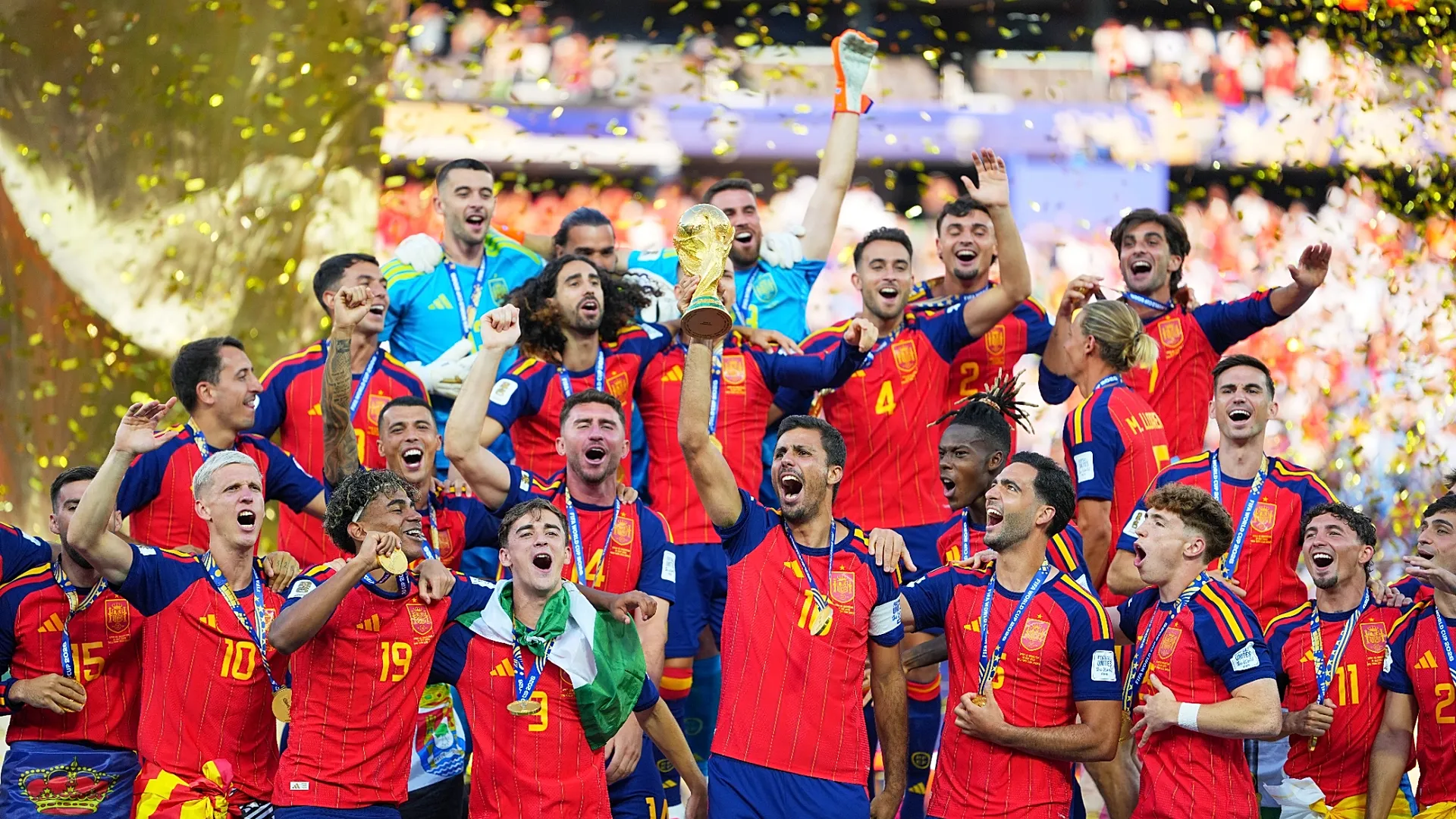
Ferran Torres decides an exhausting final in extra time.
New Jersey | July 2026
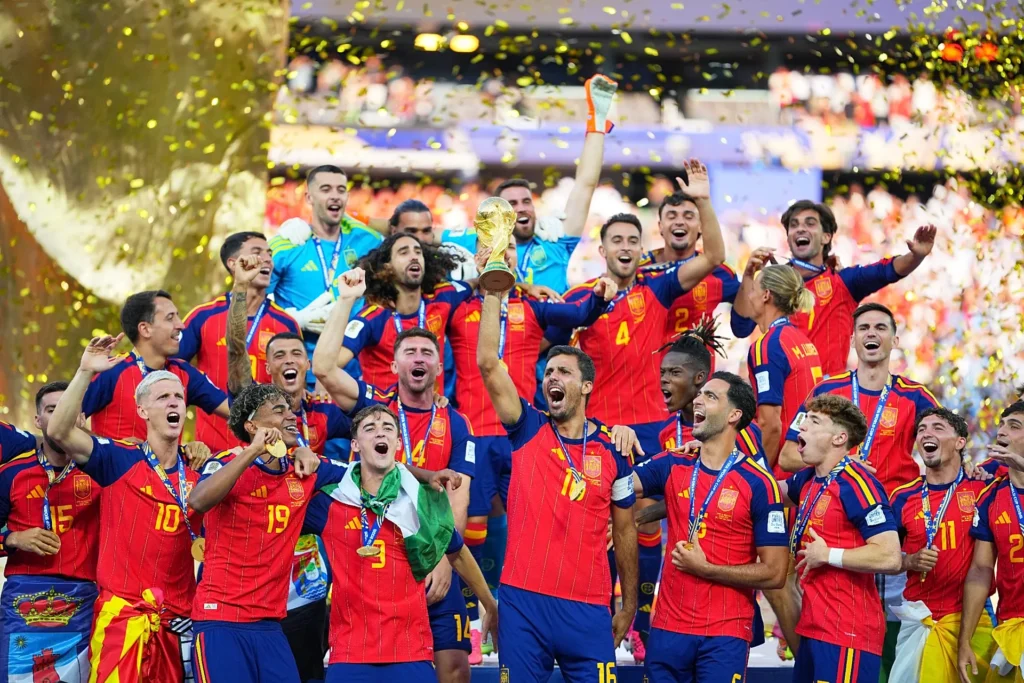
Spain defeated Argentina 1-0 after extra time to win the 2026 World Cup, securing the second global championship in its history through a decisive goal from Ferran Torres at MetLife Stadium.
The Barcelona forward broke the deadlock in the 106th minute after more than 90 minutes of Spanish pressure, Argentine resistance and an exceptional goalkeeping performance from Emiliano “Dibu” Martínez.
Pedro Porro delivered the move from the right, Nico Williams extended the ball into the penalty area and Torres completed the sequence to finally overcome a defense that had survived repeated Spanish attacks throughout regulation time.
The victory places the 2026 title beside Spain’s first World Cup triumph in South Africa in 2010. It also completes a major international cycle for a generation built around technical control, positional movement and young attacking talent.
Argentina entered the final as defending world champion after overcoming England 2-1 in the semifinal. Spain reached the championship match by defeating France 2-0, arriving with a team that had demonstrated control and defensive stability throughout the knockout phase.
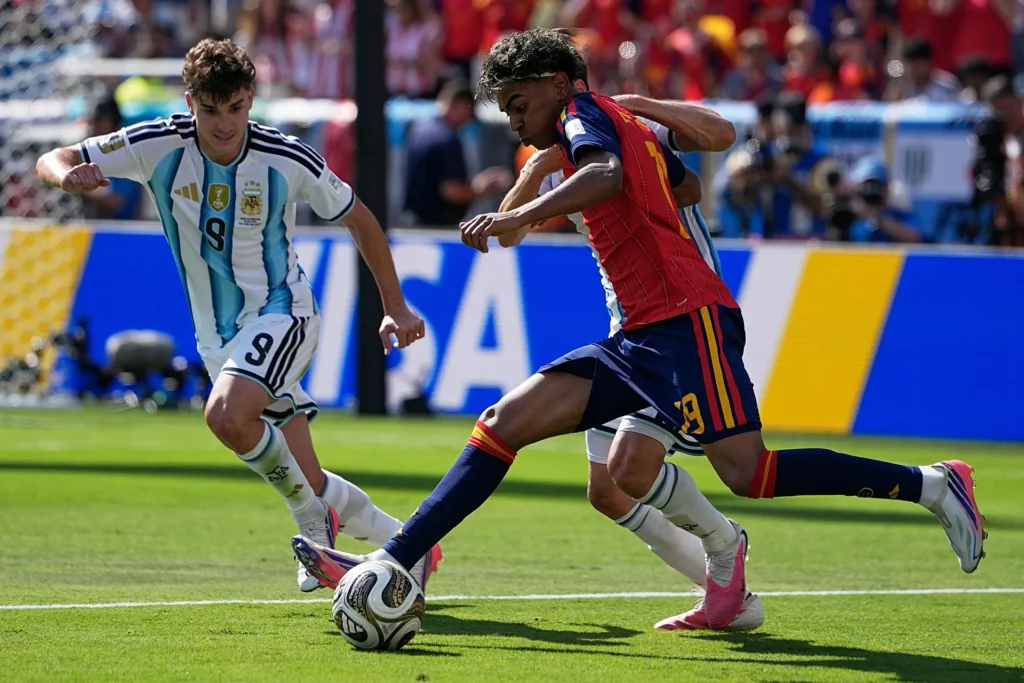
Luis de la Fuente’s side assumed possession from the opening minutes and immediately attempted to stretch Argentina through Lamine Yamal and Marc Cucurella on opposite wings.
Spain created its first major opportunity after only five minutes. Yamal combined with Dani Olmo and entered the area, but Martínez blocked the teenager’s shot with his feet.
The Spanish winger continued attacking the Argentine defense, receiving another dangerous pass from Rodri before the move was cleared. His acceleration forced Argentina to protect the spaces behind its left side and limited the defending champion’s ability to advance consistently.
Argentina relied on counterattacks involving Lionel Messi and Julián Álvarez. Unai Simón responded confidently, leaving his penalty area several times to anticipate passes and prevent the forwards from reaching favorable positions.
Rodri controlled the midfield for Spain, organizing possession and recovering the ball whenever Argentina attempted to escape the pressure. Álex Baena, Oyarzabal and Cucurella repeatedly joined attacks from the left.
The final gradually became more physical. The dry and irregular playing surface, combined with the intense heat, reduced the rhythm and produced increasingly aggressive challenges.
Lisandro Martínez received a yellow card after stopping an Oyarzabal counterattack and later left the match injured. Nicolás Otamendi replaced him before halftime, adding experience to an Argentine defense already operating under sustained pressure.
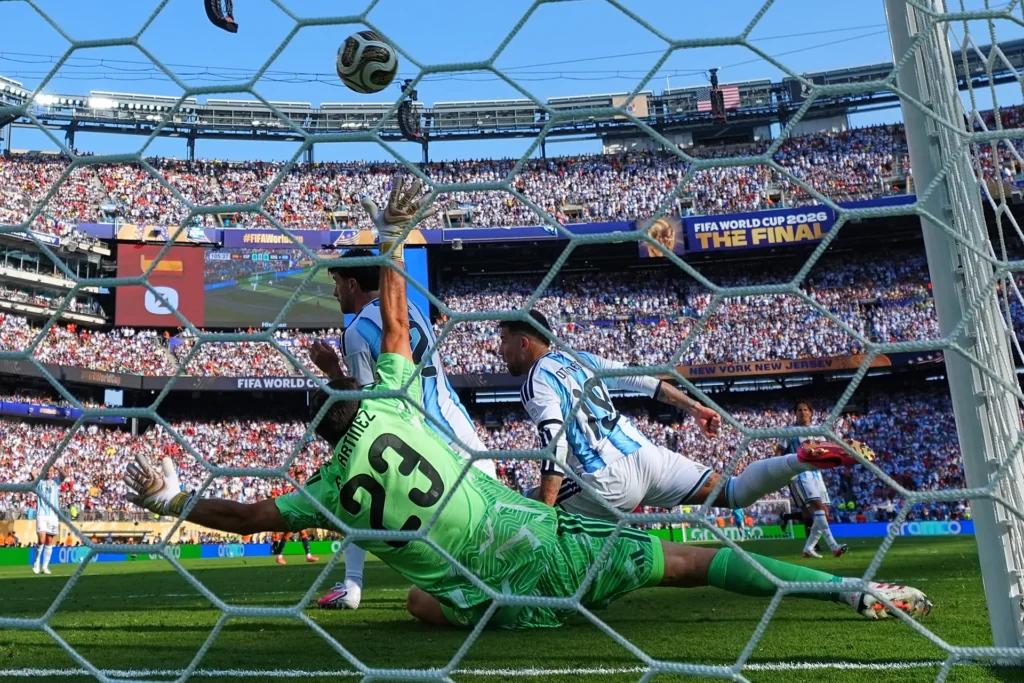
Spain continued searching for the opening goal. Oyarzabal directed a shot toward Martínez, while Cucurella sent a powerful attempt narrowly wide.
Argentina reached halftime without conceding but created little danger beyond isolated movements from Messi and Álvarez. The score remained 0-0, although the balance of possession and opportunities favored Spain.
Lionel Scaloni introduced Leandro Paredes after the break to increase Argentina’s intensity in midfield. The substitute was quickly booked following an off-the-ball incident involving Rodri and participated in several confrontations during a tense second half.
Spain maintained its structure and continued generating opportunities. Baena attempted a long-range shot, Yamal struck a free kick into the defensive wall and Olmo forced Martínez into another difficult intervention.
The Argentine goalkeeper became the central figure in his team’s resistance. His positioning and reactions repeatedly denied Spain as De la Fuente’s players accumulated corners, crosses and shots around the penalty area.
The Spanish coach responded to the physical demands by introducing Pedri and Ferran Torres. Nico Williams and Mikel Merino entered later, providing additional movement and strength against a tiring opponent.
Scaloni countered with Nahuel Molina, Facundo Medina and Giuliano Simeone, seeking greater defensive energy and an opportunity to attack the spaces left by Spain.
Those spaces rarely appeared. Pau Cubarsí and Aymeric Laporte controlled the central defensive zone, preventing Messi and Álvarez from receiving the ball close to Simón’s goal.
Torres tested Martínez with a header during the final phase of regulation time. Pedri, Cubarsí and Laporte also came close as Spain intensified its pressure.
Argentina’s resistance became even more difficult when Enzo Fernández was sent off during stoppage time after receiving a second yellow card for a severe challenge on Cubarsí.
Yamal nearly decided the match with the last major opportunity before extra time. His free kick from the edge of the area was directed toward goal, but Martínez produced another outstanding save.
Spain entered extra time with a numerical advantage and continued attacking. Nico Williams saw a header stopped, while two additional Spanish efforts were disallowed following video review.
The valid breakthrough arrived in the 106th minute. Torres attacked the decisive space inside the area and completed the combination created by Porro and Williams, sending Spain into the lead.
Argentina abandoned its defensive posture during the final minutes and moved forward in search of an equalizer. Marcos Senesi and Giuliano Simeone produced late opportunities, but Simón protected the advantage until the final whistle.
The result ended Argentina’s attempt to win consecutive World Cups and denied Messi another championship at the highest level. The captain remained a central offensive reference, but Spain’s organization prevented him from controlling the final.
For Torres, the goal represents the defining moment of his international career. He began the match among the substitutes and entered during the second half before scoring the goal that separated the two teams.
Martínez’s performance delayed Spain’s celebration and kept Argentina competitive far beyond regulation time. Without his interventions, the final could have been decided considerably earlier.
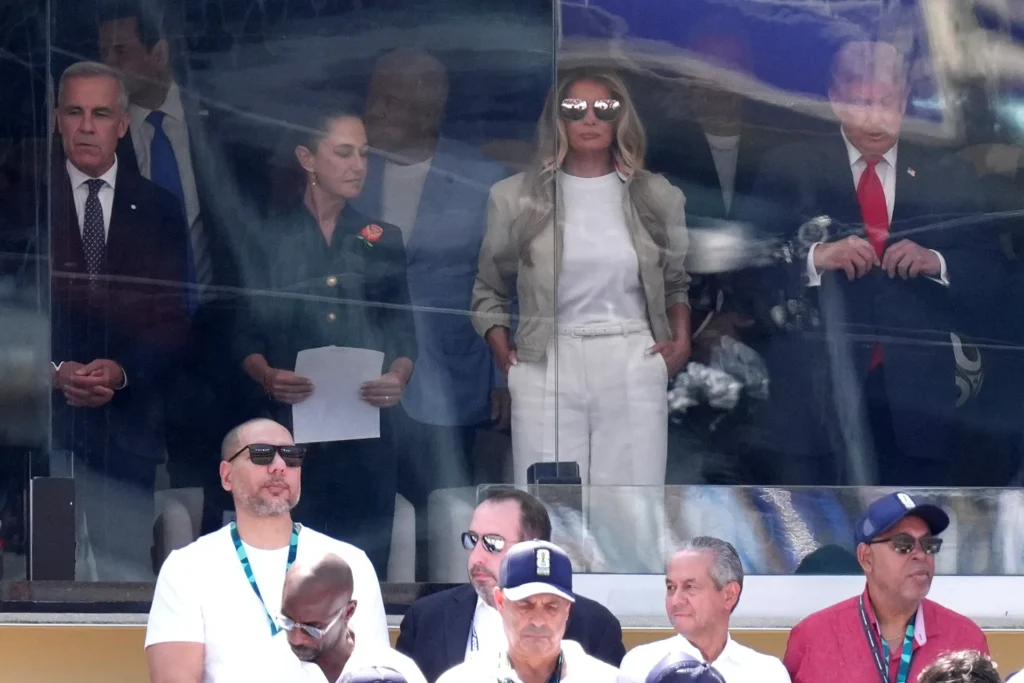
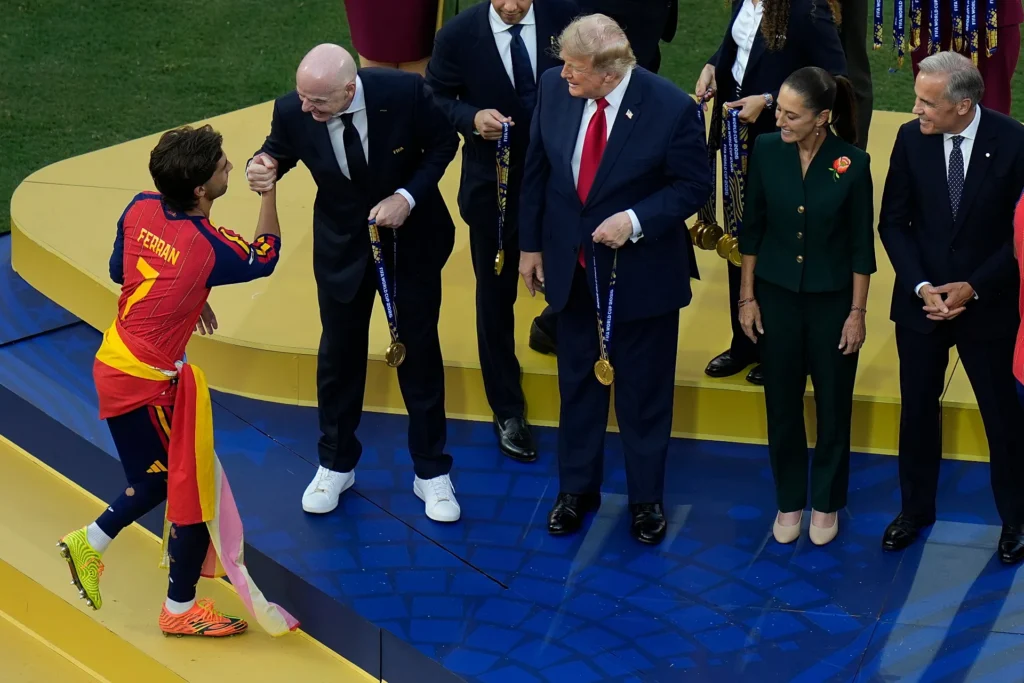
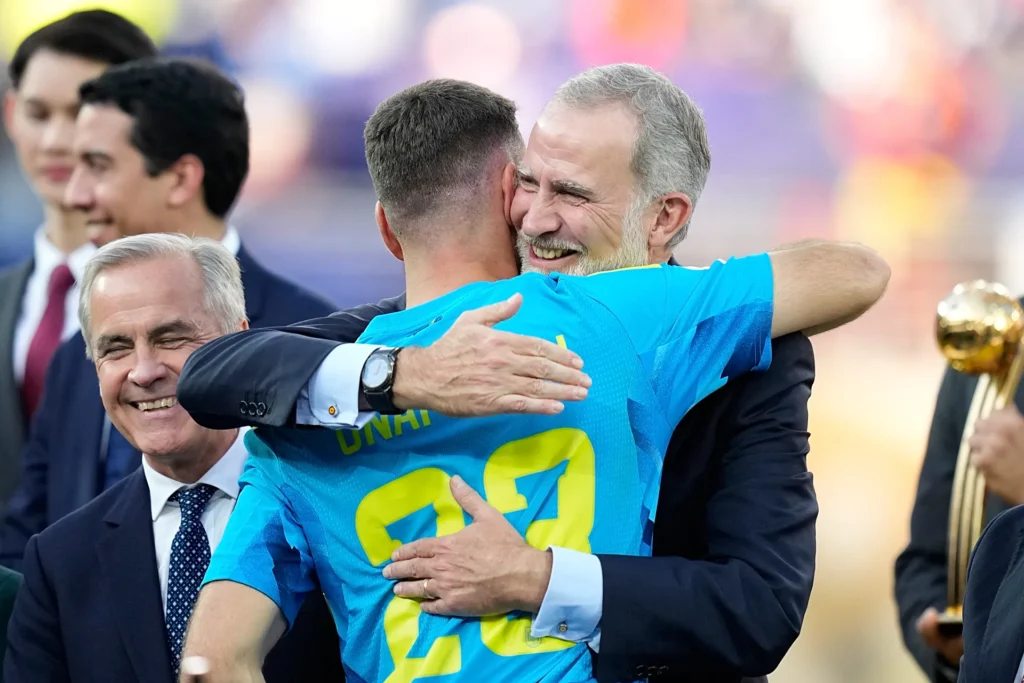
The match attracted 80,663 spectators to MetLife Stadium. Political and sporting figures present included Spanish Prime Minister Pedro Sánchez, United States President Donald Trump, FIFA President Gianni Infantino, Princess Leonor and Infanta Sofía.
Thousands more followed the final from public screens in Madrid’s Plaza de Colón and around the Obelisk in Buenos Aires, turning the match into a shared national event on both sides of the Atlantic.
Spain’s championship confirms the emergence of a generation combining experienced leaders with players including Yamal, Cubarsí, Nico Williams and Pedri. Their youth gives the national team the possibility of remaining competitive well beyond this tournament.
De la Fuente’s team did not win the final through one isolated moment. It controlled possession, accepted the physical confrontation and continued attacking after repeated saves and disallowed goals.
Argentina defended its title with discipline and resilience, but playing with ten men and absorbing pressure for more than 100 minutes eventually became unsustainable.
Ferran Torres provided the final action, but Spain’s second World Cup was constructed through collective patience.
Phoenix24 | History rewards the team that never stops believing. La historia recompensa al equipo que nunca deja de creer.