

 Phoenix 24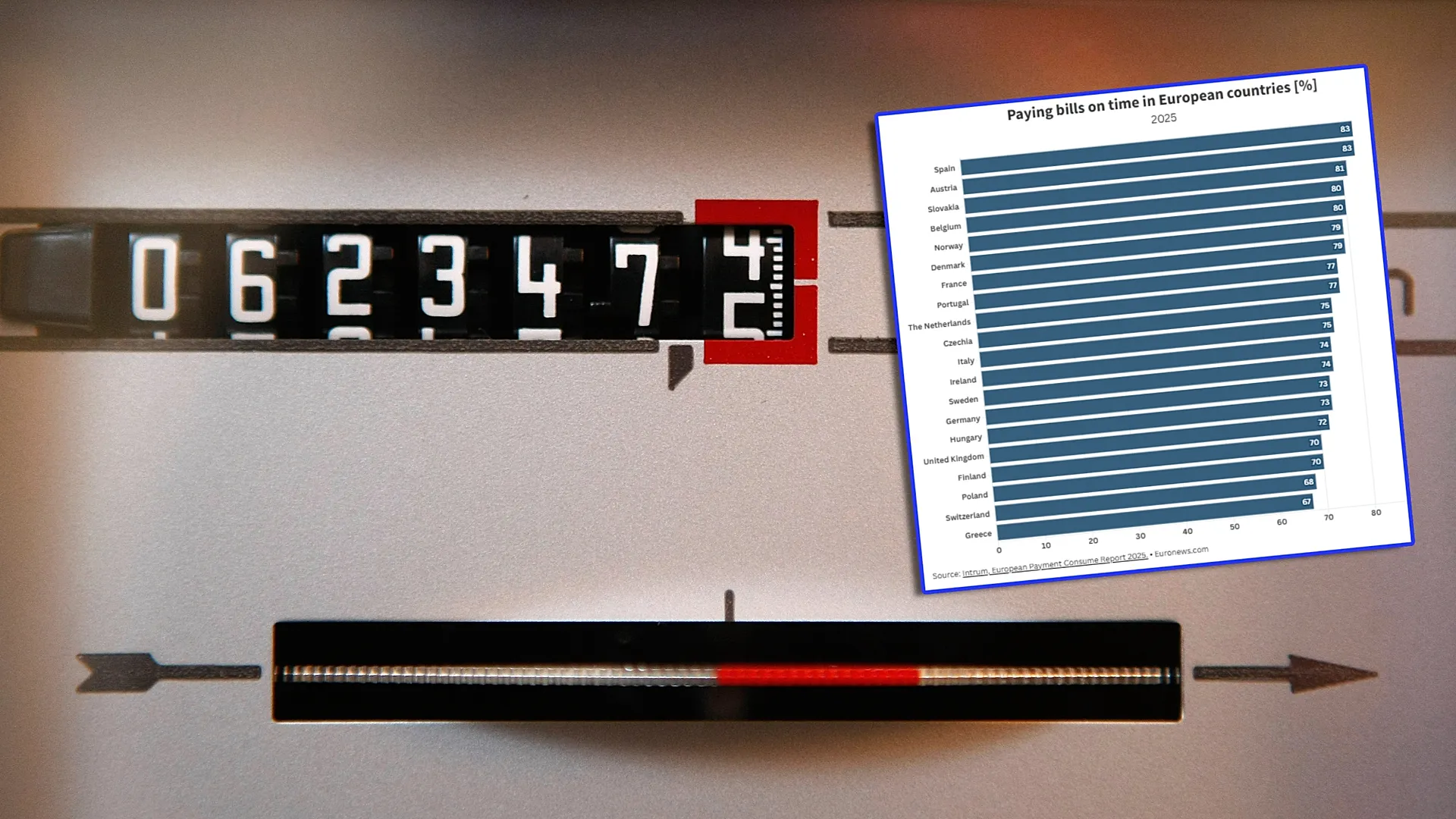
A quiet but telling indicator of financial stability has placed two countries at the forefront of Europe’s household payment behaviour.
Brussels, November 2025.
Spain and Austria emerged as the top performers in the European Union for punctual household bill payments, with eighty-three percent of families in both countries settling their obligations on time. The figure, drawn from a continental survey that tracks consumer behaviour, offers a revealing snapshot of how households navigate financial pressures, inflation cycles and shifting economic expectations across the bloc. While the percentage may appear purely technical, experts argue that punctuality in bill settlement often mirrors the deeper resilience of domestic economies and the cultural predispositions that shape financial responsibility.
In Spain, the result stands out after years of fluctuations linked to wage stagnation, regional disparities and the lingering aftershocks of prior economic crises. Analysts inside European economic institutes noted that improved energy pricing, targeted subsidies and labour-market adjustments helped stabilize monthly household finances. Social researchers highlighted that Spanish households have long been characterized by a strong culture of prioritizing essential payments, even during periods of hardship, ensuring that utilities, rent and core services remain at the top of the expenditure hierarchy. This behavioural consistency appears to have strengthened over the past year, suggesting that families responded to economic uncertainty with greater discipline rather than withdrawal.
Austria’s performance reflects a different set of dynamics. The country’s households have maintained historically high levels of payment reliability, buoyed by stable employment, predictable income flows and a welfare architecture that cushions volatility. Economic analysts indicated that early interventions in energy support schemes and inflation mitigation measures helped shield Austrian families from the stressors that unsettled other parts of the EU. Cultural norms emphasizing order, compliance and financial planning also contribute to a landscape where punctual bill payment is not only expected but institutionalized at multiple layers of society.
By contrast, several countries in eastern and southern Europe reported declining punctuality rates as inflation, rising service costs and stagnant wages strained domestic budgets. Economic experts from pan-European monitoring bodies warned that late payments often precede broader financial stress, potentially affecting both consumer confidence and small service providers who rely heavily on timely settlements. Such disparities across the bloc underscore the uneven impact of recent monetary and energy-market shocks, revealing fault lines that national governments must now navigate as they craft fiscal policy for the coming year.
The European Commission has tracked household payment reliability as part of its broader evaluation of consumer resilience, arguing that the metric offers predictive insight into how families manage liquidity pressures. According to Commission analysts, punctuality tends to correlate with structural factors such as wage stability, access to social safety nets and trust in public institutions. Spain’s upward movement and Austria’s maintained leadership therefore signal not only financial capability but a reinforced social contract between households and essential service providers.
Financial behaviour also interacts with political sentiment. In both Spain and Austria, rising dissatisfaction earlier in the year over energy prices and inflation had threatened to erode public confidence. The new data suggests that households have adapted more effectively than anticipated, cushioning potential political backlash and providing governments with a narrative of resilience ahead of upcoming budget debates. Critics, however, caution that punctual payments may mask deeper strain, as families often prioritize essential bills at the expense of discretionary spending, savings or long-term investment capacity.
For businesses operating across the EU, the results hold additional relevance. Utilities, telecom providers and housing markets view punctuality as a critical factor for cash-flow planning and risk assessment. Spain’s improvement reduces exposure for service providers historically accustomed to higher levels of payment variability, while Austria’s continued reliability reinforces its reputation as one of Europe’s most predictable markets. Cross-border companies closely monitor these trends to adjust pricing models, credit rules and customer-service strategies.
Ultimately, the leadership of Spain and Austria in bill payment punctuality offers more than a headline statistic. It illustrates how household discipline, policy interventions and cultural norms converge to produce stability in an era marked by economic uncertainty. It also highlights the varying degrees of resilience across the EU, drawing attention to the structural adjustments needed to ensure that every member state can strengthen its capacity to withstand financial shocks. As Europe prepares for another cycle of fiscal debate and energy-market recalibration, the behaviour of its households remains a crucial but often overlooked driver of economic confidence.
Truth is structure, not noise. / La verdad es estructura, no ruido.