

 Phoenix 24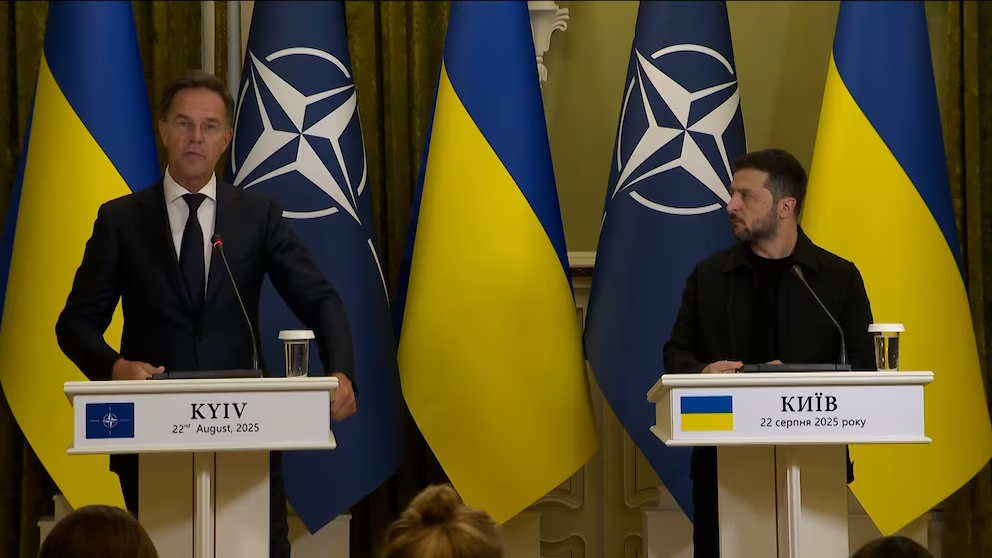
Ukraine seeks durable defense architecture as the war’s trajectory remains uncertain.
Kyiv, August 2025.
On a visit to the Ukrainian capital, NATO Secretary General Mark Rutte underscored that the time has come for guarantees that move beyond rhetoric. Standing beside President Volodímir Zelenskyy, he described negotiations for a layered security framework: first, a commitment to strengthen Ukraine’s armed forces so that they can defend sovereignty after any settlement; second, binding pledges from the United States and Europe that any renewed Russian assault would be met with immediate consequences. He insisted these guarantees must be robust enough to ensure that Moscow cannot gamble on future aggression.
The message reflects NATO’s attempt to anchor words in action. European leaders have long debated whether symbolic promises eroded credibility during earlier stages of the conflict. Now, officials in Brussels stress that Ukraine requires architecture that cannot be easily reversed by electoral cycles or shifting political winds. Washington, while supporting the principle, remains cautious about committing troops directly, favoring instead frameworks that mirror Article 5–style assurances through long-term training, weapons transfers, intelligence sharing and deterrent deployments.
Fresh contributions are beginning to materialize. Estonia announced its readiness to send a company of peacekeepers should an agreement permit, a symbolic but significant step in showing that smaller allies are prepared to assume visible responsibility. Analysts in Europe interpreted this move as part of a new “coalition of the willing,” a mechanism designed to distribute commitments among states that can contribute troops, logistics or financial backing. In Asia, security experts have pointed out that such visible contributions send signals well beyond the region, demonstrating that collective defense is not confined to the North Atlantic. In the Americas, think tanks warn that if material guarantees do not arrive quickly, Ukraine risks negotiating from weakness and Western credibility may erode.
The debate has roots in the history of failed assurances. The 1994 Budapest Memorandum, which promised security in exchange for Ukraine’s nuclear disarmament, collapsed under the weight of Russian violations. For policymakers in Kyiv, that experience is the clearest lesson: guarantees written on paper but unenforced in practice are no guarantees at all. This time, Ukrainian officials argue, the structures must be tangible, enforceable, and operational.
Regional perspectives converge but highlight different angles. In Europe, diplomats frame the guarantees as essential to ensuring that Russian influence does not again destabilize the continent’s east. In Asia, commentators emphasize that credibility in Ukraine reverberates into security calculations in Taiwan, the South China Sea and the wider Indo-Pacific. In the United States and Latin America, attention falls on whether sustained aid can survive domestic debates, particularly as electoral politics intensify in Washington.
The challenges are evident. Disagreements among allies over the scale of troop contributions, command arrangements and financial distribution could slow the process. Moscow, for its part, has already dismissed the concept of NATO-Ukraine security guarantees as illegitimate, warning that any such move represents an escalation. Yet, observers note that such statements are consistent with a broader Russian strategy of framing defensive moves as provocations.
Looking to the months ahead, three trajectories appear plausible. Continuity would involve NATO and allied states finalizing frameworks that provide Ukraine with sustained training, equipment and oversight, allowing Kyiv to maintain deterrence without igniting a wider conflict. Disruption could arise from an incident—whether accidental or deliberate—that turns limited clashes into renewed large-scale hostilities, undermining the fragile path toward stabilization. A bifurcation might emerge if some European and global partners embrace formal guarantees while others hesitate, leaving Ukraine supported by a coalition of committed allies but without the unanimity that once defined NATO’s stance.
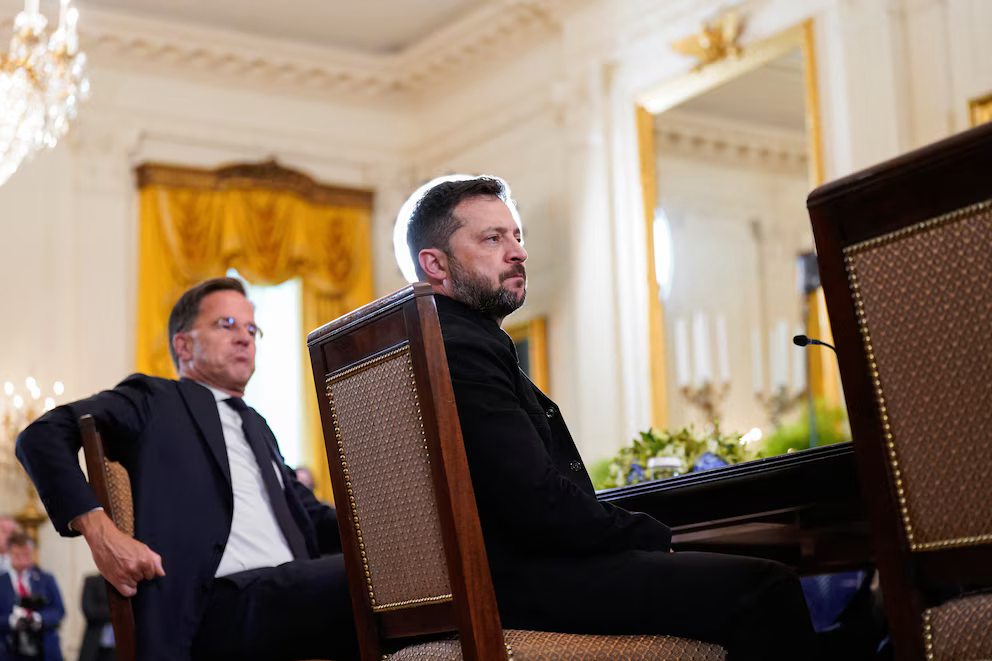
In practical terms, Ukraine is moving from the rhetoric of solidarity to the architecture of resilience. The NATO Security Assistance and Training for Ukraine command, launched earlier in the year, already coordinates deliveries and instruction. The expansion of multinational support through summits in London and The Hague has lifted defense budgets and aligned strategies. What remains is the consolidation of those strands into a single shield, credible enough to prevent Moscow from testing the limits again.
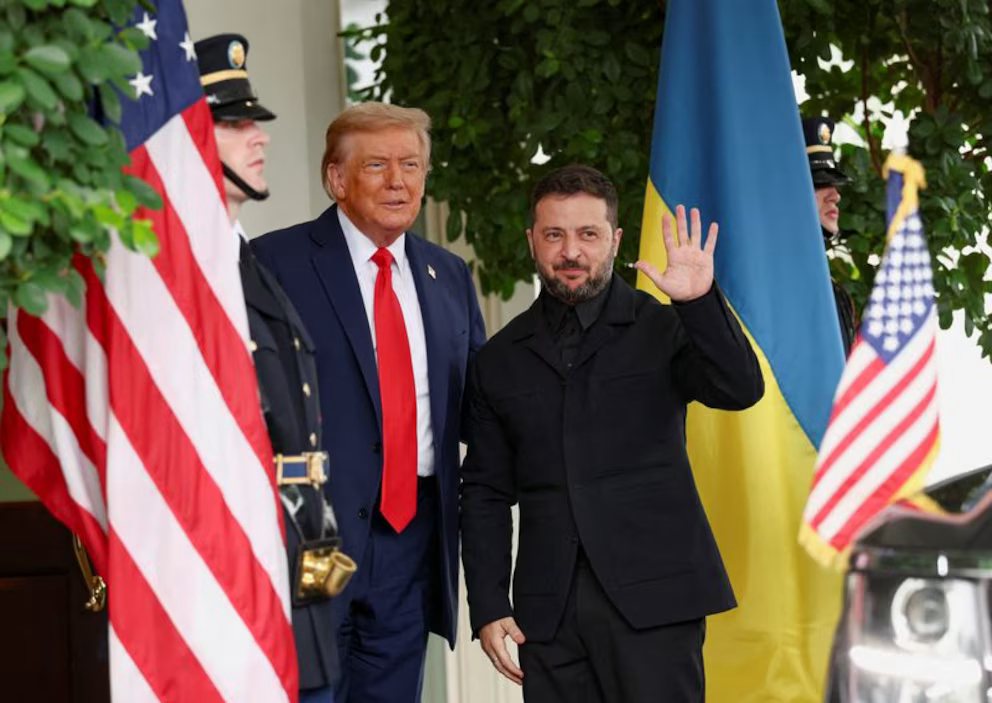
The encounter in Kyiv encapsulates more than a diplomatic announcement. It reflects Ukraine’s transformation from being merely the frontline of Western declarations to a state demanding an anchored security design. For NATO, the stakes are equally high: proving that promises can be translated into enforceable protection, and that credibility can withstand both political shifts and Russian pressure. Whether through continuity, disruption or bifurcation, the decisions taken now will determine if Ukraine emerges from war as a sovereign state secured by international commitments, or if it remains vulnerable to cycles of aggression and negotiation.
Facts that do not bend.
Facts that do not bend.