

 Phoenix 24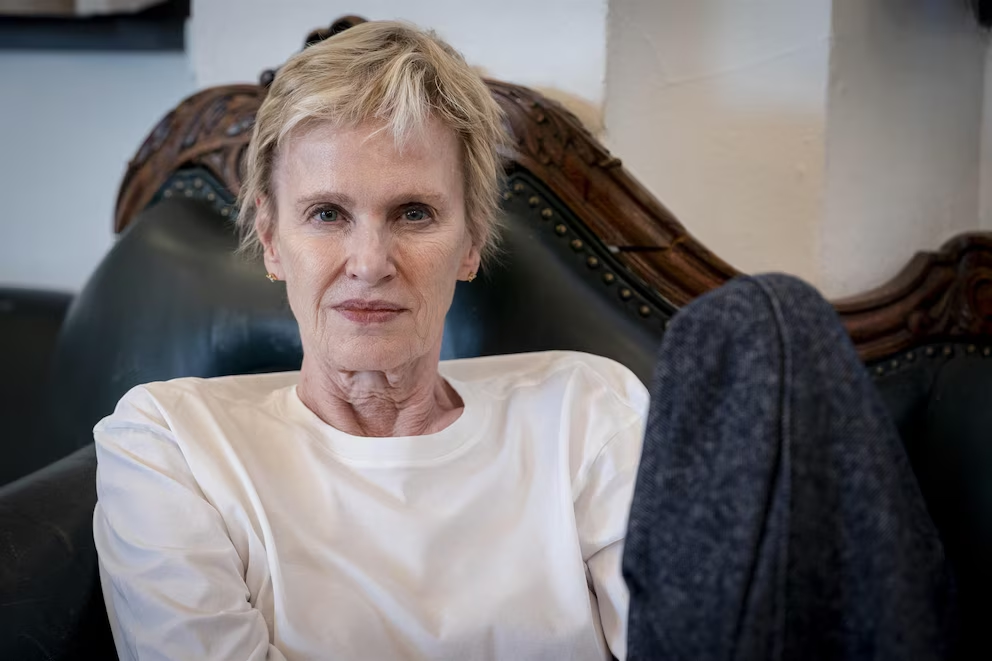
Love can also become literary testimony.
New York, May 2026. Siri Hustvedt spoke about Paul Auster from a place where grief, memory and intellectual companionship remain inseparable. Her reflection presents Auster not only as a major figure of contemporary literature, but as a partner who understood the misogyny she faced in cultural and literary spaces.
Hustvedt described Auster as a committed feminist because he recognized the unequal treatment directed at her. That statement matters because it moves the conversation beyond biography and into the hidden structures of literary prestige, where women writers have often been read through suspicion, condescension or comparison rather than through the autonomy of their own work.
The testimony also reveals the private dimension of public authorship. Behind two literary careers stood a long dialogue about writing, illness, recognition, gender and the emotional cost of intellectual life. In that sense, Hustvedt’s words do not reduce Auster to a supportive figure; they illuminate the shared moral terrain from which both writers observed the world.
Auster’s legacy has often been framed through chance, identity, solitude and the architecture of narrative. Hustvedt’s reflection adds another layer: the ethical gaze of someone who saw how literary culture distributes authority unevenly. That perspective does not replace his work, but it complicates the memory surrounding it.
The interview becomes more than a tribute. It is a reminder that literary history is also built through domestic witnesses, emotional archives and the voices of those who saw what institutions preferred not to name. In Hustvedt’s account, love does not soften criticism; it sharpens it.
Cada silencio habla. / Every silence speaks.