

 Phoenix 24
Celebrity reinvention now begins with direct control.
Los Angeles, April 2026. Shannon Elizabeth, remembered globally for her role in American Pie, has opened a new chapter in her public career by moving into a subscription-based content platform that allows her to manage image, distribution and audience access on her own terms. The decision is more than a personal pivot. It reflects a broader transformation in entertainment, where legacy figures from the studio era are increasingly seeking direct control over how they are seen, monetized and reintroduced to the public. What matters here is not only the platform itself, but the strategic redefinition of visibility.
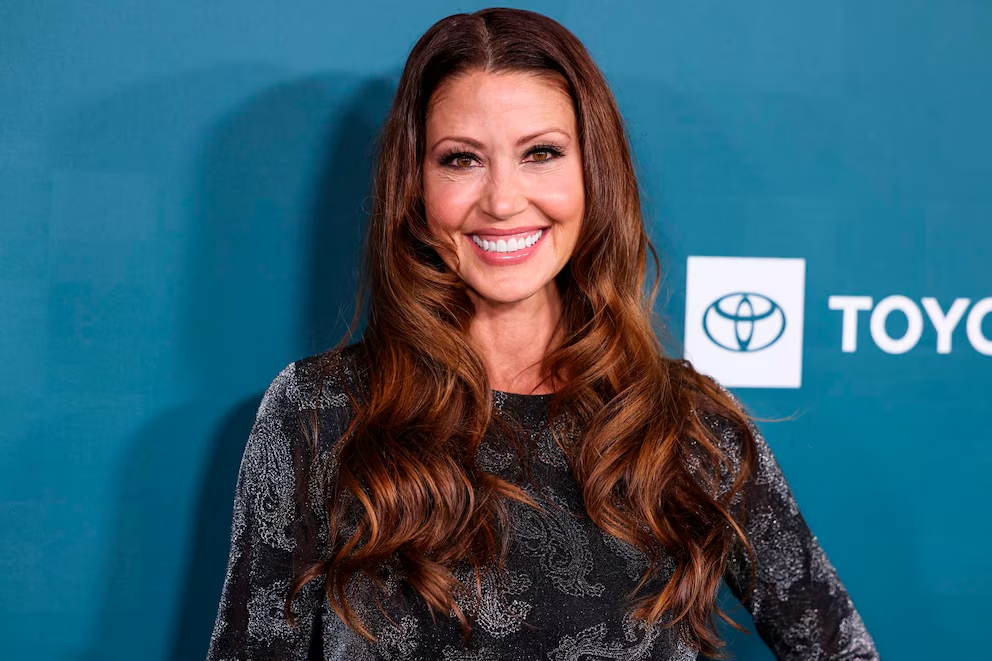
Elizabeth’s move carries symbolic force because her public identity was shaped early by a role that turned her into one of the most recognizable sensual icons of late 1990s popular culture. For years, that image functioned as both asset and confinement. It gave her lasting recognition, but it also reduced public perception of her to a narrow frame built by Hollywood rather than by her own evolving sense of self. By stepping into a space where presentation is self-managed, she is not simply returning to public view. She is renegotiating the meaning of a persona long filtered through the expectations of others.

That shift reflects a deeper industry pattern. Traditional entertainment once relied on studios, producers, magazines and television networks to mediate the relationship between celebrities and audiences. Today, digital platforms allow performers to bypass those structures and build direct channels of attention, revenue and identity. In that model, the celebrity is no longer just talent within a machine. She becomes the manager of her own narrative architecture. That change can be financially attractive, but it is also culturally significant because it alters who holds power over image itself.

The move also highlights an unresolved tension between agency and expectation. A star associated for decades with a sexually charged public image may seek autonomy through self-directed exposure, but that autonomy still unfolds within an audience economy shaped by the same desire that helped construct the original stereotype. In other words, reclaiming control does not erase the gaze. It reorganizes the terms under which the gaze operates. That is what makes this kind of reinvention more complex than a simple empowerment narrative.
There is also a generational dimension beneath the story. For performers who emerged in earlier media eras, digital platforms now offer a second life outside the traditional structures that once defined career relevance. They create room for reinvention, direct monetization and more flexible forms of public engagement. At the same time, they demand continuous self-curation and a willingness to convert personal identity into ongoing content. Freedom grows, but so does the burden of constant visibility. What was once delegated to managers, publicists and studios now falls more directly on the individual.
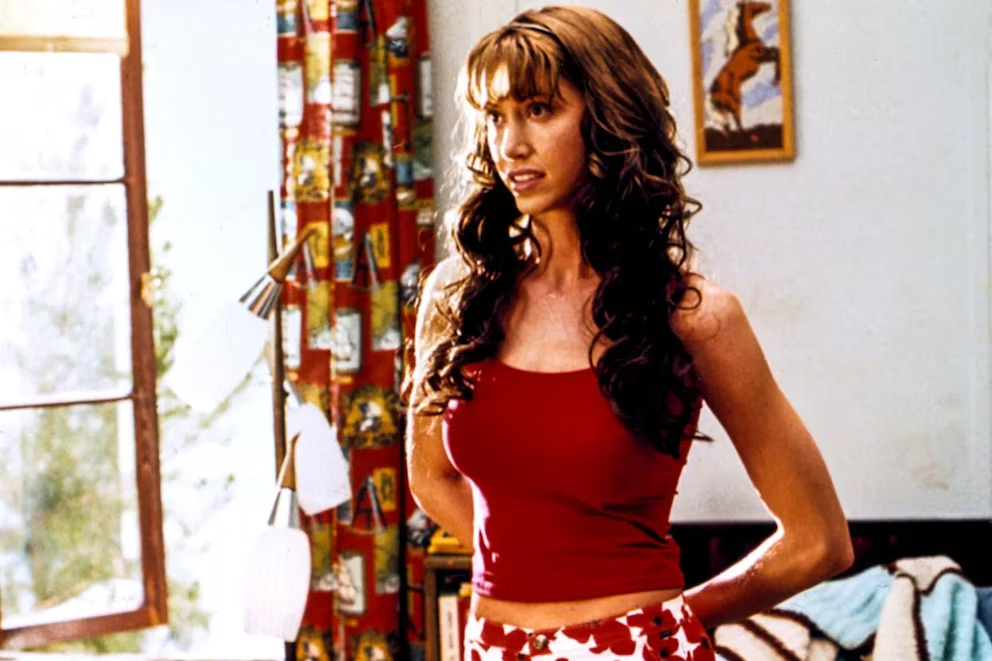
Elizabeth’s decision can therefore be read as part of a wider shift in celebrity culture rather than as an isolated entertainment headline. Public figures are increasingly moving from institutional fame to platform-based presence, where control, intimacy and commercial strategy converge. The old model turned stars into distant icons mediated by industry gatekeepers. The new one invites them to become active operators of their own image economy. That transition changes not only how careers are sustained, but how fame itself is structured.

What makes the moment especially revealing is that it exposes the changing relationship between legacy and reinvention. Elizabeth is not abandoning the image that made her famous. She is re-entering it from a different position of authority. The past remains present, but the mechanism of control is shifting. That is the real story beneath the headline. In a media environment defined by fragmentation and direct engagement, survival no longer depends only on remaining recognizable. It depends on learning how to own recognition without being trapped by it.

Seen in that light, her move is not merely a personal or provocative career choice. It is part of a larger realignment in which performers from older entertainment systems are adapting to a world where visibility is self-managed, identity is continuously negotiated and relevance can be rebuilt outside the institutions that once monopolized cultural power. Shannon Elizabeth’s latest step belongs to that new terrain, where image is no longer simply inherited from the screen. It is strategically reconstructed in public.
Beyond the news, the pattern. / Beyond the news, the pattern.