

 Phoenix 24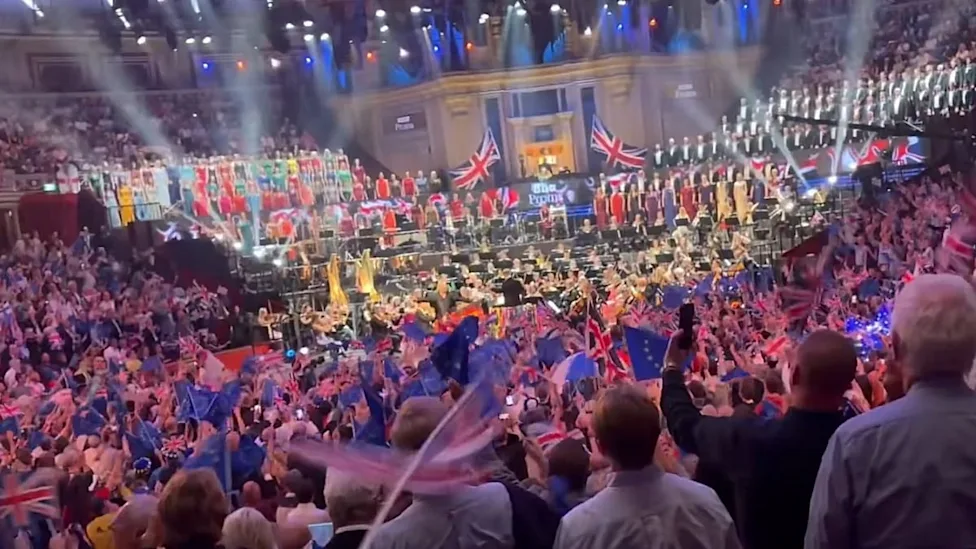
A musical tradition once again became a stage for competing ideas of British identity.
LONDON, UNITED KINGDOM
Thousands of European Union flags filled the Royal Albert Hall during the Last Night of the Proms, appearing at moments to outnumber the traditional Union Jacks as the audience accompanied some of Britain’s best-known patriotic songs.
The display was particularly visible during performances of Rule, Britannia!, Jerusalem and Land of Hope and Glory. Images circulated rapidly online, prompting renewed debate over whether the flags represented European solidarity, dissatisfaction with Brexit or the inappropriate politicization of a cultural event.
The initiative traces its origins to the 2016 referendum, when the pro-European group Thank EU for the Music began distributing flags outside Proms venues. Its organizers argue that British patriotism and European identity are compatible, emphasizing the international nature of orchestras, composers and musical collaboration.
Critics maintain that the campaign attempts to transform a British celebration into a political demonstration. Supporters respond that the Proms has always featured flags from many countries and that the presence of EU symbols reflects the transnational character of classical music. No verified count established that EU flags definitively exceeded British ones, although the visual impression was striking.
The 2026 finale combined established tradition with a diverse programme that included a tribute to Dolly Parton and performances by internationally renowned musicians. Yet the flags became one of the evening’s most discussed elements, demonstrating that Britain’s withdrawal from the European Union continues to shape cultural identity long after the formal political process ended.
A flag can mark a border, but culture rarely remains inside it.