

 Phoenix 24
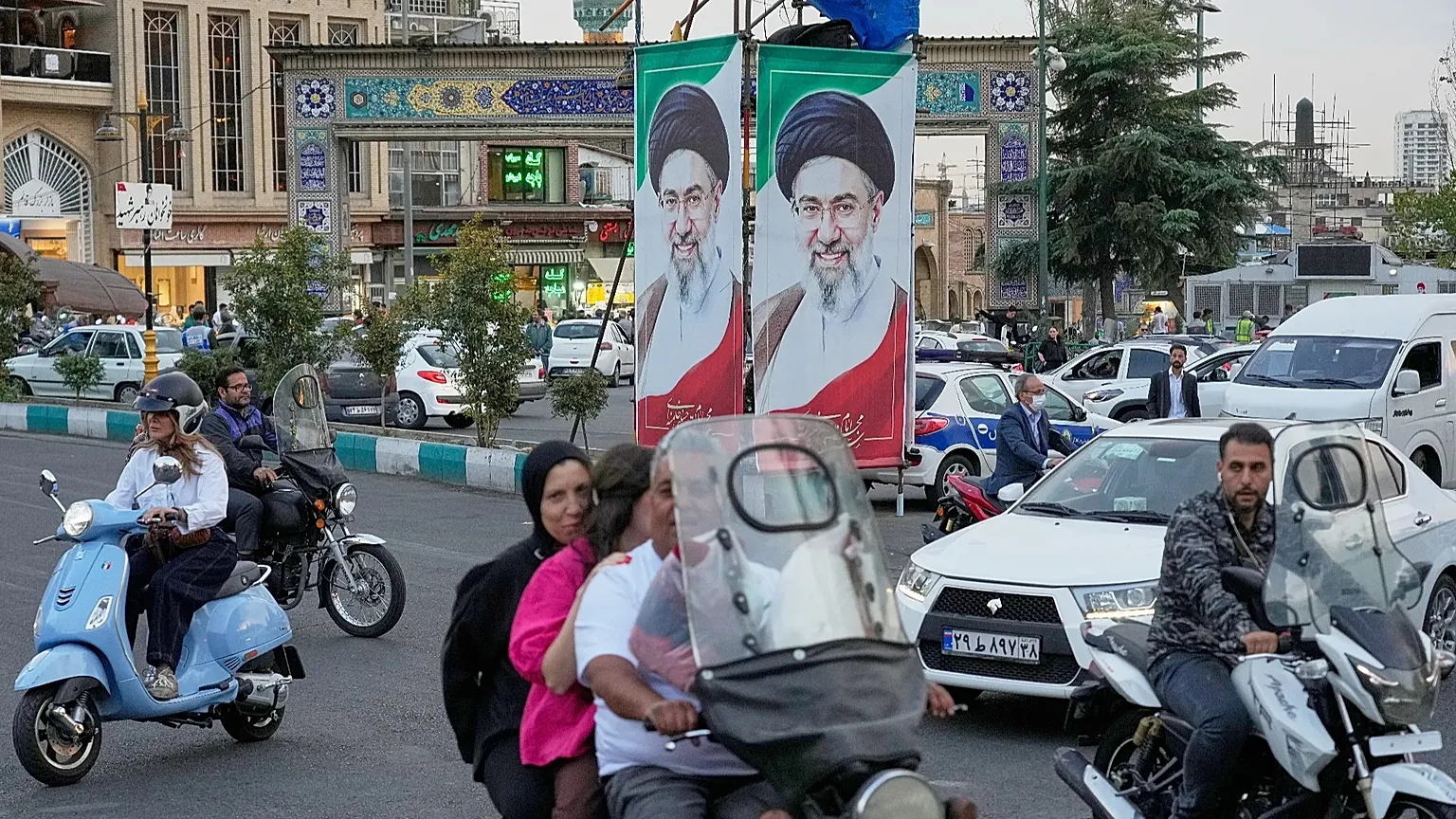
TEHRAN, IRAN — November 1, 2026. Iran has warned that any renewed military attack by the United States or Israel would trigger an immediate and potentially far-reaching response, raising concerns about another escalation in a conflict that has already destabilized the Middle East and disrupted international energy markets. Supreme Leader Ayatollah Mojtaba Khamenei instructed senior military commanders to prepare for additional hostilities and update their list of potential targets, while Iranian diplomats simultaneously pursued negotiations mediated by Qatar. The conflicting signals of military confrontation and diplomatic engagement come just days before the November 3 U.S. midterm elections, with President Donald Trump’s administration considering its next steps toward Tehran.
According to Iran’s official IRNA news agency, Khamenei met with the country’s senior military leadership on October 31 and demanded heightened operational readiness against the possibility of renewed American and Israeli strikes. He warned that future threats should receive an immediate and substantial response without geographical restrictions, suggesting that Iranian retaliation might extend beyond the Middle East. Iranian state media also reported instructions to expand the list of potential American and Israeli targets to include physical and nonphysical assets, a formulation that could encompass military infrastructure and other strategic interests. However, the statement did not identify specific locations or establish that attacks against targets in Europe or the South Caucasus had been authorized, making it essential to distinguish the breadth of the warning from confirmed military plans.
The announcement followed months of confrontation triggered by American and Israeli strikes against Iran on February 28, which killed former Supreme Leader Ali Khamenei and brought his son, Mojtaba Khamenei, to power. The subsequent conflict involved Iranian retaliation, attacks affecting military facilities across the region and major disruptions to commercial navigation through the Strait of Hormuz. Although diplomatic initiatives have sought to prevent renewed large-scale fighting, the possibility of additional American operations has remained a significant source of uncertainty. Washington has maintained that military options remain available, while Iranian officials have argued that further attacks would produce consequences extending beyond the immediate battlefield.
Iranian military commanders reinforced the message during their meeting with the supreme leader. Major General Ahmad Vahidi, commander of the Islamic Revolutionary Guard Corps, participated alongside senior army and general staff officials in discussions concerning military preparedness and production capacity. Iranian state media claimed that domestic weapons production had increased sevenfold, although the announcement did not provide independently verifiable figures or establish which categories of equipment were included. Analysts at the Washington-based Institute for the Study of War interpreted Khamenei’s rhetoric primarily as an attempt to discourage further American and Israeli attacks by increasing uncertainty about the potential costs of renewed confrontation.
Despite the increasingly forceful military language, Iranian officials have also acknowledged progress in diplomatic discussions involving Qatar. Foreign Minister Abbas Araghchi announced that Tehran could consider reopening the Strait of Hormuz within two days of a potential agreement, shortening an earlier proposed implementation period of seven days. Iranian representatives continued meeting Qatari mediators in Doha on November 1, following consultations in Tehran, as negotiators explored arrangements addressing the maritime dispute and wider conflict. The proposal remains conditional, and no final agreement to restore unrestricted navigation through the waterway had been announced.
The Strait of Hormuz remains one of the most consequential issues in the negotiations because of its importance to international energy transportation. Located between Iran and Oman, the maritime passage connects the Persian Gulf with the Gulf of Oman and serves as a principal export route for oil and liquefied natural gas produced by several regional economies. Disruptions to shipping can increase transportation costs, complicate energy supply arrangements and contribute to volatility in international commodity markets. Iran has previously linked reopening the passage to demands that Washington lift its blockade of Iranian ports, release frozen Iranian assets and remove restrictions on Iranian petroleum exports, while the United States has resisted accepting those conditions as presented.
A further complication concerns the terms under which commercial ships would be allowed to transit the waterway. Major General Mohsen Rezaei, secretary of Iran’s Supreme National Security Council, indicated that Tehran expects vessels to follow a route coordinated with Oman and operate under Iranian management. That position raises questions about freedom of navigation, commercial predictability and the legal arrangements governing transit through an internationally significant maritime corridor. Even if negotiations produce an initial reopening agreement, implementing a durable arrangement would require addressing security guarantees, operational procedures and the competing expectations of governments whose economic interests depend on the passage.
Diplomatic contacts have also generated conflicting interpretations concerning communications from U.S. Vice President JD Vance. Rezaei said Iranian authorities had received a letter associated with renewed negotiations and described the American tone as more constructive than before, although he emphasized that Tehran was still awaiting a satisfactory response to its conditions. President Trump had previously characterized Vance’s outreach as relating to medical supplies rather than the formal reopening of peace negotiations, illustrating the differences between publicly stated positions. Araghchi welcomed the broader willingness to communicate but indicated that direct discussions with American representatives would depend on Washington accepting Iran’s conditions, leaving the structure of future negotiations unresolved.
The timing of these developments is particularly sensitive in Washington, where the November 3 congressional elections have intensified scrutiny of foreign policy and the economic consequences of the conflict. Secretary of State Marco Rubio stated that Trump had not decided whether to authorize additional strikes against Iran and emphasized the administration’s preference for a diplomatic resolution. Nevertheless, American officials have continued discussing the possibility of further military action, while Trump has indicated that unresolved strategic targets remain under consideration. These statements demonstrate that Washington is maintaining military pressure alongside diplomatic engagement, although the existence of contingency planning does not mean that a new offensive has been ordered.
The risk of escalation extends beyond the two countries because renewed fighting could affect American military facilities, regional governments, commercial shipping and critical infrastructure across the Gulf. Iran’s warning about geographically unrestricted retaliation introduces additional uncertainty, particularly for countries hosting American forces or facilities potentially considered strategically relevant by Tehran. However, the precise scope of any future Iranian response remains unknown, and public threats should not be interpreted as evidence that specific international attacks are imminent. The combination of military preparedness, competing deterrence strategies and unresolved diplomatic demands creates conditions in which miscalculation could carry significant regional and economic consequences.
The confrontation also raises questions about nuclear policy, an enduring source of disagreement between Tehran and Washington. Rezaei stated that Iran had not decided to alter its nuclear doctrine, although he acknowledged that some domestic voices had questioned whether further attacks should prompt reconsideration. The United States has consistently maintained that preventing Iran from obtaining nuclear weapons is a central policy objective, while Iranian authorities insist that their nuclear program serves peaceful purposes. The persistence of these disagreements complicates any attempt to achieve a broader settlement, particularly when maritime security, economic sanctions and military deterrence are being negotiated simultaneously.
For Qatar, the immediate diplomatic challenge is to identify a sequence of reciprocal measures acceptable to both governments. Iran is seeking assurances and economic concessions before fully restoring maritime access, while Washington must evaluate whether proposed arrangements provide sufficient guarantees concerning navigation and regional security. A limited agreement involving the Strait of Hormuz could reduce immediate tensions without necessarily resolving the underlying nuclear and military disputes. Conversely, failure to establish credible commitments could leave both sides relying increasingly on threats intended to strengthen their negotiating positions, increasing the danger that deterrence itself becomes a source of instability.
The developments of November 1 therefore illustrate a geopolitical confrontation in which diplomacy and military pressure are advancing simultaneously rather than operating as separate alternatives. Iran is attempting to demonstrate that another attack would impose wider costs, while the United States continues exploring negotiations without abandoning the possibility of force. Qatar’s mediation has created an opportunity to address the immediate maritime crisis, but the competing conditions and absence of a finalized agreement leave the broader conflict unresolved. The decisive question is whether both governments can convert limited diplomatic progress into verifiable commitments before renewed military action transforms an already serious regional confrontation into a wider international security crisis.
Phoenix24: Beyond the headline, the geopolitical consequences. / Más allá del titular, las consecuencias geopolíticas.