

 Phoenix 24
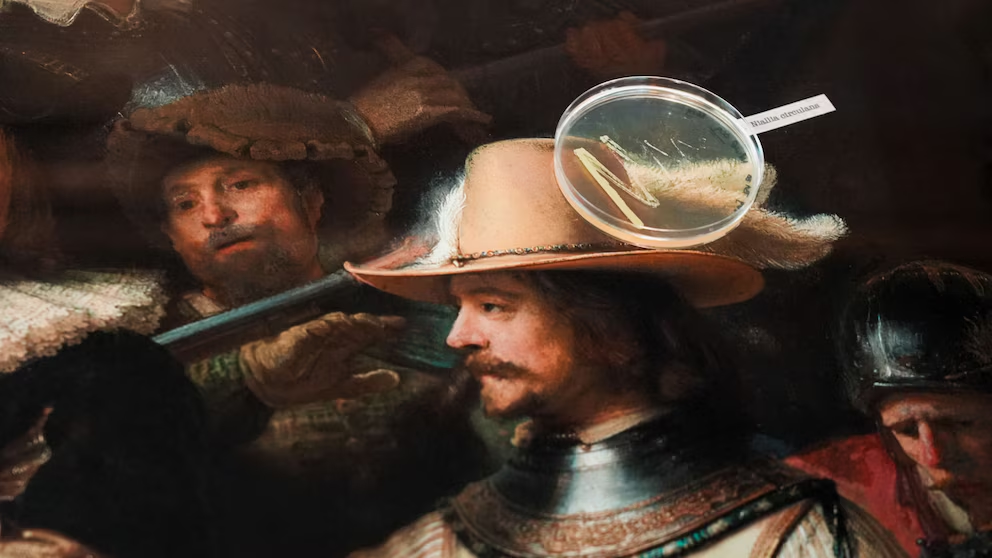
An invisible microbial world reveals new mysteries beneath a masterpiece.
AMSTERDAM, Netherlands. Scientists examining Rembrandt’s The Night Watch have discovered a surprising community of microorganisms living on the surface of the nearly 400-year-old painting, including a bacterial species first identified at a Japanese sugar refinery. The findings, presented through a collaboration between the Rijksmuseum and ARTIS-Micropia, introduce microbiology into one of the most ambitious art conservation projects ever undertaken.
The unexpected discovery involves Microbacterium saccharophilum, a bacterium first described in 2013 after being isolated from soil at a sugar refinery in Yokohama, Japan. Researchers detected the species on an area of Rembrandt’s painting where protective varnish had been removed.
Its presence remains unexplained. Scientists have not established how the microorganism reached the artwork or how long it has been there. Identifying the species does not demonstrate that it originated directly from Japan or survived on the canvas for centuries.
The investigation forms part of Operation Night Watch, an extensive scientific examination and restoration programme launched by the Rijksmuseum in 2019. The initiative combines advanced imaging, chemical analysis and conservation research to understand how Rembrandt created the monumental painting in 1642 and how its materials have changed over time.
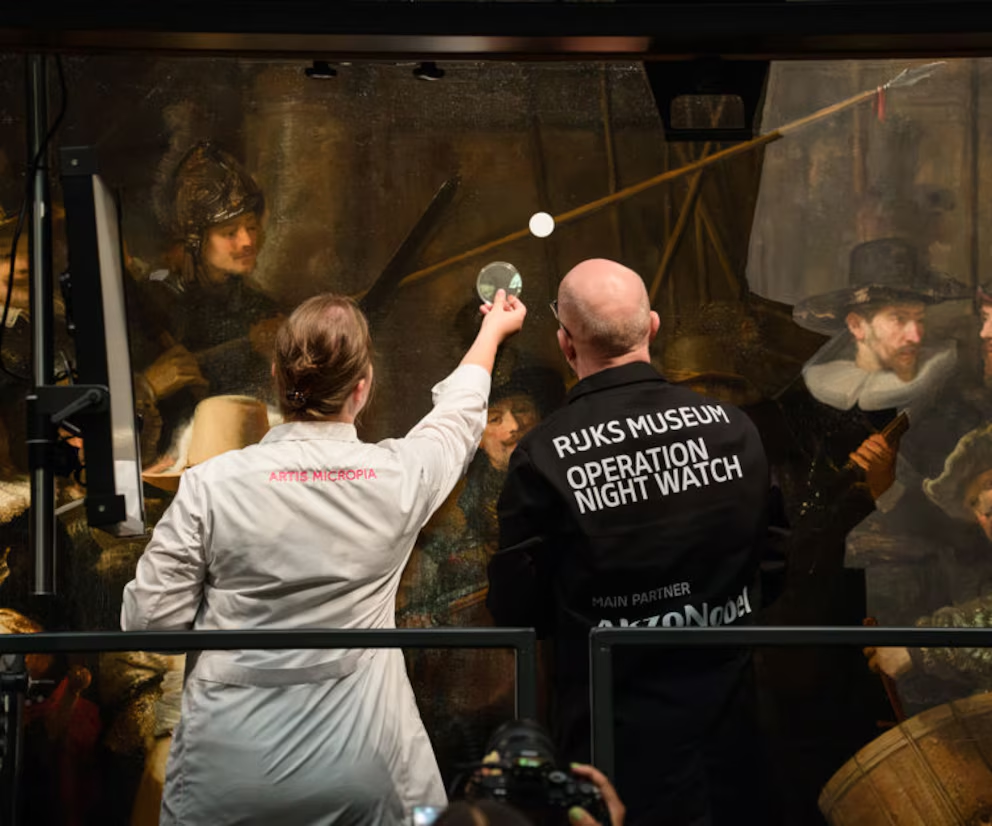
Working with ARTIS-Micropia, specialists are collecting approximately 60 samples from ten locations across the painting. Sterile cellulose discs are gently placed against selected surfaces before being transferred to laboratory culture dishes, where microorganisms can grow into observable colonies.
Early findings include Staphylococcus epidermidis and Micrococcus luteus, bacteria commonly associated with human skin, alongside microorganisms found in soil and plant environments.
Microbiologist Eline van Bloois emphasized that the organisms identified so far do not appear to threaten the painting’s conservation. Nevertheless, researchers are examining whether microbial communities might provide additional information about the artwork’s materials and environmental history.
The investigation also highlights a scientific limitation: detecting a microorganism does not establish when it arrived. Researchers cannot determine whether individual bacteria have been present for generations or were introduced recently.
Visitors can explore the findings through The Night Watch Lives, an exhibition at ARTIS-Micropia featuring a life-size reproduction of the painting and laboratory cultures displaying its microscopic inhabitants. The exhibition opened on November 11 and will continue through May 2027.
Beyond its artistic significance, the project demonstrates how microbiology can contribute to cultural heritage research. Understanding microorganisms on historic surfaces may eventually help conservators refine preservation strategies without compromising fragile materials.
For Rembrandt’s masterpiece, the discovery reveals an unexpected dimension of its existence: a painting celebrated for its extraordinary depiction of human life also supports an invisible biological community whose history scientists are only beginning to investigate.
When Evidence Speaks, Narratives Change.