

 Phoenix 24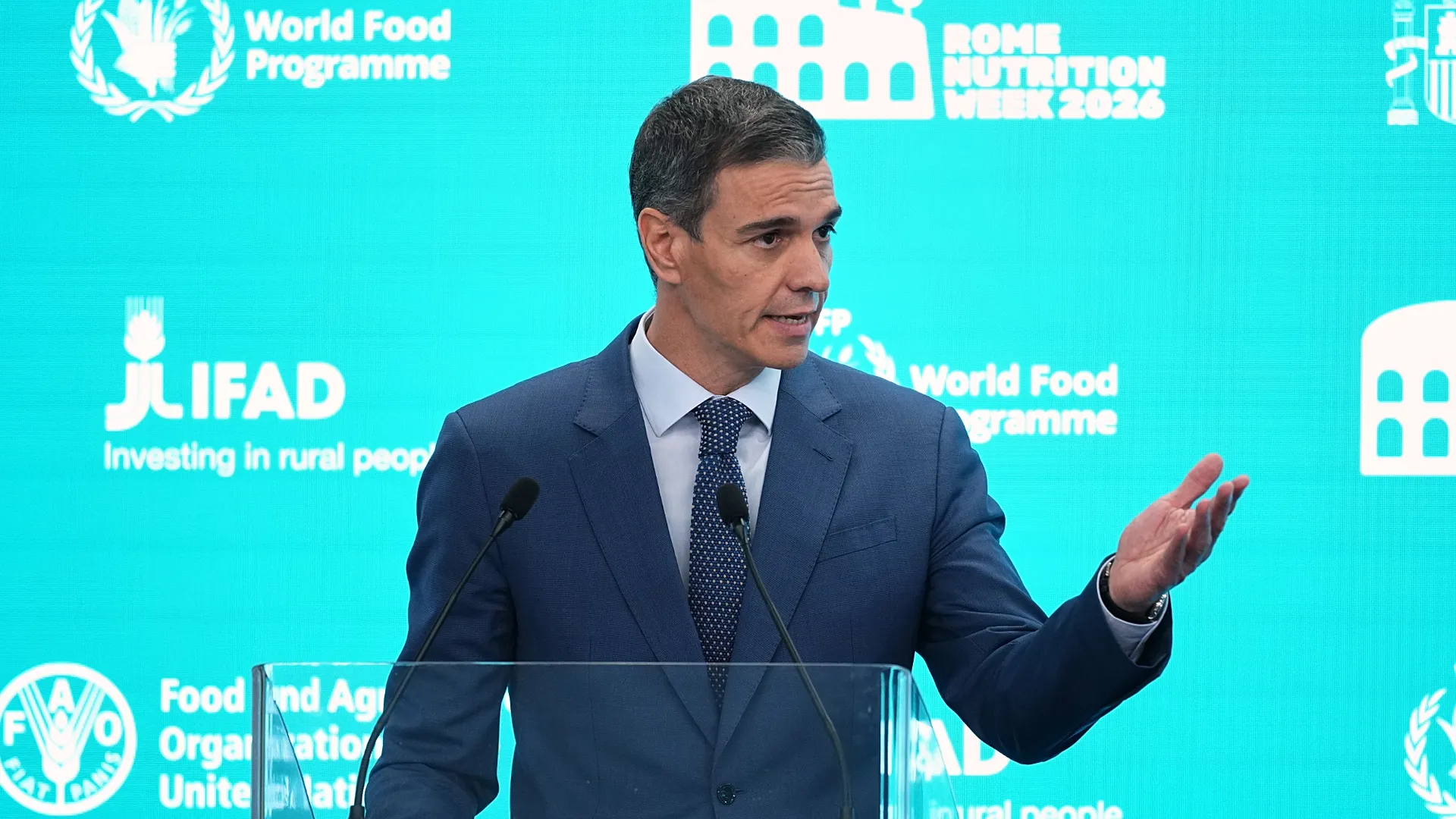
Hunger is no longer collateral damage.
Madrid, May 2026
Pedro Sánchez sharpened Spain’s diplomatic offensive by warning that famine has become a political weapon in Gaza and by condemning the treatment of activists linked to the humanitarian flotilla. His message placed Spain again at the center of Europe’s most uncomfortable debate: whether the defense of international law applies only when the aggressor is convenient, or also when the case divides the West from within.
The Spanish prime minister framed the Gaza crisis not as a distant humanitarian tragedy, but as a moral and institutional fracture for Europe. By denouncing hunger tactics and the humiliation of flotilla members, Sánchez pushed the issue beyond charity language and into the terrain of accountability. That shift matters because it challenges the European Union’s habit of speaking in legal principles while acting through diplomatic caution.
The flotilla dispute has become a symbol larger than the vessels themselves. For Israel, it represents a challenge to its blockade and security doctrine; for its critics, it exposes the criminalization of humanitarian pressure. Between those two readings, Europe is being forced to decide whether it will remain a commentator of the crisis or become a political actor willing to impose costs.
Spain’s position does not close the conflict, but it raises the price of silence. Sánchez is betting that Gaza’s hunger, the treatment of activists and the paralysis of Brussels can no longer be separated into different files. In that convergence, Europe’s credibility is not being debated in abstract language; it is being measured against bodies, borders and blocked aid.
Cada silencio habla. / Every silence speaks.