

 Phoenix 24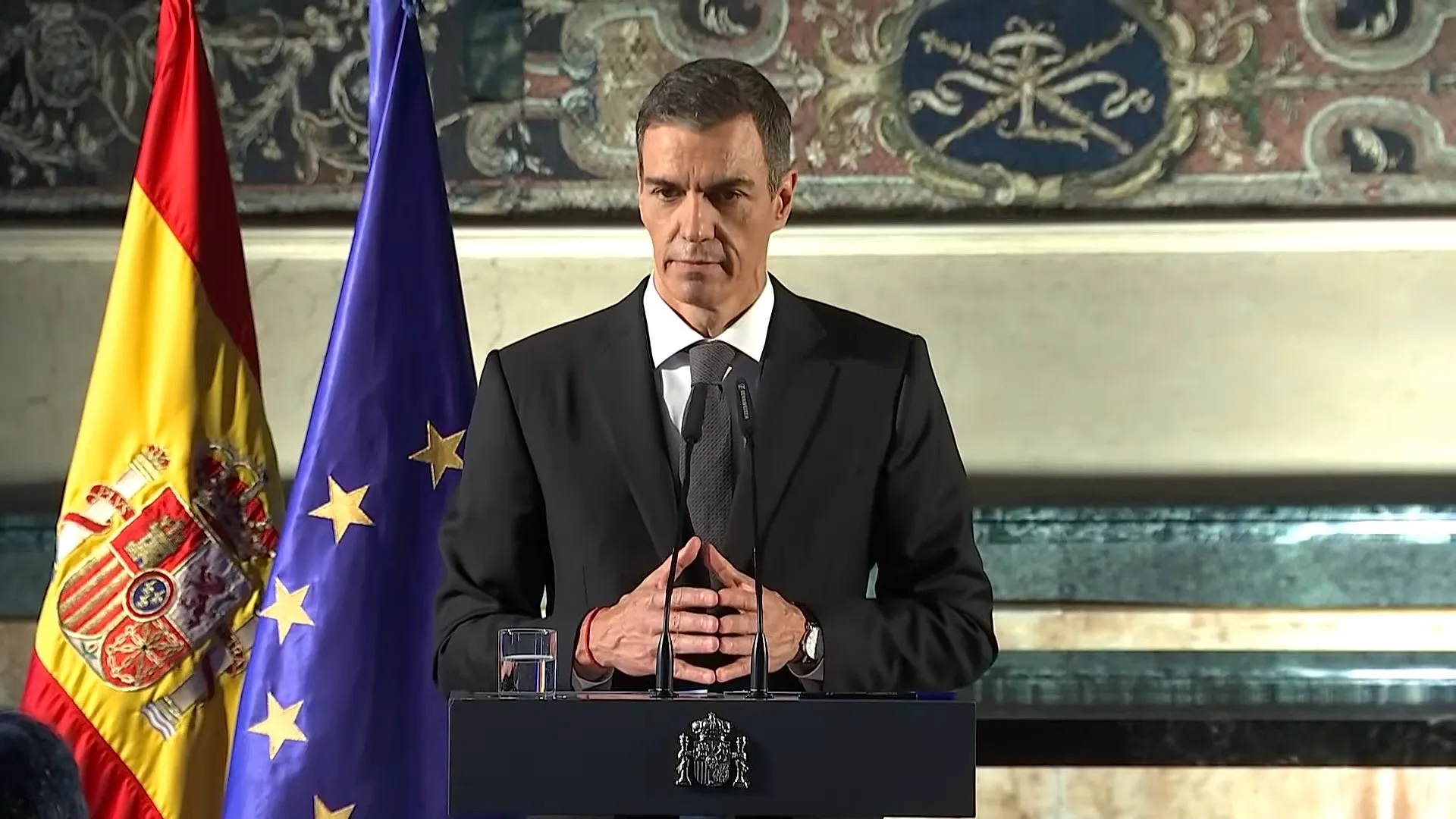
The crisis now speaks from inside the party.
Madrid, May 2026.
Pedro Sánchez tried to contain Spain’s latest political storm by invoking judicial cooperation, institutional respect and the presumption of innocence for former Prime Minister José Luis Rodríguez Zapatero. His statement came as the Civil Guard’s Central Operational Unit entered the Socialist Party headquarters in Madrid under a judicial requirement linked to alleged payments in the Leire Díez case. The timing turned a legal procedure into a political image: police inside the governing party’s nerve center while the prime minister defended one of its historic figures.
Sánchez insisted that the PSOE has nothing to hide and promised full collaboration with the courts. He also maintained his support for Zapatero, who has been implicated in a separate investigation related to the rescue of Plus Ultra, with alleged crimes including influence peddling, document falsification, money laundering and criminal organization. The legal complexity is still unfolding, but the political damage is already measurable.
The problem for Sánchez is no longer only the content of each case. It is the accumulation of simultaneous judicial fronts around his environment, his party and symbolic figures of Spanish socialism. In that atmosphere, every defense sounds institutional, but every image feels corrosive. The opposition sees a chance to frame the government as exhausted; Sánchez answers by separating investigations from his administration’s social and economic record.
Spain now enters a familiar but dangerous terrain: the space where presumption of innocence and political accountability stop moving at the same speed. Courts require time, evidence and procedure. Politics demands perception, containment and narrative control. For Sánchez, the immediate challenge is not only to survive the investigations, but to prevent the PSOE from becoming the image of the very institutional decay it says it can manage.
Cada silencio habla. / Every silence speaks.