

 Phoenix 24
Trust is becoming infrastructure.
San Francisco, March 2026
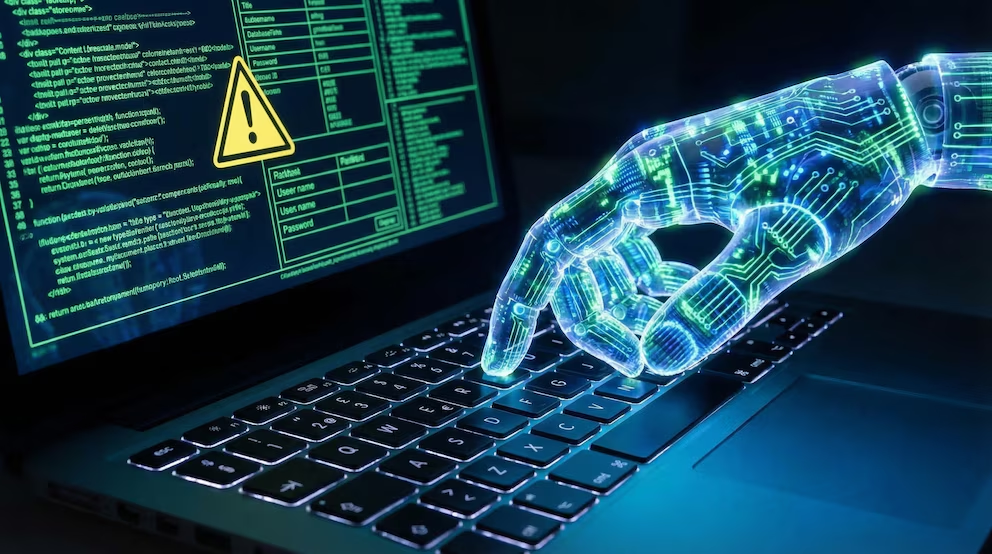
The launch of a human verification tool for purchases made through AI agents signals a deeper shift than a product update or a startup expansion. It suggests that the next major struggle in digital commerce will not be about whether agents can shop, negotiate, or execute tasks on behalf of users. That part is already moving forward. The real contest is now about trust, authorization, and proof of personhood in an online environment where software can increasingly behave like a customer. World, the identity venture co-founded by Sam Altman, has introduced AgentKit to help merchants verify that an AI shopping agent is acting for a real human, not as part of a fraudulent or automated swarm.
That matters because agentic commerce changes the logic of retail verification. Traditional e-commerce systems were designed around direct user interaction, with humans clicking, typing, and approving transactions themselves. AI agents complicate that model. They can compare prices, fill carts, trigger payments, and carry out instructions at machine speed, which makes them useful for consumers but also risky for platforms. A merchant no longer needs to ask only whether a payment method is valid. It must also ask whether the actor behind the transaction is genuinely authorized by a real person. In that sense, identity is moving from the edge of the transaction to its operational core.

World’s wager is that proof of humanity can become part of that new infrastructure. Its broader World ID system is already marketed as a way to prove that someone is a real and unique human online while minimizing direct disclosure of personal information. The new layer appears aimed at extending that logic into commerce, especially as AI agents begin to handle purchases semi-autonomously. The strategic idea is clear enough: if online shopping is entering an era where software acts on behalf of people, platforms will need a mechanism to distinguish between delegated action and synthetic abuse.
There is an irony here, and it is hard to ignore. Sam Altman is tied not only to a startup trying to verify humans online, but also to a company central to the rapid normalization of generative AI. One venture helps accelerate the production of powerful automated systems. Another now proposes to certify that humans still sit behind key digital interactions. Yet that irony is precisely what makes the move strategic rather than accidental. The more capable AI becomes, the more valuable human verification becomes. In that equation, authentication is not a side feature. It becomes a tollgate for participation in trusted digital markets.
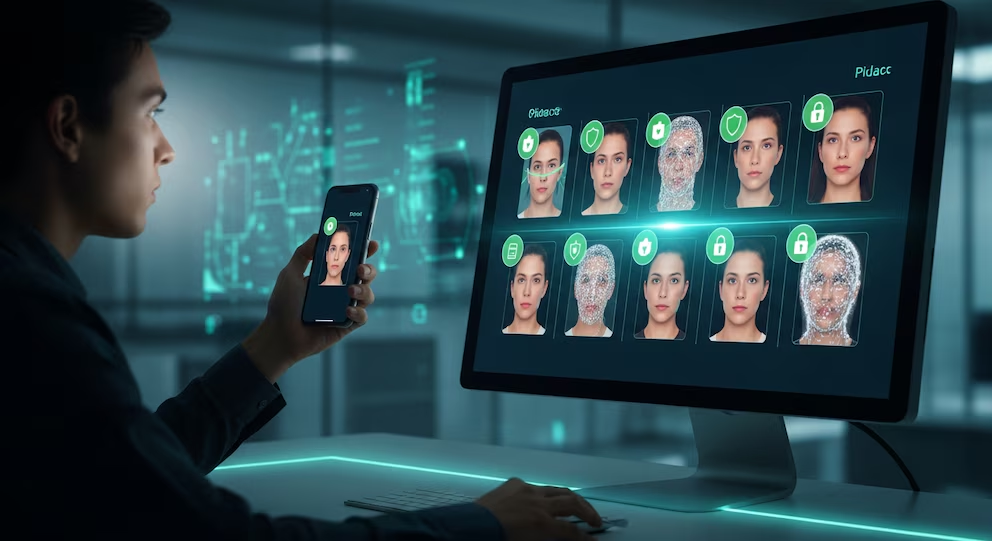
The commercial implications are significant. If AI agents start shopping at scale, retailers will face new categories of risk: unauthorized purchases, scripted inventory manipulation, automated arbitrage, account abuse, and a flood of transactions whose surface legitimacy conceals weak human consent. A system that cryptographically or procedurally ties an agent to a verified person could reduce some of that risk. It could also help retailers feel more comfortable opening their systems to third-party agents rather than locking everything down behind defensive friction. In that sense, verification may become a growth enabler as much as a security layer.
Still, the deeper issue is political as well as technical. Whoever controls trusted verification in an AI-mediated internet gains influence over the terms of participation. That power is not trivial. A company that becomes the trust layer between humans, agents, merchants, and payment rails would sit in a highly strategic position. It would not merely authenticate identity. It would shape which interactions count as legitimate, which transactions move faster, and which automated actors are treated as acceptable participants in the digital economy. Markets often present such systems as neutral infrastructure. They rarely remain neutral for long.
That is where the privacy debate returns with force. World has long framed its model as privacy-preserving proof of humanity, arguing that users can verify uniqueness without broadly exposing personal identity. Even so, the growth of such systems inevitably revives concerns about centralization, surveillance potential, exclusion errors, and dependence on a narrow set of identity intermediaries. Trust architecture always brings a second question: trusted by whom, on what terms, and with what recourse if the system fails. The promise of human verification is compelling. The governance challenge around it may prove even more consequential.
There is also a larger structural pattern here. The internet is entering a phase in which the distinction between human action, bot behavior, and delegated machine agency can no longer be assumed. That means platforms will increasingly need mechanisms not just for cybersecurity, but for ontological sorting. They will have to determine whether the actor requesting access, purchasing goods, or completing a task is a human, an AI, or an AI acting for a human. That sounds abstract, but it is becoming a concrete commercial problem. Once that happens, identity systems stop being philosophical tools and start becoming industrial necessities.
So this launch is about far more than e-commerce convenience. It is about the construction of a new trust stack for an internet crowded by autonomous software. If that stack solidifies, future online transactions may depend less on passwords and payment cards than on proof that a machine is acting under legitimate human authority. In that world, verifying humanity becomes less a moral preference than a market requirement. And the companies that build that layer will not simply serve the next digital economy. They will help define who is allowed to operate inside it.
Beyond the news, the pattern. / Más allá de la noticia, el patrón.