

 Phoenix 24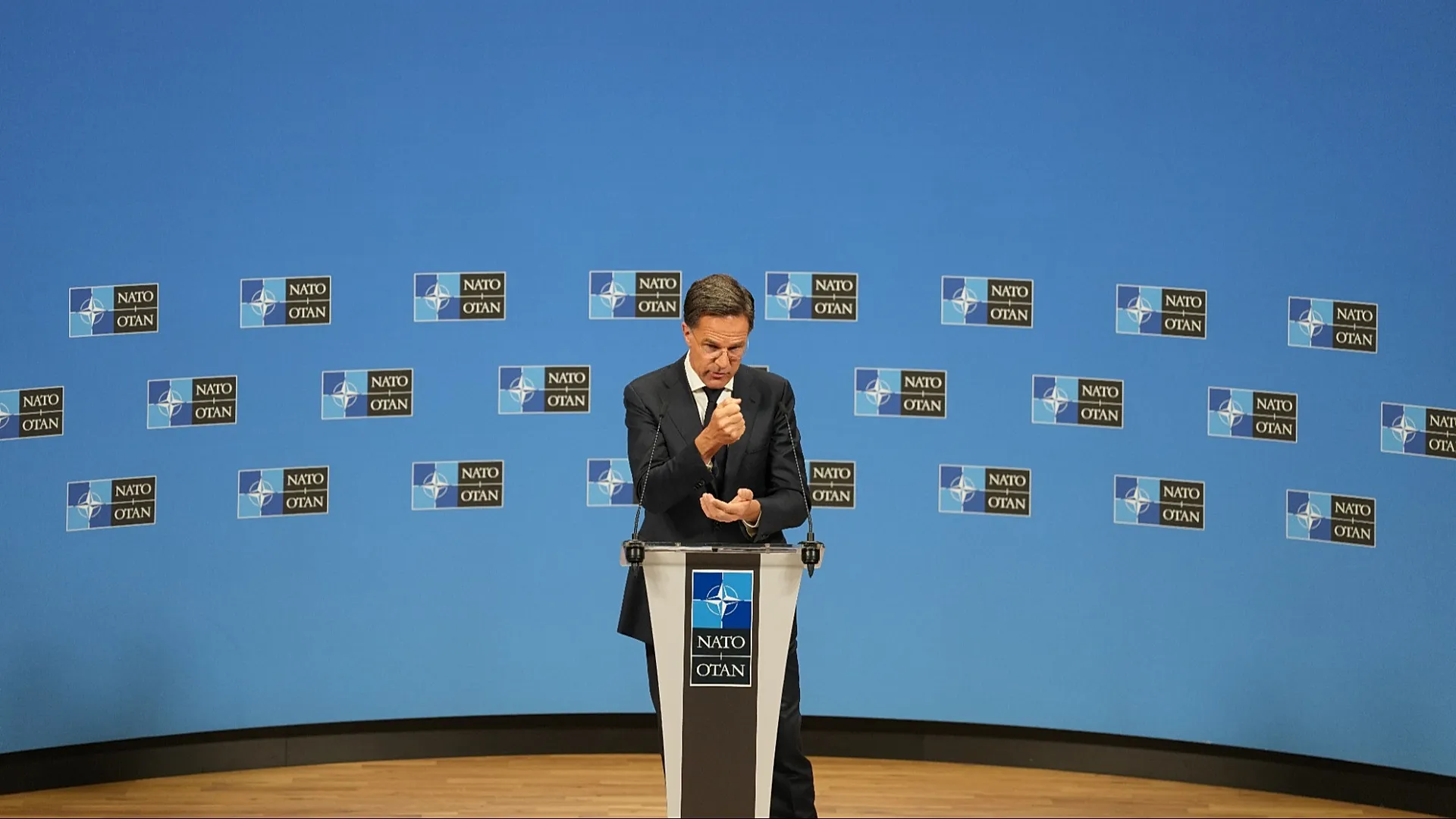
The July summit begins with trust already under strain.
Washington, June 2026
NATO Secretary General Mark Rutte met United States President Donald Trump at the White House in an attempt to ease mounting tensions before the Alliance’s July summit in Ankara. The meeting came as Trump expressed anger toward European allies that refused to support Washington’s military campaign in Iran. Rutte entered the talks seeking to preserve American engagement while demonstrating that European countries and Canada are responding to longstanding demands for higher defence spending.
The NATO chief planned to present Trump with figures showing record investment across the Alliance and to emphasize the president’s influence over that increase. European allies and Canada collectively added more than 90 billion dollars in defence expenditure in real terms during the previous year. Rutte has acknowledged that some members still need to accelerate their efforts, but he argues that the overall trajectory demonstrates a substantial redistribution of responsibility inside NATO.
The diplomatic strategy reflects Rutte’s established method of managing Trump through personal recognition and carefully framed achievements. Rather than confronting the president over his criticism of Europe, the secretary general has sought to connect higher military budgets directly to Trump’s pressure on allied governments. That approach may help stabilize relations temporarily, although it also reveals how strongly NATO’s cohesion has become linked to the management of one leader’s expectations.
Rutte was also expected to highlight the economic benefits that increased European and Canadian defence orders generate for the United States. Expanding production to meet allied demand supports American factories, military suppliers and employment, giving Washington a commercial incentive to remain committed to transatlantic security. The argument reframes NATO not merely as a burden funded by the United States, but as a market that channels substantial allied spending into the American defence sector.
The Ankara summit, scheduled for July 7 and 8, will focus heavily on security spending in Europe and the Arctic, along with the need to expand weapons production. The United States expects concrete evidence that allies are moving toward the new objective of allocating five percent of gross domestic product to defence by 2035. That target emerged from the previous NATO summit and represents a dramatic increase over the earlier benchmark of two percent.
Meeting the higher threshold will require governments to make difficult budgetary decisions extending far beyond the acquisition of weapons. Countries will need to invest in military infrastructure, cyber defence, logistics, ammunition reserves, strategic mobility and industrial capacity. These commitments may compete with spending on healthcare, education and social protection, creating political resistance even among governments that accept the need for stronger defence.
Tensions intensified after Trump suggested that the United States could reconsider military assistance to allies that rejected American requests for support during the war in Iran. Several European governments declined to participate directly or restricted the use of their territory and military facilities. Spain limited access to its airspace, while the United Kingdom initially resisted an American request before allowing operations described as defensive against Iranian missile targets.
Trump interpreted those decisions as evidence that some allies expect protection from Washington while refusing to assist the United States during its own conflicts. His remarks raised renewed concerns about the credibility of NATO’s collective defence principle, under which an attack against one member is treated as an attack against all. Any suggestion that protection could depend on political loyalty or participation in unrelated military campaigns introduces uncertainty into the Alliance’s central security guarantee.
The United States has already announced measures reducing elements of its long-term military role in Europe. After German Chancellor Friedrich Merz publicly criticized the American and Israeli strategy in Iran, describing it as poorly conceived, Trump informed NATO that 5,000 American troops would be withdrawn from Germany. The decision reinforced European fears that military deployments could become instruments of bilateral political pressure.
American Defence Secretary Pete Hegseth further sharpened the dispute during a meeting with his NATO counterparts in Brussels. He criticized allies that refused to participate in or endorse the Iran campaign, portraying their conduct as incompatible with the sacrifices expected inside the Alliance. The confrontation exposed a widening disagreement over whether NATO solidarity should extend to military operations that were not collectively approved under its established decision-making structures.
European governments generally distinguish between NATO’s obligation to defend allied territory and participation in military campaigns initiated independently by individual members. That distinction is essential to national sovereignty because each government retains authority over the deployment of its armed forces. Washington’s current position risks blurring those boundaries by connecting collective defence commitments to support for separate American operations.
The uncertainty has also reached the institutional future of NATO’s annual summit. Preparations for the Ankara gathering reportedly do not yet include a commitment to hold another leaders’ meeting in 2027. Albania had been expected to host that summit, but its suitability could be reconsidered if it fails to demonstrate progress toward the Alliance’s defence spending requirements.
Spain, Italy and Czechia are also regarded as lagging behind NATO’s targets, while Belgium has only recently reached the previous two-percent threshold. These differences complicate Rutte’s effort to present the Alliance as collectively responsive to American pressure. Record aggregate expenditure may impress Washington, but Trump is likely to focus on governments that remain below the agreed benchmarks.
During his two-day visit, Rutte was scheduled to meet Trump and Secretary of State Marco Rubio in the Oval Office, as well as members of Congress and senior intelligence officials. Those discussions reflect the breadth of the challenge facing NATO. The secretary general must secure support not only from the White House but also from institutions responsible for funding, intelligence cooperation and long-term defence policy.
Rutte’s immediate objective is to prevent disagreements over Iran from dominating the Ankara summit and weakening NATO’s deterrence posture. His broader challenge is to maintain an Alliance in which the United States demands greater loyalty while European members seek more autonomy over when and where they participate in military operations. The spending figures may provide temporary reassurance, but they cannot by themselves resolve the deeper disagreement over the meaning of solidarity.
The July summit will therefore test more than national defence budgets. It will reveal whether NATO can preserve collective security while accommodating divergent strategic interests, political pressures and interpretations of allied responsibility. Rutte’s meeting with Trump is an attempt to contain the conflict before leaders assemble, but the underlying question remains unresolved: whether the Alliance can continue operating through consensus when its most powerful member increasingly treats protection as conditional.
Phoenix24: claridad en la zona gris. / Phoenix24: clarity in the grey zone.