

 Phoenix 24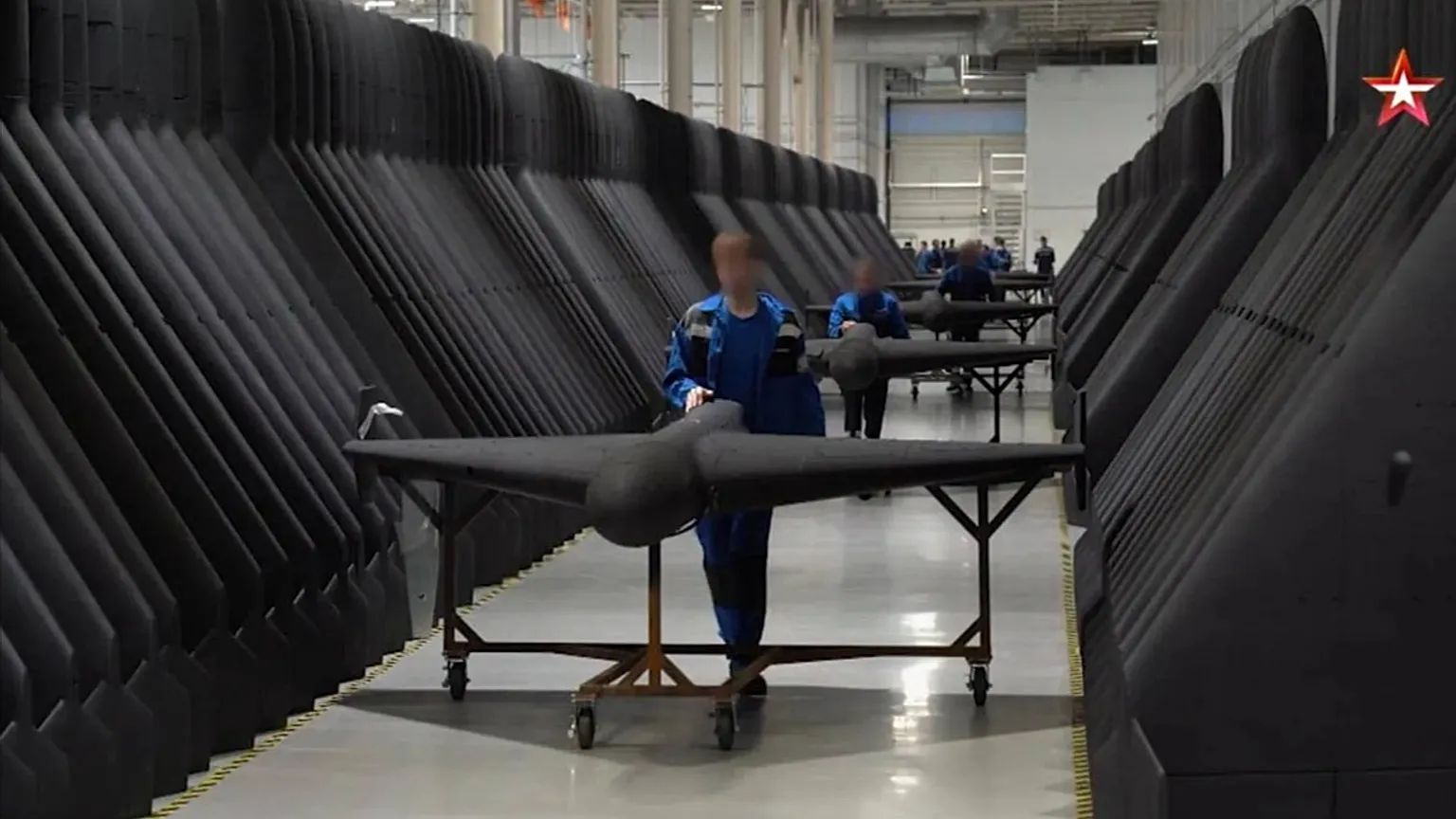
Long-range unmanned systems are reshaping Europe’s defensive geography.
Brussels, Belgium.
Russia’s expanding family of long-range drones is drawing renewed attention after reports suggested that Moscow could potentially launch unmanned aircraft from commercial vessels operating in the Mediterranean. The scenario, initially linked to a reported US intelligence warning concerning Spain, France and Italy, remains unconfirmed publicly by the CIA or the governments involved. Euronews has examined the Russian systems that could theoretically support such an operation, revealing an arsenal that has evolved well beyond the Iranian-designed Shahed drones first widely observed in Ukraine.
The Geran-2 remains one of Russia’s principal long-range attack drones. Derived from the Iranian Shahed-136 design and manufactured domestically at the Alabuga industrial complex in Tatarstan, the aircraft can reportedly travel around 1,000 kilometers when carrying its heavier warhead configuration. Its relatively low production cost allows large numbers to be launched simultaneously, forcing defenders to expend significantly more expensive interceptor missiles.
Russia has subsequently introduced faster jet-powered variants. The Geran-3 can reach approximately 300 to 370 kilometers per hour, while the newer Geran-4 reportedly operates at speeds approaching 500 kilometers per hour and has demonstrated flights close to 960 kilometers. The Geran-5 represents another technological step, with reported speeds of up to 600 kilometers per hour, a range approaching 950 kilometers and a substantially larger payload.
Another system attracting particular attention is the Gerbera. Originally developed as a low-cost decoy intended to saturate air-defense radars, newer versions have reportedly been fitted with explosive warheads. Measuring roughly two meters in length, the drone can travel between 300 and 600 kilometers at speeds of around 160 kilometers per hour. Its estimated unit cost of approximately $10,000 makes it especially suited to operations involving large numbers of aircraft.
The strategic concern lies less in any single model than in how these systems might be deployed. A merchant vessel positioned hundreds of kilometers from European territory could theoretically reduce the distance a drone must travel before reaching coastal infrastructure. Containers could also complicate the identification of launch platforms before an aircraft enters European airspace.
However, the reported Mediterranean scenario remains an intelligence assessment rather than evidence that an attack has been ordered or is imminent. Italian Defense Minister Guido Crosetto has said that Italy has received no confirmed operational warning supporting such claims. That distinction is essential when evaluating a threat involving considerable uncertainty.
What is established is Russia’s rapidly expanding drone production capacity and the increasingly diverse systems deployed against Ukraine. The combination of inexpensive decoys, long-range propeller aircraft and faster jet-powered drones is forcing European governments to reconsider air defense far beyond NATO’s eastern frontier.
The emerging security problem is therefore geographical as much as technological. If unmanned aircraft can be launched from mobile maritime platforms, distance from Russia no longer provides the same defensive assumption it once did.
Contra la propaganda, memoria. / Against propaganda, memory.