

 Phoenix 24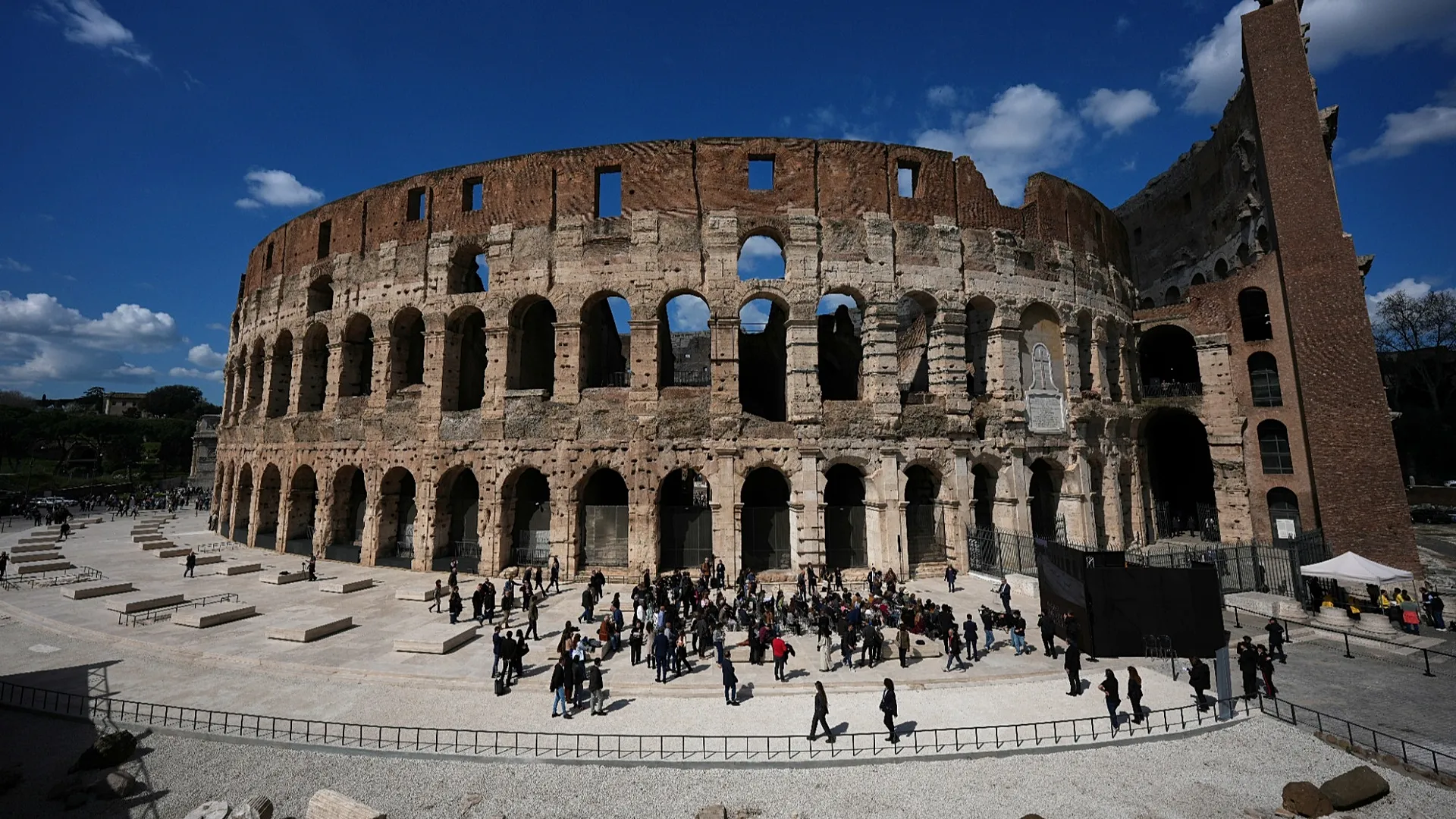
Stone returns where memory had sunk.
Rome, April 2026
Rome has turned a restoration project at the Colosseum into something larger than conservation. The latest intervention has brought back into view structural elements that had remained buried for centuries, including the footprint of access corridors, the base geometry of the monument and the old numerical logic that once guided spectators to their seats. What visitors now encounter is not simply a cleaner or more polished amphitheater. They are seeing a more legible machine of imperial circulation, one that reveals how architecture in ancient Rome was built not only to impress, but to organize mass movement with striking precision.
The restoration focuses on the exterior perimeter of the monument, where new travertine blocks have been installed to indicate the places where large access columns once stood. That decision matters because it does not aim merely to beautify the site. It seeks to restore spatial intelligence. By recovering the outline of what had disappeared beneath accumulated ground levels, the project allows the public to understand the Colosseum less as a ruin detached from its original logic and more as an integrated structure with rhythm, proportion and engineered intention. In cultural terms, that is a significant shift. It invites visitors to read the building not as romantic debris, but as a functioning urban system from antiquity.
One of the most revealing details concerns the original entry numbers. In antiquity, the arches, except those aligned with the main axes, carried engraved numerals above them to guide the public toward the correct entrances. That feature may sound minor, but it says a great deal about Roman organizational power. The Colosseum was not only an arena of spectacle. It was a logistics device capable of processing enormous crowds through coded access points with an efficiency that still feels modern in spirit. The renewed emphasis on those circulation markers helps explain why the building remains such a potent symbol of statecraft through architecture. It was monumental, yes, but it was also operational.
The architects behind the work have framed the restoration as an effort to recover the real proportions of the monument and the buried dimension of the arches and paving that had vanished from everyday perception. That framing is important because it moves the project beyond superficial restoration. This is not about adding ornamental clarity. It is about reconstructing the measurable logic of the Flavian Amphitheatre, including the original pavement level that once anchored the monument’s full perimeter. By pulling those dimensions back into public view, the project closes part of the gap between the ruin tourists consume and the structure that ancient Rome actually built.
There is also a technical layer with contemporary relevance. The intervention did not only recover lost visibility. It also created an opportunity to rethink rainwater drainage around the site and to integrate hydraulic management into the design of the renewed pavement. This is where heritage conservation becomes quietly modern. The Colosseum is not being frozen as an untouchable relic. It is being maintained as a living public space that must still manage water, circulation and accessibility in a city shaped by mass tourism and environmental stress. That balance between archaeological fidelity and present-day urban function is one of the hardest challenges in monumental preservation, and Rome appears to be using this project to show that heritage can remain historically respectful without becoming infrastructurally passive.
The restoration also exposes the long violence of time. Two sections of the public access corridors began collapsing from the sixth century onward, in part because the ground in that area proved especially unstable. That detail is easy to overlook, but it matters. Great monuments do not decline only because empires fall. They also decay because geology, weather, drainage and neglect slowly unmake them. The Colosseum’s current renewal therefore carries a double meaning: it restores what human history buried, and it also responds to what the earth itself destabilized over centuries. In that sense, restoration is never just a cultural act. It is a negotiation with time, matter and urban memory.
For Rome, the symbolic dividend is obvious. The Colosseum remains Italy’s most visited monument and one of the most recognizable structures on the planet. Any major intervention on it is automatically an intervention on national image. What is notable here, however, is the choice of emphasis. Rather than selling only spectacle, the project emphasizes legibility. It gives visitors a clearer idea of how the monument worked and how ancient Roman crowds moved through it. That educational dimension subtly elevates the restoration above tourism marketing. It suggests that Rome wants the Colosseum to remain an object of admiration, but also an object of understanding.
There is a broader cultural lesson in that choice. In many global heritage sites, restoration risks turning the past into a smooth surface designed primarily for photographs. This project gestures in another direction. It recovers absence. It marks what was lost. It helps the eye imagine what no longer stands. That is a more intellectually ambitious form of conservation because it asks the public to participate in reconstruction through perception rather than merely consume a finished image. The buried columns are not fully resurrected, but their footprint now speaks. The vanished order is not complete, but it is readable again.
What emerges, then, is not only a renewed Colosseum, but a renewed argument about why monuments matter. They are not valuable just because they are old or iconic. They matter because they preserve systems of thought in stone. The Colosseum encoded hierarchy, access, spectacle, discipline and imperial scale into architecture. By bringing hidden structures back into view, Rome is not simply restoring a ruin. It is restoring the intelligibility of power as the ancient city once built it. That is why this intervention resonates beyond archaeology. It reminds us that beneath every celebrated monument there are always buried instructions about how a civilization understood order.
Detrás de cada dato, hay una intención. Detrás de cada silencio, una estructura.
Behind every data point, there is an intention. Behind every silence, a structure.