

 Phoenix 24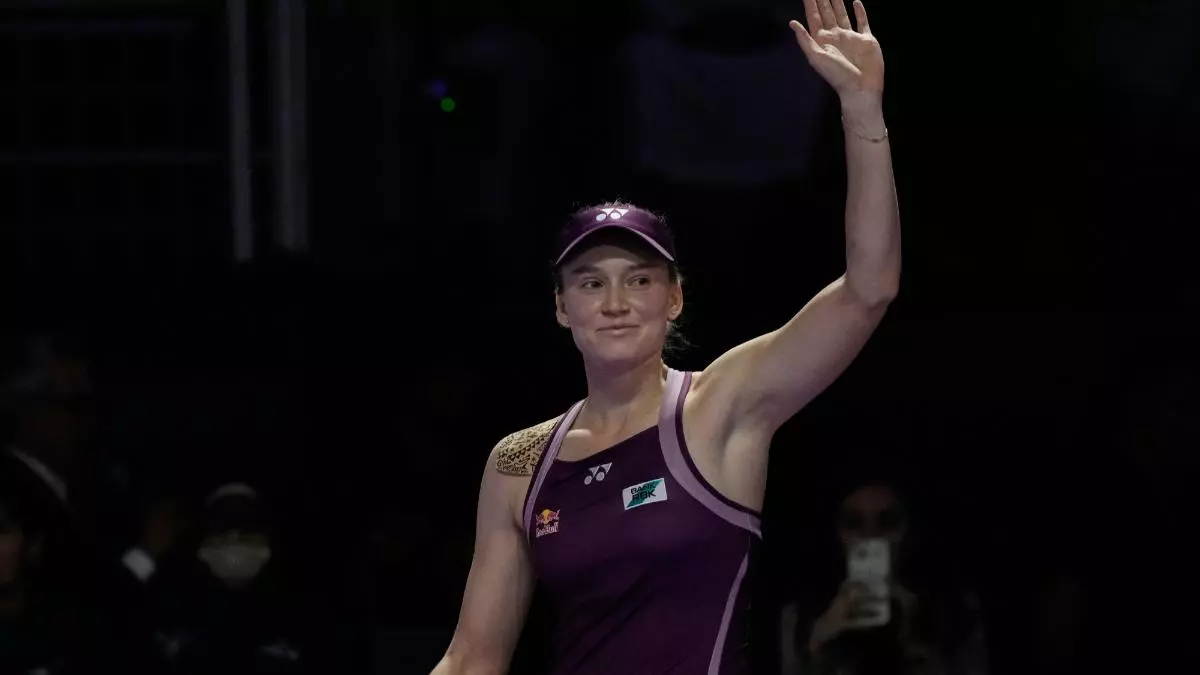
A trophy measures victory, but a paycheck can measure a revolution.
Riyadh, November 2025
Elena Rybakina lifted the silver trophy with a calm expression that mirrored her tennis. Precise, controlled, ruthless in the decisive points. With that win in Riyadh, she did more than secure another title. She claimed the biggest prize purse ever awarded in women’s tennis. The event has become the most financially powerful tournament on the WTA calendar, eclipsing every other purse this season and sending a clear message to the tennis world. The future is arriving from an unexpected place, and the center of gravity is shifting.
Throughout the week, Rybakina imposed her presence with a simplicity that borders on intimidation. She plays without theatrics, without flinching. Her timing neutralizes aggression, her serve opens the court, and once she establishes rhythm, rallies feel like narrow corridors. Opponents try to accelerate, to use angles or variation, yet Rybakina responds with clean trajectories that erase time. In the final she demonstrated the same pattern. She absorbed pressure, redirected pace and decided the match on the big points. When the last shot landed inside the line, she barely celebrated. It was not detachment. It was certainty.
What gives weight to this victory is not only the tennis but the location. Riyadh represents something none of the traditional tennis capitals anticipated. It is no longer enough to host a tournament. Now federations and sponsors compete against a region that is willing to fund ambition without compromise. Saudi Arabia is investing aggressively not only in events but in narrative. The kingdom is buying not just dates on the calendar. It is buying meaning. Rybakina’s triumph becomes a symbol of that strategy. If a sport wants visibility, resources and global reach, it must consider new territories.
The players feel it. The WTA players council spent months debating whether the tour should embrace or resist this shift. Ethics, geopolitics and commercial growth collided. Some feared that accepting the Saudi model would dilute the sport’s identity. Others argued that rejecting investment and global expansion would trap women’s tennis in financial stagnation. At the end, the numbers spoke louder than ideology. A single tournament with a purse that surpasses even the Grand Slams in payout changes everything. Money forces evolution because it redefines incentives.
For the WTA, the stakes extend beyond this week. The organization has struggled for years with unequal prize money at certain events and a fragile business model that depends on fluctuating sponsorships. Riyadh offers a different equation. Stable financial backing combined with guaranteed visibility. This is not simply a contract. It is leverage. Players now look at their schedules and ask which tournaments invest in them and which expect loyalty without return. If Riyadh becomes a permanent fixture, the tour may reorganize itself around the Middle East.
Rybakina’s win exposes a deeper tension. Tennis has always sold elegance on court, but the business has often underestimated the value of its athletes. Here the opposite occurred. The event treated players as central assets. Every practice session drew crowds. Every match filled the arena. The audience did not watch her as a visitor. They watched her as a champion worth investing in. Rybakina, direct and soft spoken, responded by raising her level when the pressure demanded. In the semifinals she produced one of her cleanest performances of the year, with a first serve percentage rarely seen on indoor hard courts. In the final she refused chaos. When her rival tried to disrupt rhythm, Rybakina reset the tempo with unshakeable discipline.
From Europe to North America, analysts observe the transformation with mixed fascination and unease. Traditional markets fear losing influence. They fear that tennis will migrate toward locations with deeper pockets and fewer historical obligations. Others see opportunity. Asia views this event as a proof that geography is no barrier to building cultural relevance. Broadcasters recognize something even simpler. When the world changes, audiences follow. Rybakina’s final broke audience records across multiple streaming platforms. Interest was not regional. It was global.
Inside the locker room the message is already clear. If the sport wants to grow, it must follow growth. If it wants to protect status, it must adapt. Several players have begun to look at sponsorship options connected to new markets. Young talent now sees a path not limited to Europe or North America. The future of tennis is a map that no longer centers on the old capitals.
Rybakina herself refuses to dramatize the implications. She talks about improvement, discipline, routines. Yet she is aware that her victory will be the image broadcast around the world: the moment when a new economic era of tennis crystallized. While others negotiate narratives, Rybakina builds evidence point by point. Precision is her argument. Consistency is her ideology.
The question that remains after the trophy ceremony is not who won. It is who defines the sport. The tournament signals that attention follows investment and that visibility can shift in a single season. Today the proof stands on a podium in Riyadh, holding the largest winner’s check ever awarded in the women’s game.
Tennis has entered a new chapter. The court remains the same dimensions. The power behind it no longer is.
The visible and the hidden, in context.
Phoenix24: The visible and the hidden, in context.