

 Phoenix 24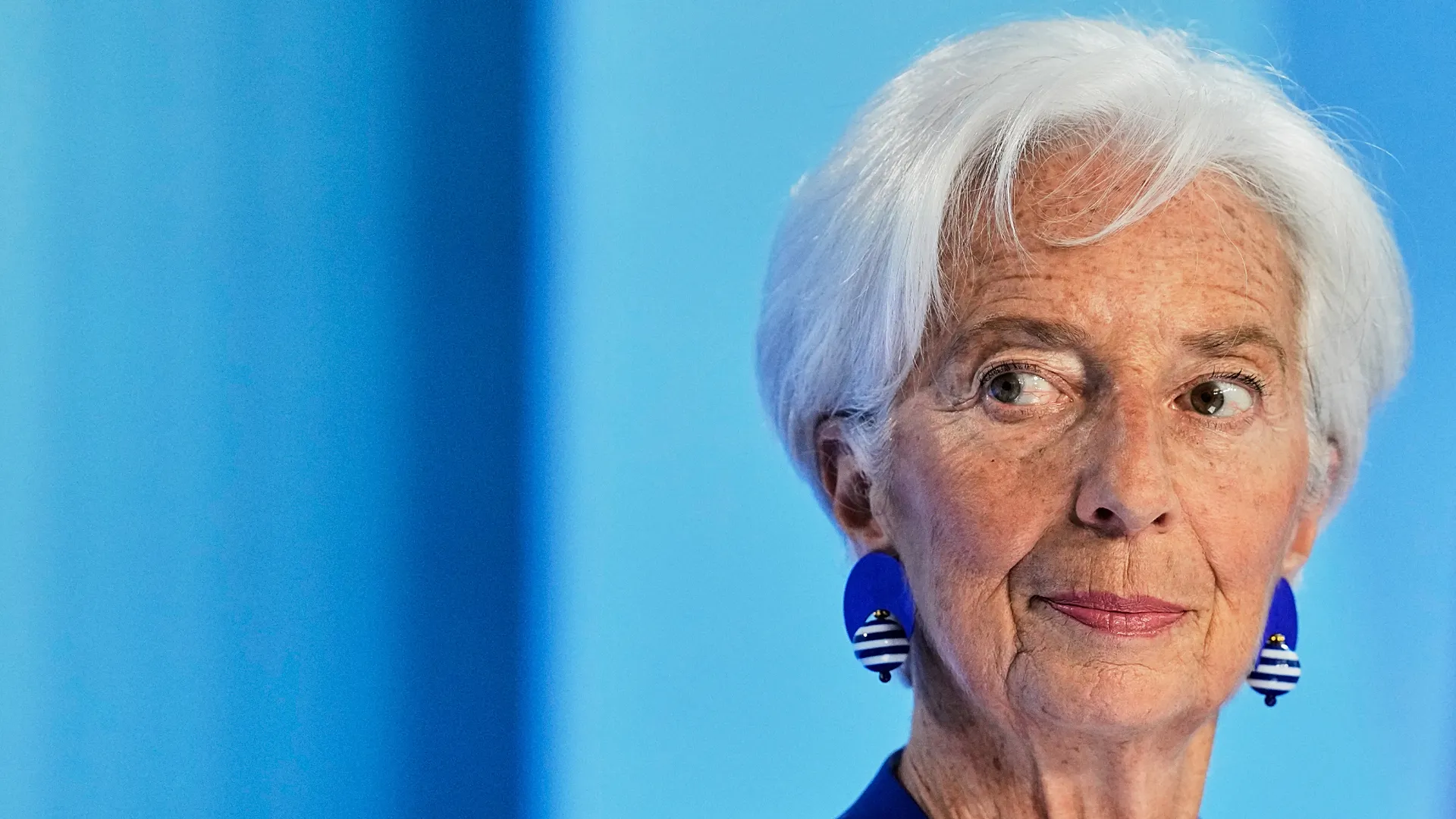
Deeper financial integration could reduce Europe’s strategic dependence.
BRUSSELS, Belgium | June 2026
European Central Bank President Christine Lagarde has urged European Union lawmakers to complete the bloc’s capital markets union, arguing that deeper financial integration is essential if the euro is to become a stronger global reserve currency. Speaking in Brussels, she said international monetary influence cannot be created quickly or through declarations alone. It requires deep markets, reliable institutions, modern payment systems and the capacity to protect economic sovereignty. Her message comes as geopolitical instability and renewed trade confrontation reshape confidence in the international financial order.
The euro remains the world’s second most important currency, but it continues to operate far behind the United States dollar in global reserves, payments and financial markets. ECB data indicates that the euro accounts for roughly 20 percent of several measures of international currency use. Its position improved moderately during 2025, supported by strong foreign investment and record issuance of euro-denominated international debt. Even so, Europe’s fragmented financial structure limits the currency’s ability to compete more effectively.
Lagarde identified the capital markets union as the most important unfinished reform. The project seeks to make it easier for savings and investment to move across EU borders by reducing regulatory differences and connecting national financial markets. Europe has a large economy and substantial household savings, but much of that money does not reach expanding companies or strategic infrastructure efficiently. Fragmentation prevents the bloc from turning its economic size into financial scale.
A more integrated market would provide investors with a larger supply of liquid, euro-denominated assets. Central banks and global institutions generally hold reserve currencies when they can invest large amounts without creating significant price disruption. They also require predictable regulation, secure settlement systems and reliable access during periods of stress. Europe offers institutional stability, but its markets remain divided among national legal, supervisory and taxation systems.
This fragmentation particularly affects innovative companies seeking capital. European businesses often depend more heavily on bank financing than their American competitors, which can access deeper equity and bond markets. When promising firms require substantial funding, many seek investors or listings outside the European Union. A genuine capital markets union could help retain companies, finance technological development and increase the number of assets available to international investors.
Lagarde also connected monetary influence with security and geopolitical power. She noted that no currency became an international reserve without being supported by a political system capable of defending its interests. The observation reflects growing concern that economic openness alone is insufficient in an environment shaped by sanctions, military conflict and strategic rivalry. Financial credibility increasingly depends on the wider resilience of the institutions behind a currency.
The debate has accelerated as President Donald Trump’s confrontational approach to trade and foreign policy creates uncertainty about the future direction of the United States. European officials see an opportunity for the euro to gain importance if investors seek alternatives to the dollar. However, they also recognize that dissatisfaction with American policy will not automatically redirect global money toward Europe. The EU must provide competitive markets and financial infrastructure before it can benefit from any shift.
Payment dependence represents another major vulnerability. American companies Visa and Mastercard process a large share of card payments within the euro area and dominate many cross-border transactions. This reliance leaves Europe dependent on infrastructure governed outside its direct control. The ECB argues that monetary sovereignty requires European payment options capable of operating independently during political or technological disruptions.
The proposed digital euro forms part of that strategy. It would be a public digital means of payment backed by the central bank and designed to complement cash rather than replace it. European lawmakers are expected to advance the necessary legislation during 2026. Supporters believe the digital euro could strengthen payment resilience, reduce external dependence and ensure that central bank money remains available as transactions become increasingly digital.
The ECB is also developing infrastructure for tokenized finance and distributed ledger technology. Projects known as Pontes and Appia are intended to connect central bank money with new systems for issuing and settling digital assets. Their objective is to prevent private payment instruments from becoming the only foundation of emerging financial markets. The ECB wants trusted public money to remain the anchor even as technology changes how assets are traded.
Stablecoins have made this issue more urgent. Around 95 percent of stablecoins worldwide are linked to the dollar, giving the United States another mechanism for extending its currency’s influence. The Trump administration has favored regulated private stablecoins rather than a digital dollar issued by the Federal Reserve. European policymakers are therefore considering how euro-denominated stablecoins and the digital euro could prevent further erosion of the bloc’s monetary autonomy.
The dollar’s global position still provides major advantages to the United States, including lower borrowing costs and greater influence over international transactions. A stronger euro could give Europe similar, although more limited, benefits. It could reduce currency risks for European companies, support cheaper financing and make the bloc less vulnerable to sanctions or external pressure. Greater international use would also strengthen Europe’s role in setting global financial standards.
The ECB’s latest assessment shows that the euro already possesses several favorable foundations. International issuance of euro-denominated loans and bonds rose sharply in 2025, while the currency became the leading denomination in the global green and sustainable bond market. Foreign portfolio inflows into the euro area approached historic levels. These trends suggest that investors are willing to increase euro exposure when suitable assets are available.
However, the currency still lacks a sufficiently large and unified supply of safe assets comparable to the American Treasury market. European government debt is issued separately by member states with different credit profiles and liquidity conditions. Joint EU borrowing has expanded, but it remains limited relative to the scale of global reserve demand. Discussions about common debt therefore remain closely connected to the euro’s international ambitions.
Completing the capital markets union will require difficult political decisions. Member states must reconcile differences involving insolvency law, taxation, supervision and investor protection. National governments may resist reforms that transfer authority or weaken control over domestic financial systems. The challenge is not identifying the technical measures, but building enough political agreement to implement them.
Lagarde’s argument is that delay now carries strategic costs. Europe is competing in a world where finance, technology and security are increasingly interconnected. Remaining dependent on foreign payment systems and fragmented domestic markets could limit the bloc’s ability to respond to crises. A stronger euro requires Europe to treat financial integration as an instrument of sovereignty rather than only an economic reform.
The currency will not displace the dollar in the immediate future, and the ECB is not presenting that as a realistic short-term objective. The goal is to make the euro more widely used, more trusted and more capable of supporting Europe’s interests. That process depends on deeper markets, modern infrastructure and credible political commitment. Lagarde’s warning is clear: the euro’s global potential will remain incomplete until Europe finishes building the financial union behind it.