

 Phoenix 24
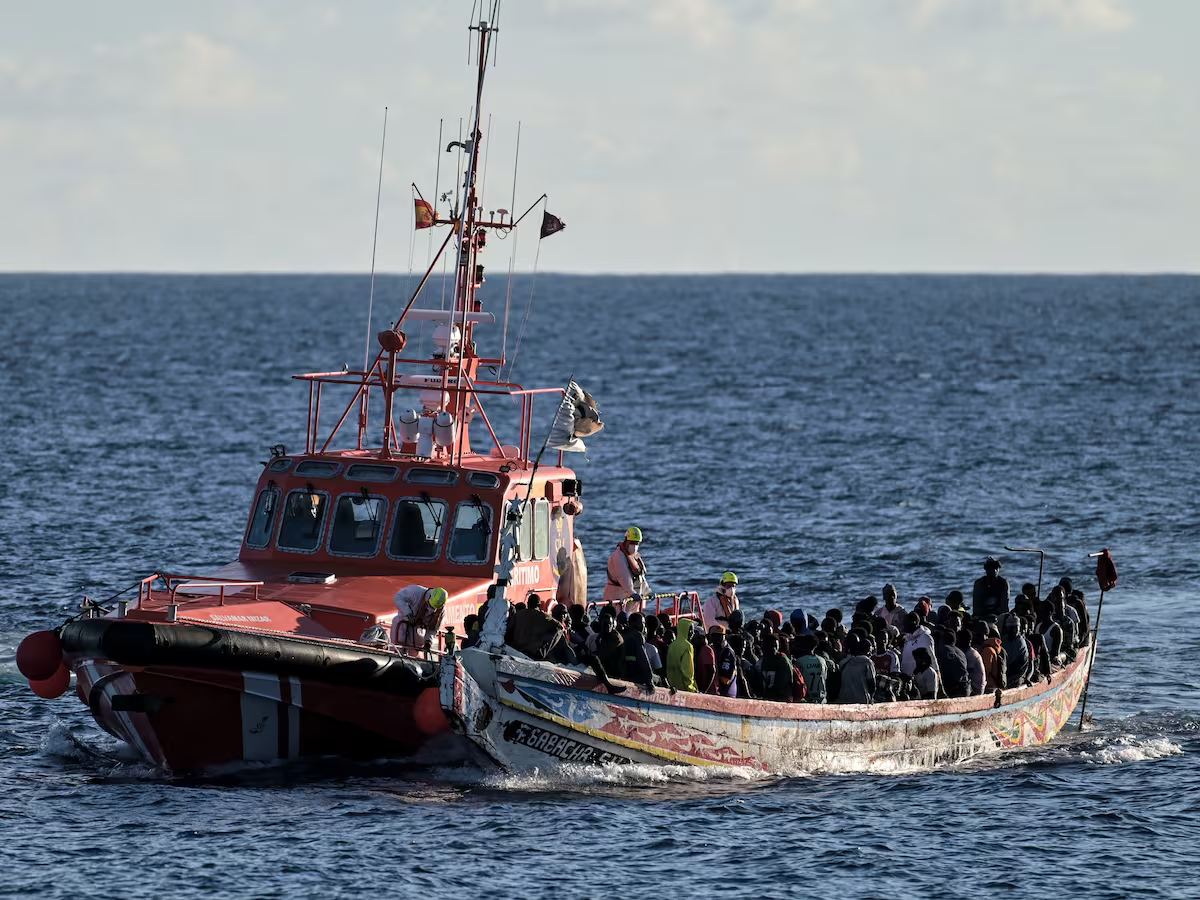
An unprecedented day of rescues exposes mounting humanitarian pressures.
EL HIERRO, Spain. Spain’s Canary Islands recorded an unprecedented surge in migrant arrivals on November 14, 2026, as maritime rescue teams assisted 1,580 people aboard 15 boats, surpassing the archipelago’s previous single-day record and intensifying concerns about the capacity of local emergency services.
Initial reports documented 1,488 arrivals, including 1,235 people aboard 12 traditional wooden fishing boats, known as cayucos, reaching El Hierro. Another 203 people arrived in Gran Canaria and 50 in Tenerife.
However, updated figures published by Spanish news agency EFE on November 15 included an additional vessel carrying 92 people, bringing El Hierro’s total to 1,327 and the archipelago-wide figure to 1,580.
The revised count exceeds the previous daily record of 1,461 arrivals, established on November 7, 2020.
According to provisional assessments, at least 120 women and 173 minors were among those rescued.
The operations mobilized six vessels belonging to Spain’s maritime rescue service and two Civil Guard patrol boats. Rescue crews worked throughout the day to locate overcrowded vessels, transfer passengers safely and coordinate medical assistance.
The emergency has placed particular pressure on El Hierro, a small island whose reception infrastructure is struggling to accommodate the increasing arrivals.
Regional President Fernando Clavijo warned that local resources had been overwhelmed and called for an urgent response from Spain’s central government and European institutions.
The island’s authorities had already declared a social emergency following the arrival of more than 8,000 people over approximately five weeks.
Clavijo also requested intervention from European Commissioner for Migration Magnus Brunner, while Spanish Prime Minister Pedro Sánchez reportedly committed to convening an emergency interministerial meeting.
The migration surge reflects continuing pressures along the Atlantic route connecting West African countries, including Senegal, Mauritania and Gambia, with Spanish territory.
The journey can extend beyond 1,000 kilometers, exposing passengers to dangerous currents, unpredictable weather, overcrowding and limited access to food and drinking water.
Spain’s Interior Ministry recorded 6,194 arrivals in October, highlighting the recent acceleration in movements toward the islands.
However, the reasons behind migration are complex. Economic insecurity, limited employment opportunities, political uncertainty and established migration networks interact with seasonal maritime conditions.
Local representatives and migration specialists have emphasized that the immediate challenge involves expanding humanitarian assistance, accelerating transfers to suitable reception facilities and ensuring adequate medical care.
The record arrivals have renewed questions about responsibility-sharing between Spain and European institutions.
For the people undertaking these dangerous crossings, the figures represent more than a migration statistic: they reflect individual journeys shaped by uncertainty, vulnerability and the search for opportunity.
Beyond the Numbers, the Human Consequences.