

 Phoenix 24
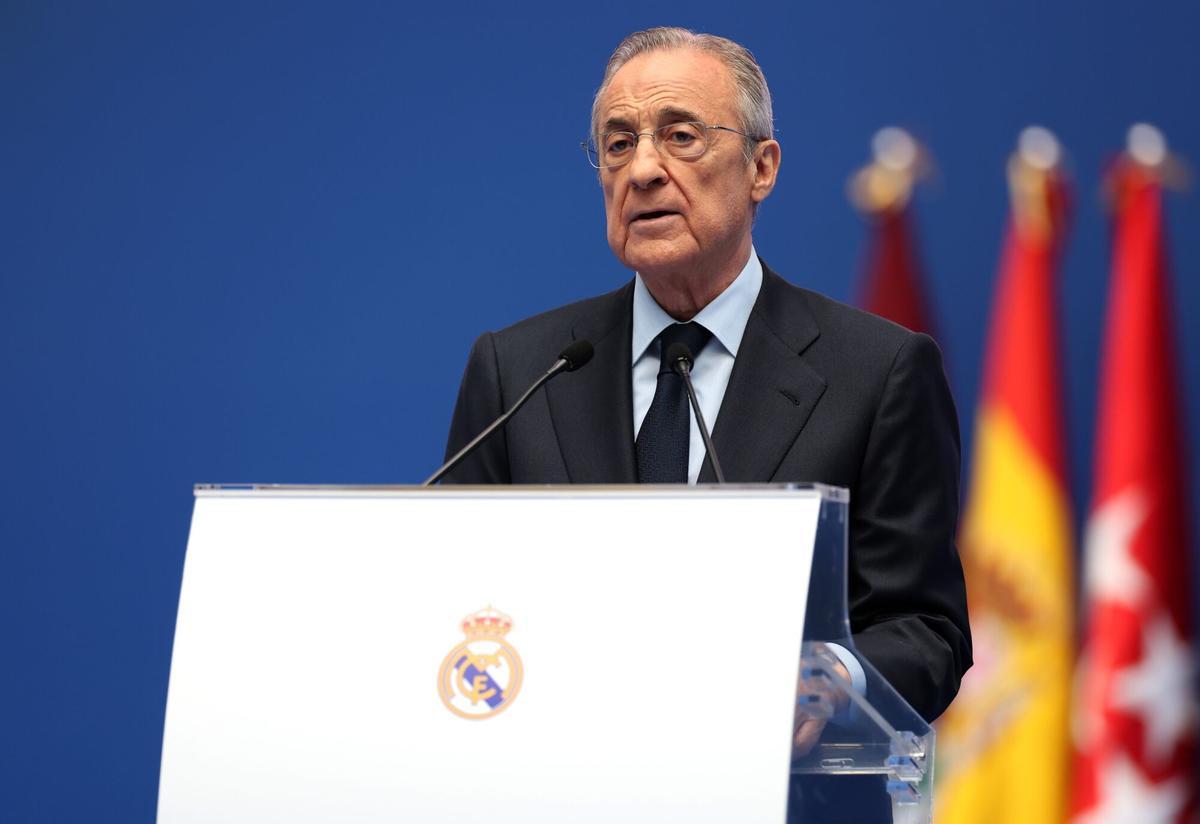
Even giants become fragile when success turns structural.
Madrid, March 2026
The latest economic reading around Real Madrid does not suggest imminent collapse, but it does expose something the club’s mythology often hides: strength and fragility can coexist. Recent financial scrutiny has revived doubts about how resistant the institution really is once the glow of trophies, global prestige, and commercial power is stripped away. What emerges is not the image of a broken club, but of one whose stability depends on keeping too many high-performance variables aligned at the same time. That matters because the richer a football institution becomes, the more expensive its normality tends to be.
Real Madrid’s public image encourages the idea that scale itself guarantees security. In reality, large clubs are often protected less by simplicity than by constant motion: matchday income, commercial expansion, sporting relevance, media centrality, and the ability to keep monetizing their own aura. When that machine keeps running, the club appears untouchable. But when fresh financial data invites a closer look, the hidden pressure points become easier to see. Grandeur does not eliminate vulnerability; it often reorganizes it.
One of the key tensions in this kind of model is that elite football institutions must spend continuously to remain what they already are. A club like Real Madrid cannot defend its symbolic status by standing still. It must keep investing in squad value, infrastructure, branding, and the broader experience that sustains global loyalty. That creates a paradox in which success is not only rewarded, but required as a financial condition of equilibrium. The institution may look sovereign, yet part of that sovereignty depends on never falling too far from the top.
This is where fragility enters the picture. It does not necessarily appear as insolvency or dramatic crisis, but as dependence on permanent competitive relevance. If commercial growth slows, if sporting performance becomes less reliable, or if major structural investments fail to generate the expected rhythm of returns, even an elite club begins to feel the strain differently. What looks solid from the outside can, in fact, be a highly demanding balance. The machine remains powerful, but it has less room for calm than its image suggests.
There is also a broader lesson here about modern football governance. The biggest clubs have become hybrid institutions: part sporting entity, part entertainment brand, part real-estate logic, part financial architecture of expectation. That complexity increases resilience in some ways, but it also makes the club more exposed to interconnected pressures. A weak season is no longer just a sporting inconvenience. It can ripple into perception, revenue, leverage, and strategic confidence all at once.
For Real Madrid, that does not mean decline is already underway. It means the club’s durability should not be confused with invulnerability. The recent economic discussion is significant precisely because it punctures the lazy assumption that prestige automatically equals immunity. A giant can still dominate the landscape and remain structurally delicate underneath. In modern football, fragility does not always look like weakness. Sometimes it looks like a system so large that it must keep winning just to remain stable.
That is why the financial angle matters beyond club accounting. It reminds us that elite football has entered a phase where symbolic capital and economic pressure are no longer separable. Real Madrid still projects power, and with reason. But the newer data suggests that behind the spectacle there is also a more demanding truth: the club is not simply rich, it is committed to staying rich through a model that leaves little space for strategic stillness. And when permanence depends on uninterrupted momentum, even greatness begins to carry its own form of risk.
Detrás de cada dato, hay una intención. Detrás de cada silencio, una estructura.
Behind every datum lies an intention. Behind every silence, a structure.