

 Phoenix 24
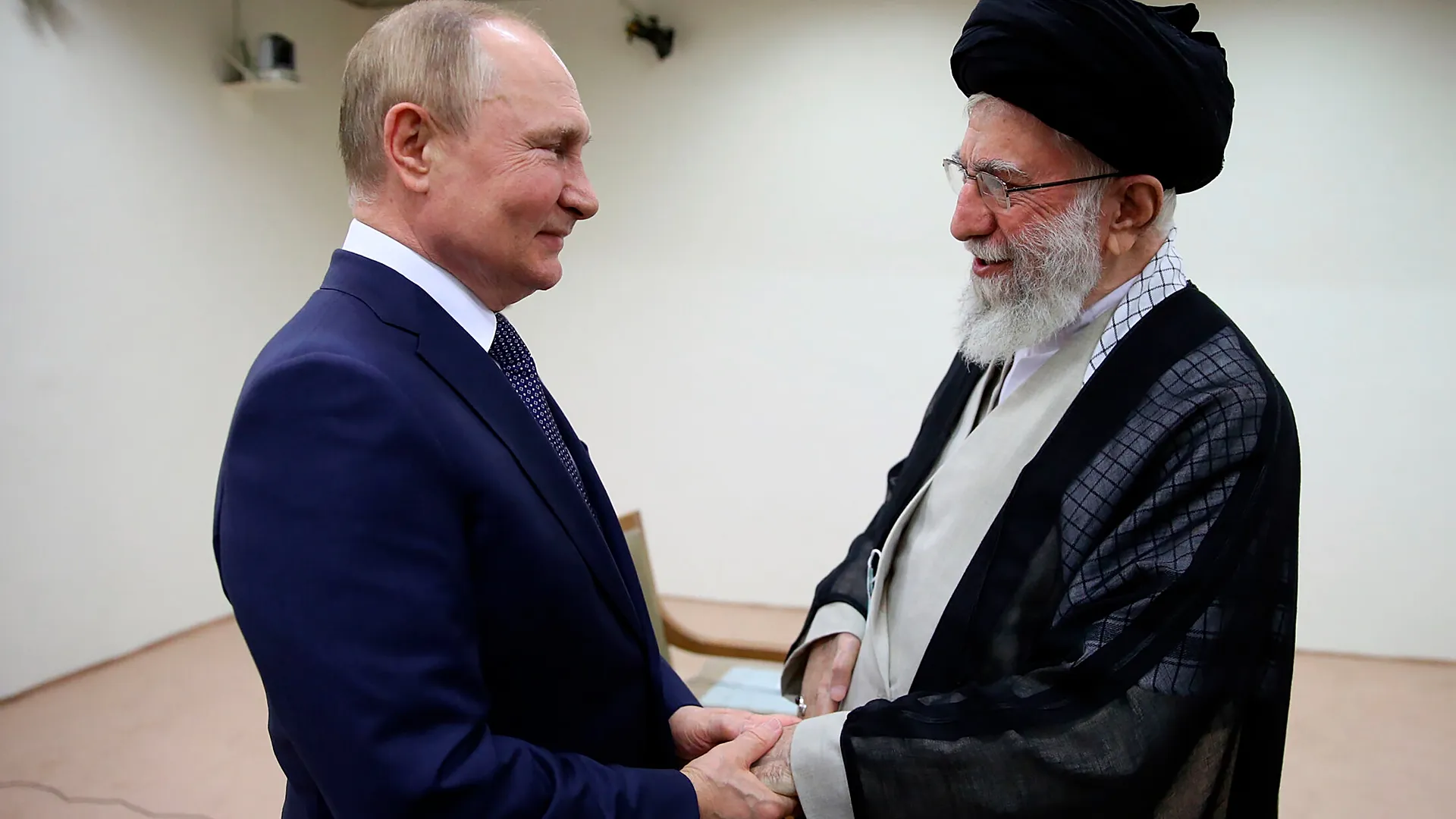
A strategic alliance just lost its anchor.
Moscow, March 2026
Vladimir Putin’s decision to label Ali Khamenei’s death a “cynical” murder was not only a diplomatic reaction to a shock event in Iran. It was also a carefully framed message about legitimacy, hierarchy and the rules Moscow wants to defend when allied regimes are struck at the top. Reports indicated that the Kremlin’s message to Iranian President Masoud Pezeshkian described the killing as a violation of human morality and international law, while praising Khamenei as a statesman who elevated Russia-Iran ties into a comprehensive strategic partnership. In political terms, the wording matters because it places the event in the language of order, not merely emotion.
The timing makes that wording even more consequential. Public reporting also noted that Moscow offered condolences but little else, a restraint that reveals the tension between symbolic solidarity and operational caution in a moment of regional escalation. Russia is trying to preserve strategic relevance in the Middle East while avoiding a direct collision with Washington over Iran, especially as other fronts continue to consume Kremlin bandwidth. That gap between rhetoric and action is precisely where the deeper story sits, because it reflects a power center that still wants influence without assuming the costs of direct confrontation.
What appears, on the surface, as a moral condemnation is also a signal to multiple audiences at once. To Tehran, it communicates loyalty and historical respect; to domestic Russian audiences, it presents the Kremlin as a defender of state sovereignty and international norms when partner governments are targeted; to Western capitals, it warns that Russia will frame this episode as a destabilizing precedent. The strategic dimension is blunt: Khamenei’s death is a setback for Moscow in a region where it has long sought greater leverage. The statement, then, works as grief language and geopolitical damage control at the same time.
The broader regional reaction underscores why Moscow is speaking with such precision. European officials have described Khamenei’s death as a defining moment and, at the same time, a potential trigger for renewed instability and a spiral of violence. That contrast is central: Europe is speaking in a dual register of possibility and risk, while Moscow is speaking in a register of legal rupture and strategic loss. These are not simply different moral interpretations, they are competing narratives about what political transformation means when it is triggered by force.
Inside Iran, the rapid move to establish a transitional leadership structure suggests that the system’s first instinct is continuity rather than reinvention. International coverage reported the formation of an interim leadership arrangement involving President Masoud Pezeshkian, judiciary chief Gholamhossein Mohseni Ejei and cleric Alireza Arafi, with the succession process moving toward the Assembly of Experts under wartime conditions. The same reporting emphasized how tightly interlocked the Islamic Republic’s institutions remain, including the Guardian Council and the Revolutionary Guard’s political and economic influence. In practice, this means the succession question is not only about who comes next, but about which institutional bloc consolidates power fastest under pressure.
That internal architecture helps explain why external actors are already contesting the meaning of the moment. International coverage of reactions and mourning dynamics indicates that the event is being interpreted simultaneously as martyrdom, strategic decapitation and potential transition, depending on the speaker’s political position and regional alignment. When an event can carry all three meanings at once, information warfare begins immediately, often before formal succession mechanisms are complete. Moscow’s phrasing fits that landscape because it turns the episode into a legal and civilizational grievance, a frame that can travel beyond Iran and resonate with states concerned about targeted leadership strikes as a precedent.
There is also an energy and market subtext that should not be underestimated. Reporting has highlighted Russian warnings about possible disruptions linked to Hormuz and the global oil implications of regional escalation, which reinforces the idea that the Kremlin sees this crisis through both geopolitical and economic lenses. A volatile Gulf can create acute instability for many actors, yet it can also alter revenue dynamics in ways that affect war financing and bargaining positions elsewhere. In other words, the Kremlin’s public condemnation may be moral in form, but it unfolds in a strategic environment where every shock is also a pricing event.
The most revealing feature of Putin’s response is not the intensity of the adjective he chose, but the balance he is trying to maintain. He has positioned Russia as a witness, a partner and a critic of the strike, while stopping short of announcing a new level of intervention. That is the posture of a state protecting narrative leverage during a rapidly shifting crisis, not merely reacting to a fallen ally. If this moment becomes a long succession struggle in Tehran rather than a quick transition, Moscow’s statement may be remembered less as a condolence and more as the opening line in a contest over how the region’s next order is described.
Más allá de la noticia, el patrón. / Beyond the news, the pattern.