

 Phoenix 24
Moscow
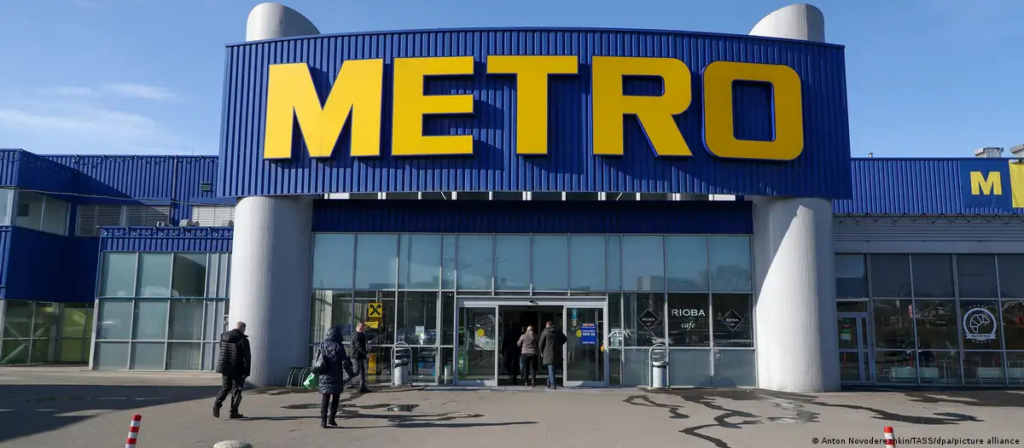
German wholesaler and food retailer Metro AG has lost operational control of its Russian subsidiary after President Vladimir Putin signed a decree placing the business under temporary administration. The order transfers management of Metro Cash and Carry’s Russian operations to UK Torg RUS, while Metro formally remains the legal owner of the subsidiary.
The decree does not explain the reason for the measure. It follows similar interventions affecting Western companies operating in Russia under a 2023 framework targeting assets linked to states Moscow classifies as unfriendly. Previous cases involving foreign groups have demonstrated that temporary administration can significantly weaken the original owner’s ability to determine strategy, manage assets or negotiate an exit on its own terms.
Metro entered the Russian market in 2001 and at one point operated 91 wholesale stores employing around 9,000 people. Russia remains financially important for the group. During the first nine months of its 2025 and 2026 financial year, Russian sales increased 10.3 percent in euro terms to approximately €2.14 billion, representing about 8.7 percent of Metro AG’s total sales during the period.
The company says it has gradually reduced its ties to the Russian operation since Moscow launched its full scale invasion of Ukraine in 2022. Yet leaving the market has become increasingly complicated for Western companies. Russian authorities have imposed large discounts on asset sales, exit taxes and government approval requirements, sharply limiting the negotiating leverage of foreign owners.
The intervention also comes amid worsening relations between Moscow and Berlin. Germany has attributed a suspected drone operation near Leipzig airport to Russia and recently closed a Russian consulate in Bonn and a Russian cultural center in Berlin. Moscow has denied the accusations and responded by closing the German consulate in St. Petersburg.
The German government continues to support Ukraine politically, financially and militarily, while Russia increasingly portrays Berlin as one of its principal European adversaries. Analysts in Germany have argued that pressure on German corporate assets may therefore serve purposes extending beyond commercial regulation.
For Metro, the immediate problem is operational control. For other Western companies still active in Russia, the message is broader. Formal ownership may no longer guarantee effective authority over assets once geopolitical confrontation becomes embedded in corporate governance.
Analysis that transcends power.