

 Phoenix 24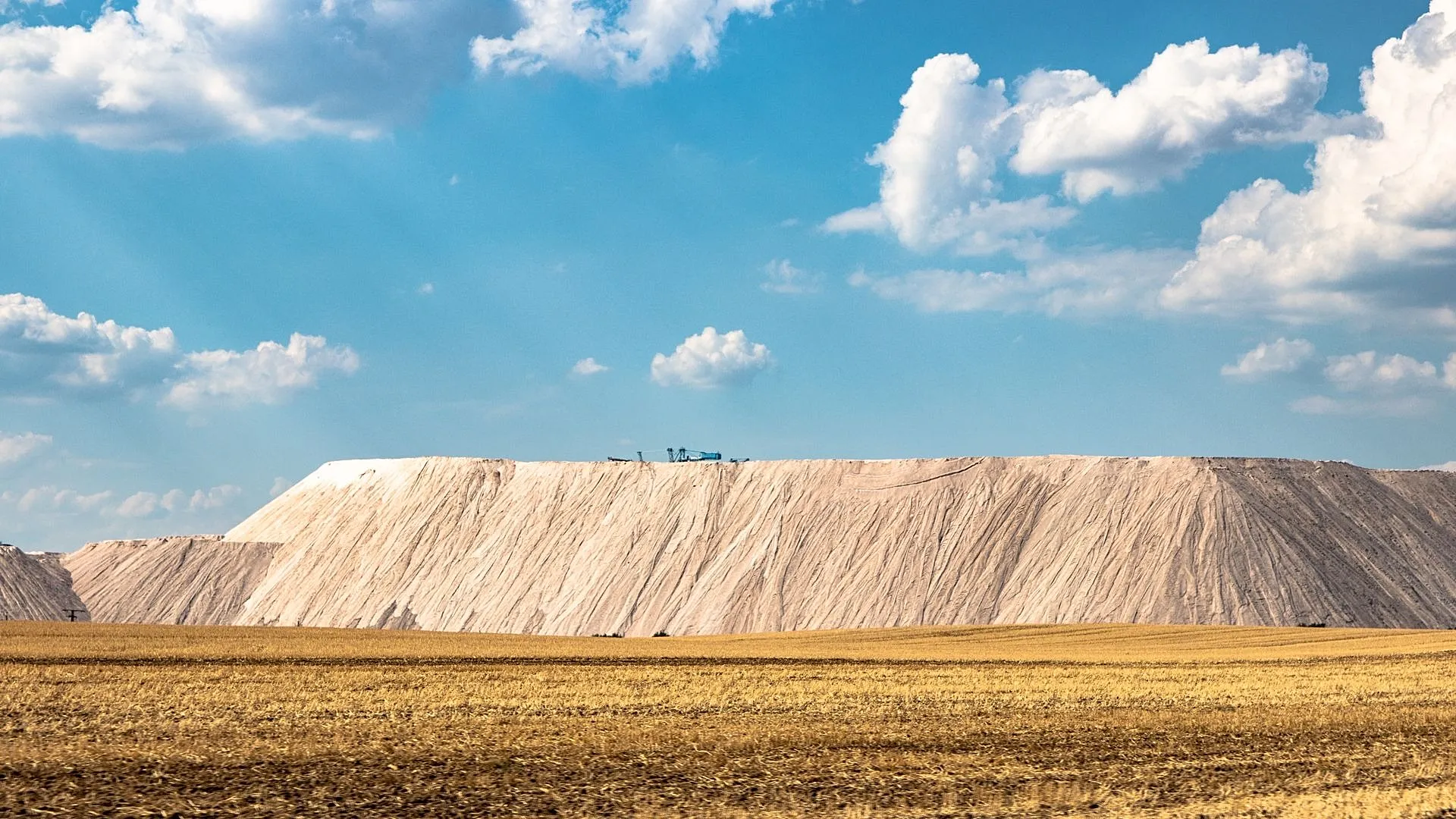
Old industrial landscapes may strengthen Europe’s material independence.
Lower Silesia | July 2026
Poland’s historic mining waste could become an important source of the metals required for Europe’s energy, automotive, electronics and defense industries. Material deposited decades ago in industrial heaps is being reassessed as technological advances and rising commodity prices make the recovery of previously discarded elements increasingly viable.
Euronews reported that Poland has more than 1,350 identified and documented mining-waste sites, some of them dating back approximately two centuries. Many have not yet been fully examined for their metallic content, but geological records suggest that several may contain valuable resources overlooked when the original mines and smelters were operating.
These sites are described as anthropogenic deposits because they were created through human industrial activity rather than natural geological processes. Older metallurgical methods could not recover every element contained in the extracted material, while some metals had little commercial importance at the time. The remaining slag and waste may now contain substances considered economically and strategically valuable.
Critical raw materials are essential for manufacturing microprocessors, batteries, electric motors, power converters, propulsion systems, advanced electronics and military equipment. The category includes metals such as nickel, lithium, cobalt, antimony, tungsten and molybdenum, alongside specialized elements used in high-performance technologies.
Poland does not possess major natural concentrations of every rare-earth element, but its copper deposits are polymetallic. Copper extraction can also produce silver, gold, palladium, platinum and nickel, increasing the potential value of both current mining operations and historic industrial waste.
Grupa Virtus, a Warsaw-based company formerly known as Raen, is supporting a project to recover critical materials from mining waste. After previous involvement in photovoltaic energy, the company shifted toward defense financing, dual-use technologies and projects associated with strategic industrial capacity.
The proposed recovery system is modular and mobile. Crushing, acid dissolution, electrorefining and neutralization equipment can be installed inside container-based units and transported directly to the waste site. Processing material where it is already stored could reduce the cost, environmental impact and logistical complexity of moving large volumes elsewhere.
The company says the system requires relatively limited space and energy, making it suitable for former industrial areas without access to major electrical infrastructure. The first Polish proof-of-concept installation is being constructed in Lower Silesia and is expected to begin operating during the winter, subject to weather and commissioning conditions.
The project will initially evaluate recovery efficiency, material purity, energy consumption and processing capacity. Its results will determine whether larger facilities can be commissioned and whether the technology can be adapted to different mining-waste compositions.
Each site presents a separate technical challenge. Waste heaps contain different combinations and concentrations of metals, requiring engineers to select the appropriate electrodes, chemical conditions and electrorefining process. Commercial production estimates cannot be finalized until specific sites, environmental permits and processing agreements have been secured.
The recovery method was developed by a Polish research team led by Professor Przemysław Łoś in collaboration with the Wrocław University of Science and Technology, the Silesian University of Technology and the Institute of Non-Ferrous Metals. Comparable installations have already been implemented in China and Chile under the team’s technical supervision.
According to the developers, the system operates through a closed process in which acids are purified and reused rather than discharged. Electrolysis allows individual metals to be separated from complex industrial mixtures and collected on cathodes.
The company maintains that the process can isolate substances including tantalum, niobium, antimony, hafnium, gold and silver without producing additional waste streams. Those environmental claims will need to be evaluated through the operational data and regulatory assessments associated with the Polish demonstration facility.
Economic conditions have significantly improved the appeal of secondary raw materials. Andrzej Kensbok, vice-president of Grupa Virtus, noted that copper prices have risen from approximately $1,500 per tonne more than a decade ago to between $10,000 and $12,000.
Higher prices can make the recovery of copper and associated precious metals commercially attractive. Waste that once had little economic value may therefore become a viable industrial input, while mines previously regarded as unprofitable may also return to consideration.
Recycled metals are already integrated into Poland’s industrial production. KGHM Polska Miedź obtains approximately 30 percent of its domestically produced copper from recycled scrap, compared with about 10 percent in earlier periods.
Metals can be repeatedly recycled without losing their essential material properties. Secondary copper, steel and other recovered materials can re-enter manufacturing once they have been refined to the purity, dimensions and chemical specifications demanded by customers.
Automotive and battery manufacturers require highly precise materials, including specialized alloys and lithium or cadmium powders. Defense production may require tungsten bars for armor-piercing components, while electronics and electric-motor manufacturers depend on metals processed to strict technical standards.
The proposed Polish facilities would not necessarily manufacture these finished components. Their role would be to recover and purify raw material before supplying advanced smelters and industrial processors capable of transforming it into customer-specific products.
Electronic devices, cables, electric motors, industrial liquids and vehicle batteries represent another expanding source of recoverable material. Europe began accelerating transport electrification more than a decade ago, meaning that the earliest generations of electric-vehicle batteries are now approaching replacement and recycling.
Large energy-storage systems connected to electrical grids will create an additional waste stream during the next five to ten years. As these installations reach the end of their operational lives, companies will need to neutralize, dismantle and separate their components before recovering valuable metals.
This transition supports a more circular industrial model in which secondary resources complement traditional mining. Recycling is not expected to eliminate mineral extraction, but it could reduce the volume of new material required and preserve resources already present within the European economy.
The geopolitical objective is equally important. Europe remains heavily dependent on externally controlled supply chains for critical materials, particularly refining networks associated with China. This dependence affects industries central to energy security, digital infrastructure, transportation and defense.
The European Union aims to obtain at least 25 percent of its critical raw material consumption from recycling by 2030. Current recycled supply is estimated at only between two and three percent, making the target difficult to achieve within the established timeline.
The Critical Raw Materials Act provides regulatory and financial instruments to support extraction, processing and recycling projects inside the European Union. Polish initiatives may seek co-financing under this framework once they demonstrate technical performance and compliance with environmental requirements.
Poland’s combination of industrial experience, documented waste sites, metallurgical knowledge and geographic position could support a broader recovery sector. The country already hosts mining-equipment manufacturers, copper and silver production, recycling businesses and industries connected to rail, shipbuilding, automotive production and defense.
Other European countries with substantial mining traditions are examining similar opportunities. Sweden, Finland, Germany and the Czech Republic possess industrial legacies that may contain recoverable materials, while future reconstruction could also bring Ukraine into the sector.
Poland’s former mining waste is therefore being reconsidered not merely as an environmental burden, but as a potential strategic inventory. The outcome will depend on whether mobile recovery technology can prove commercially scalable, environmentally controlled and adaptable to the chemical complexity of each site.
Europe’s search for material independence may begin not only in new mines, but inside the industrial remains of its own past.
Phoenix24 | Yesterday’s waste may secure tomorrow’s industry. Los residuos de ayer pueden asegurar la industria del mañana.