

 Phoenix 24
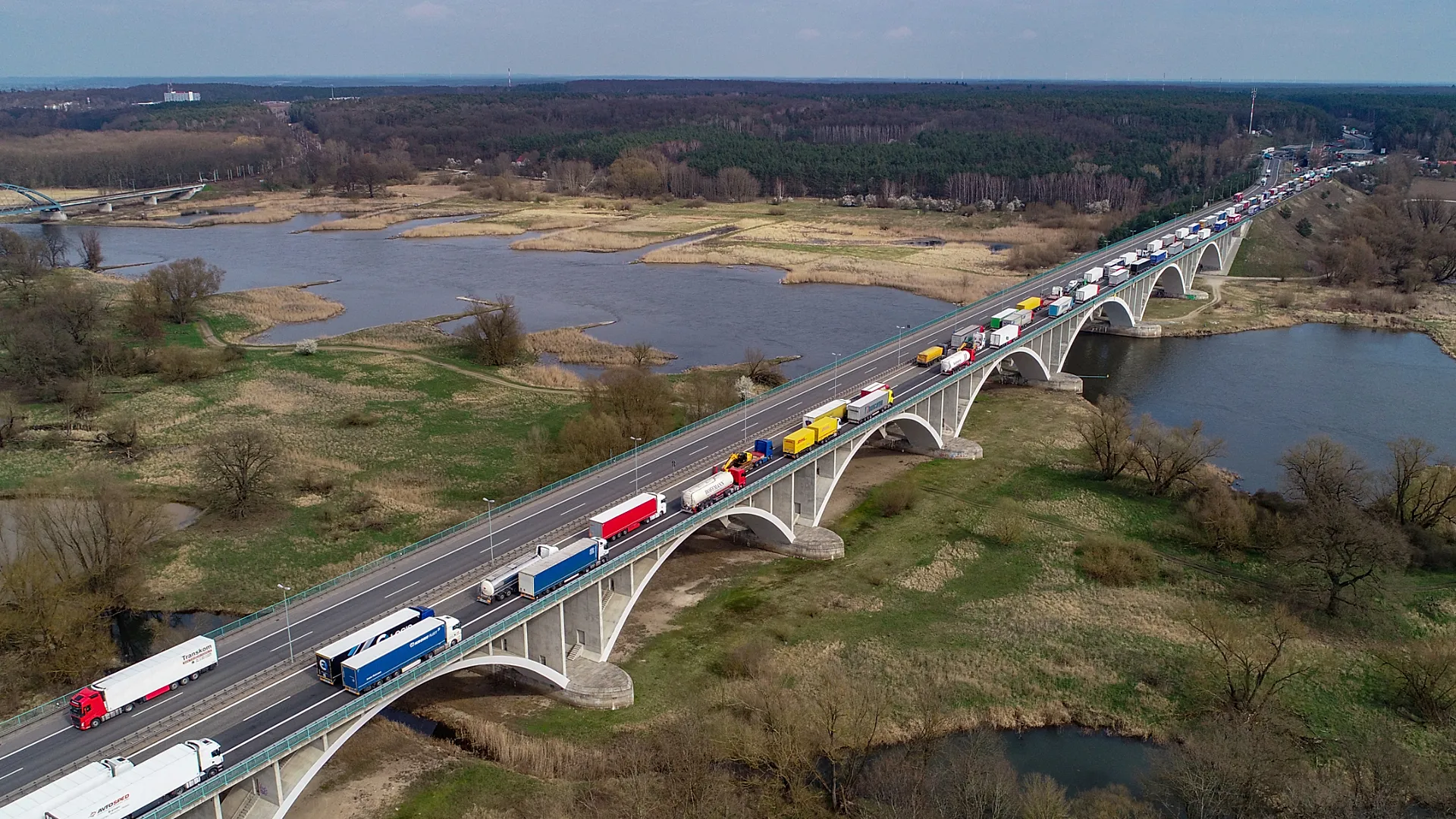
Temporary controls become political when they stop feeling temporary.
Warsaw, March 2026
Poland’s decision to extend border controls with Germany and Lithuania for another six months is not just an administrative security measure. It is a political signal that the Schengen ideal of frictionless movement remains increasingly conditional when migration pressure and internal security are pushed to the center of public debate. Warsaw says the checks will now remain in place until October 1, 2026, and has justified the move through the familiar language of combating irregular migration and protecting internal order. That vocabulary matters because it has become the shared grammar through which European governments normalize exceptional border measures inside what is supposed to be a borderless zone.
The most revealing point is that these controls are no longer being treated as a short-lived emergency. Poland first reintroduced them in July 2025, and the latest extension shows how easily temporary measures can become semi-permanent instruments of state policy. Once a government convinces its public that internal checks are necessary for security, rolling them back becomes politically harder than renewing them. In that sense, the real border being redrawn is not only geographic. It is conceptual.
The decision also reflects a wider European pattern. Germany has maintained its own controls on several borders, citing irregular migration and smuggling networks, while other member states have used similar justifications to reintroduce checks that would once have been seen as exceptional. Poland is therefore not acting in isolation. It is participating in a continental drift in which Schengen still exists formally, but its practical openness is increasingly filtered through domestic political pressure.
That matters especially on the German and Lithuanian fronts because each border carries a different symbolic burden. The German border is tied to disputes over returns, migration management and the broader politics of burden-sharing inside the European Union. The Lithuanian border, by contrast, sits closer to the eastern migration route that Warsaw has long linked to pressure from Belarus and the wider geopolitical weaponization of migration. By extending controls on both fronts, Poland is effectively saying that its security anxieties are no longer episodic. They are systemic.
There is also a domestic political logic behind the move. Border controls are among the most visible ways a government can demonstrate action, decisiveness and sovereignty to its own electorate. Even if the practical effect on migration flows is mixed or uneven, the symbolism is powerful because it offers a state-centered answer to a problem often perceived as transnational and difficult to govern. In democratic politics, visibility of action often matters almost as much as measurable outcome. A checkpoint communicates control even before it proves it.
Still, this strategy carries a structural cost for the European project. The more often internal border controls are prolonged, the more the Schengen area begins to function as a space of negotiable openness rather than a stable legal and political norm. What was designed as an exception for extraordinary moments starts becoming an adaptable instrument of routine governance. Once that happens, the principle of free movement does not disappear at once. It erodes through repetition.
That is why Poland’s extension should not be read simply as a migration story. It is also a story about the recalibration of Europe’s internal architecture under pressure. Security concerns, electoral incentives and geopolitical tension are combining to make internal borders feel administratively normal again, even when legal doctrine still describes them as temporary. The contradiction is no longer hidden. It is becoming the operating method.
So the significance of Warsaw’s decision lies beyond six more months of checks. Poland is helping define a European reality in which freedom of movement remains in force, but increasingly under conditions set by national governments willing to suspend it whenever political necessity demands. That does not mean Schengen is dead. It means Schengen is being asked, again and again, to survive as a principle inside a continent that trusts emergency logic more than it once did.
Detrás de cada dato, hay una intención. Detrás de cada silencio, una estructura.
Behind every datum lies an intention. Behind every silence, a structure.