

 Phoenix 24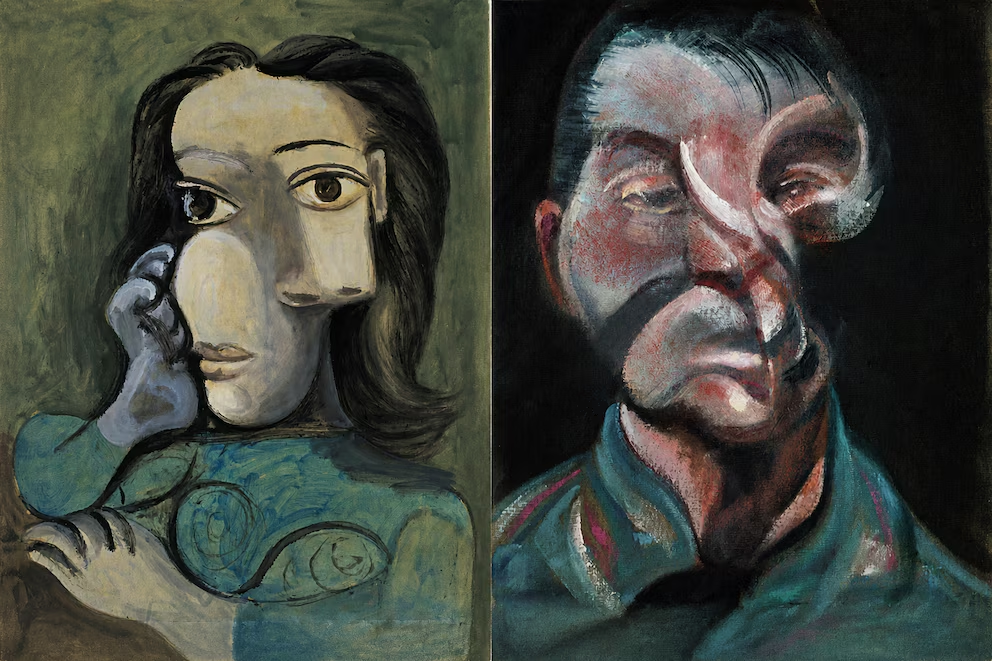
Two artistic visions reveal what conventional beauty cannot express.
VIENNA, AUSTRIA.
Pablo Picasso and Francis Bacon are brought into direct artistic dialogue at Vienna’s Albertina Museum, where an exhibition running through January 31, 2027 examines how two influential painters transformed the human figure into an expression of psychological and emotional experience. Titled Picasso – Bacon: What It Feels Like to Be Human, the exhibition brings together approximately 70 works from international collections. Rather than celebrating conventional ideals of beauty, the presentation explores how fragmented bodies, distorted faces and unsettling imagery can communicate fear, desire and vulnerability. The encounter raises a broader question about modern art: whether the human condition can sometimes be represented more convincingly through distortion than through anatomical accuracy.
The relationship between the artists began with an encounter that shaped Bacon’s career. In 1927, the young British artist saw works by Picasso at Galerie Paul Rosenberg in Paris, an experience widely regarded as decisive in his commitment to painting. Picasso’s experiments with the human body demonstrated that representation need not preserve physical proportions to convey emotional meaning. Bacon subsequently developed a profoundly different visual language, but the challenge posed by Picasso remained central to his artistic development.
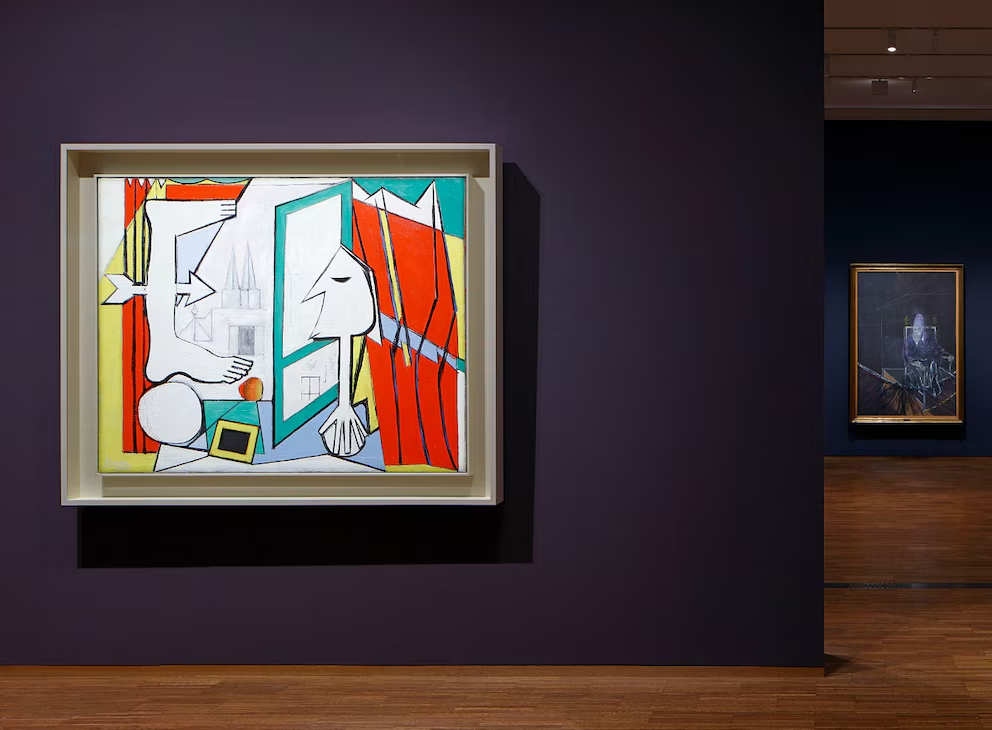
Their approaches nevertheless reveal important distinctions. Picasso frequently reorganized the body through sharply defined contours, shifting perspectives and geometric fragmentation, challenging the assumption that a figure must be viewed from a single fixed position. Bacon pursued a more visceral form of distortion, using unstable faces, isolated bodies and expressive brushwork to suggest vulnerability beneath outward appearances. Where Picasso often dismantled visual structure, Bacon made psychological tension almost physically tangible. The comparison demonstrates how two contrasting techniques could interrogate similar questions about identity and human experience.
The exhibition also examines subjects that repeatedly appear in their work, including erotic desire, violence, religious imagery and the confrontation with mortality. These recurring themes acquire particular significance when viewed against the political upheavals and devastating conflicts of the twentieth century. Neither artist confined painting to the reproduction of external reality; both explored how historical violence and private experience might transform the representation of the body. Their works invite viewers to recognize discomfort not as a failure of artistic harmony, but as a deliberate means of communication.
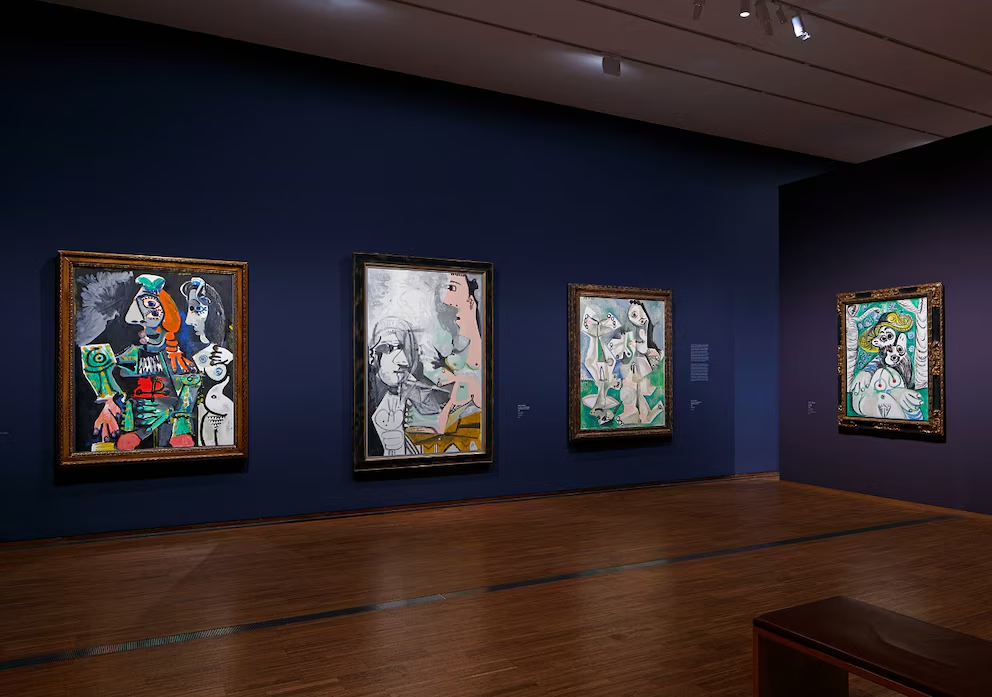
Bacon’s relationship with Picasso was not simply one of imitation. Admiration gradually developed into an artistic challenge as the British painter sought to establish an independent position within modern figurative art. By presenting their works together rather than separating them into conventional chronological narratives, the Albertina makes visible both the continuity of their concerns and the differences in their solutions. The exhibition consequently becomes a study of influence without reducing either artist to the achievement of the other.
Beyond their historical importance, the paintings confront a question that remains recognizable in contemporary culture. Societies continue to construct ideals of physical perfection while struggling to acknowledge vulnerability, ageing and emotional suffering. Picasso and Bacon approached these experiences through visual disruption, refusing to make the body reassuring or entirely coherent. Their encounter in Vienna suggests that art’s ability to reveal humanity may depend less on depicting how people look than on expressing what they endure.
Art That Challenges the Visible. / Art That Reveals the Human.