

 Phoenix 24
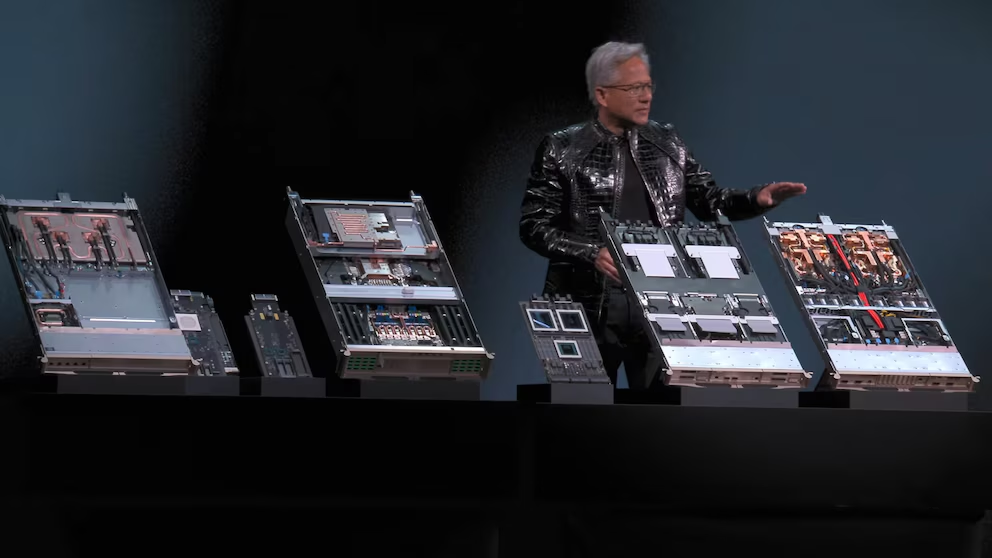
When a technology sector defines its future at a global showcase, the implications extend far beyond product announcements.
Las Vegas, January 2026.
At CES 2026, Jensen Huang, chief executive of Nvidia, presented what may be one of the most consequential strategic narratives in recent years for artificial intelligence. Huang declared that AI systems are entering a new era in which they can exhibit levels of competence comparable to human performance across a broader range of tasks. This message marked a distinct shift from prior industry rhetoric centered primarily on capability and scalability, moving toward assertions of functional parity in practical contexts.
Huang’s address underscored that Nvidia’s roadmap for AI is no longer confined to accelerators and training frameworks alone. It encompasses integration, generative reasoning and deployment in domains traditionally seen as requiring human judgment. The company’s recent hardware and software innovations aim to compress the gap between prototype performance and real-world applicability, positioning AI as a more reliable partner in sectors such as healthcare diagnostics, industrial automation and scientific research.
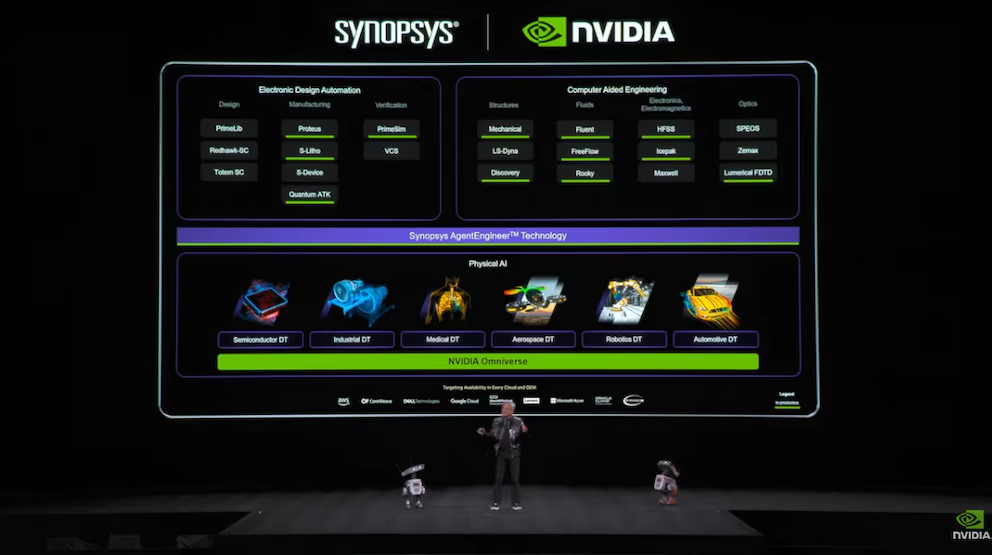
Central to Nvidia’s argument is the belief that advancements in model architecture, data pipelines and inference optimization have reached a point where the probabilistic limitations that once characterized machine intelligence can be mitigated in applied settings. This does not imply that AI possesses consciousness or subjective understanding, but rather that the practical output of these systems can meet or exceed human benchmarks on targeted measures of accuracy, consistency and adaptability.
Industry observers noted that the company’s declarations at CES also reflected strategic positioning in broader competition. With major actors in the United States, Europe and Asia investing heavily in next generation compute infrastructure, Nvidia’s message served to reinforce its leadership role and to shape expectations for AI integration timelines across ecosystems. The emphasis on human-level competence can influence how enterprises budget for adoption, how regulators conceptualize thresholds for safety and how partners prioritize interoperability across platforms.
Europe’s technology community responded with a mixture of interest and caution. While some welcome the potential efficiencies that advanced AI can unlock in sectors such as manufacturing, logistics and drug discovery, others emphasized the need for robust governance frameworks to accompany any shift toward systems that approximate human reasoning. Regulatory bodies within the European Union have been actively refining proposals on AI risk classification, accountability standards and sector-specific compliance measures, underscoring that competence alone does not equate to societal readiness.
In Asia, momentum around next generation AI deployment is strong, with several economies framing artificial intelligence as a pillar of national competitiveness. Nvidia’s vision aligns with these ambitions, though it also raises questions about workforce adaptation, ethical standards and equitable access to emerging technologies. Stakeholders in Japan, Singapore and South Korea have highlighted the importance of balancing capability with inclusive training initiatives to mitigate displacement risks and to cultivate domestic innovation ecosystems.
Within the United States, the announcement at CES resonated strongly with enterprise and research communities already intensifying investment in AI-centric operations. The prospect of tools that approach human-level task execution accelerates discussions about workforce reskilling, intellectual property norms and intersectoral collaboration models. It also adds urgency to debates over the social and economic impacts of automation.
Huang’s presentation, therefore, cannot be read merely as a product pitch. It is a strategic positioning that frames AI’s next chapter in terms of competence, collaboration and competitive differentiation. Nvidia’s argument implicitly challenges rivals to reconsider how they articulate progress and how they align technical milestones with user expectations and regulatory realities.
As the industry moves forward, observers will be watching not only how these systems perform in controlled environments but how they behave in complex, real-world conditions where ambiguous signals, ethical constraints and cross-domain generalization are the norm rather than the exception. The claim of human-level competence raises foundational questions about trust, oversight and the evolving relationship between human agency and machine execution.
Phoenix24: clarity in the grey zone.
Phoenix24: claridad en la zona gris.