

 Phoenix 24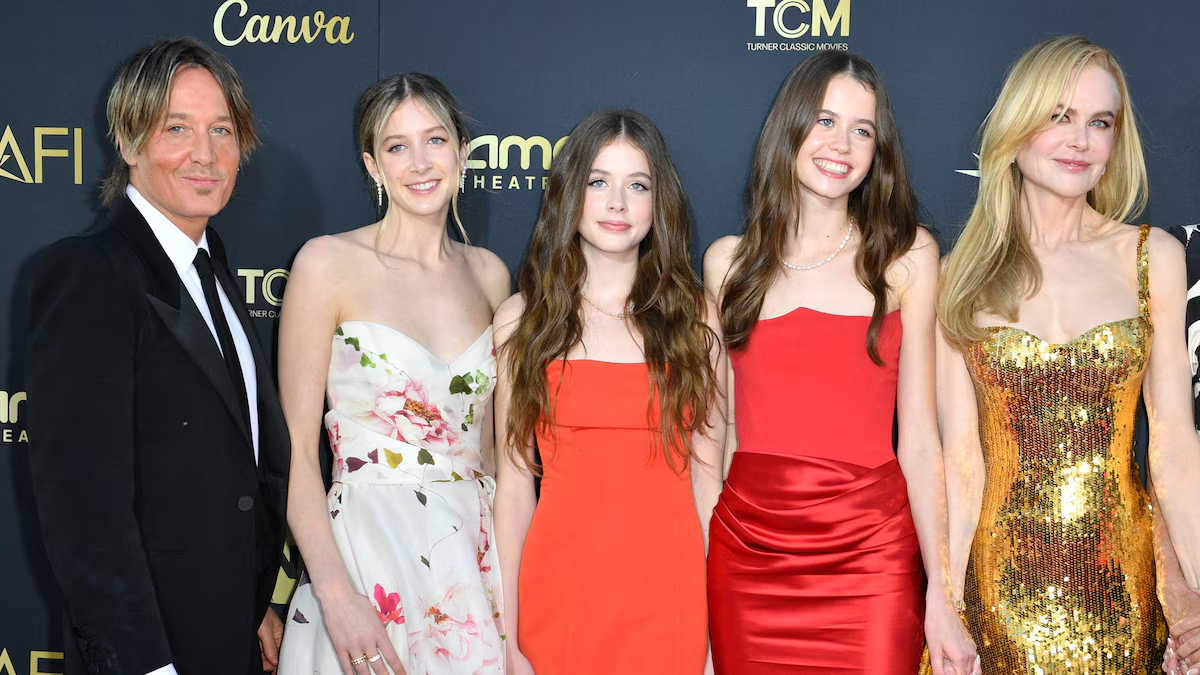
Autonomy is the new family contract.
New York, March 2026
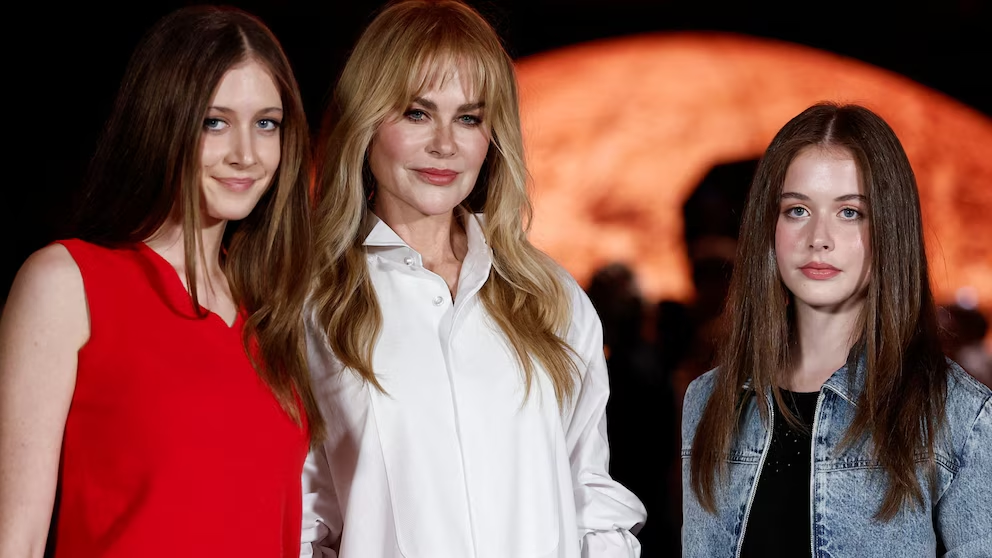
Nicole Kidman is being asked a question that follows famous parents like a shadow: will your children follow you into the industry. Her answer, delivered on a red carpet where cameras expect certainty, was deliberately unsatisfying for gossip culture and quietly instructive for everyone else. She said the decision is not hers to make. If her daughters, Sunday Rose and Faith Margaret, ever step into acting or choose any public-facing path, it will be because they choose it, not because she frames it as inheritance. That refusal to “cast” her own children is the real headline, because it signals how celebrity families are evolving under a harsher media economy.

The context matters. Kidman was in New York for the rollout of Scarpetta, a project that pulls her back toward serialized prestige at a time when television is treated like the primary engine of global audience attention. The setting was built for marketing, questions, and narrative management. Yet the moment the conversation turned to her daughters, she switched posture from performer to boundary-setter. She did not tease a future collaboration, did not feed the “family dynasty” fantasy, and did not offer a timeline. She framed the topic as autonomy. In the current celebrity ecosystem, autonomy is not a sentimental word. It is a security strategy.
Kidman’s position also reveals a quiet reversal of older Hollywood dynamics. For decades, the dominant template was lineage: famous parents opening doors, children walking through them, and the industry selling the family as a brand. That model still exists, but it now operates under stronger scrutiny because the public has become more sensitive to nepotism, privilege, and the psychological cost of turning childhood into content. When Kidman says it is not her call, she is not denying her influence. She is acknowledging that influence is exactly why the boundary must be explicit. The more power a parent has, the more important it becomes to show that the child’s identity is not pre-owned.

At the same time, her comments do not read like rejection of her daughters’ ambition. They read like refusal to treat ambition as destiny. Kidman has repeatedly spoken about wanting her children close, about the pull to keep family together even when her work demands distance. That tension, wanting proximity while defending independence, is a central contradiction of modern high-status parenting, intensified by fame. The parent wants safety and togetherness. The adolescent wants space and self-authorship. In celebrity families, that push-pull is amplified because every choice can be interpreted publicly as either control or neglect. Kidman’s approach tries to avoid both traps: she expresses love and closeness without converting it into a claim over their future.
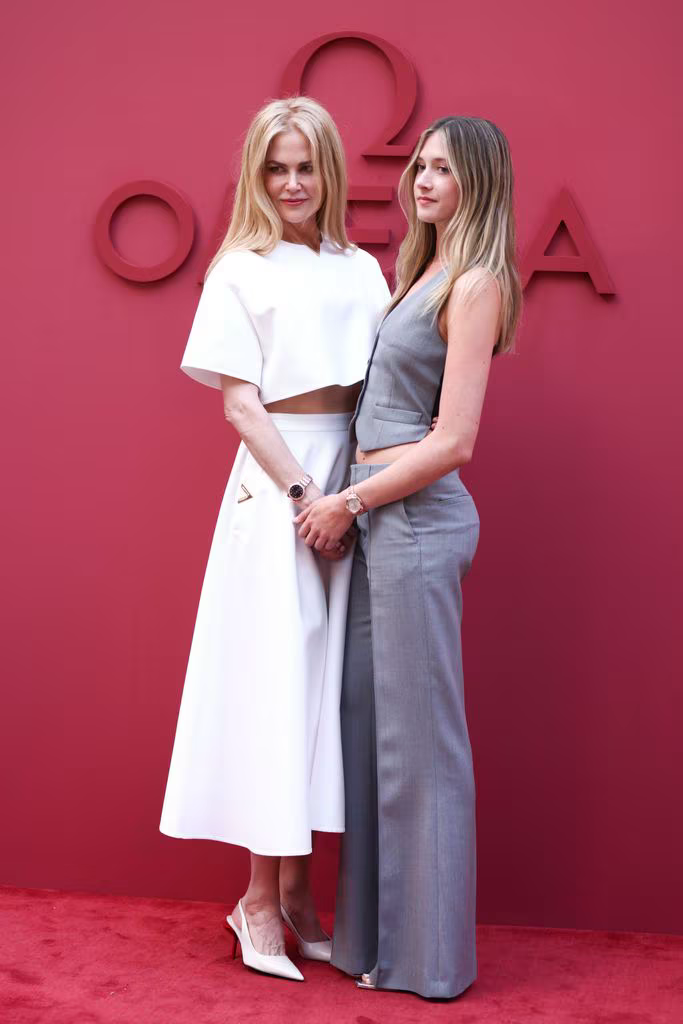
The broader cultural layer is that Sunday Rose has already entered public visibility in ways that blur the line between “private child” and “public young adult.” She has been photographed in fashion contexts and has been discussed as a young person with creative interests. Those signals invite the media to treat her trajectory as inevitable. Kidman’s response pushes back against inevitability. It is a reminder that visibility is not the same as career commitment, and that one appearance does not constitute a lifetime contract with public scrutiny. In an era where the internet makes early exposure permanent, delaying definitive labels becomes a protective act.
This stance also aligns with a growing recalibration in how elite families manage risk. In the United States, celebrity parenting is increasingly shaped by legal and reputational lessons learned the hard way: online harassment, obsessive commentary, invasive photography, and the long tail of digital records that outlive any youthful phase. In Europe, the pressure is different but related: cultural institutions and audiences often demand authenticity and push back against manufactured dynasties. In Australia, where Kidman’s public identity still carries a national-symbol layer, the expectation of “family narrative” is often intense. Across these regions, the common factor is that public life is less forgiving than it used to be, and the threshold for harm is lower because amplification is faster.
Kidman’s refusal to decide for her daughters is also a subtle statement about what success is supposed to look like now. The old definition of success in entertainment was expansion: more fame, more roles, more public presence, more visibility across generations. The new definition, at least for some families, is control: the ability to choose when to be seen, how to be seen, and whether to be seen at all. That is why her answer resonates. It is not a denial of Hollywood. It is a denial of Hollywood as default outcome.
There is a psychological realism to this approach that the public often misses. Adolescence is already a period where identity is unstable and experimental. When that experimentation happens under mass attention, every temporary phase can be treated like a permanent brand decision. The result is a kind of identity foreclosure, where the young person feels pressured to “become” something before they have had the space to explore alternatives. Kidman’s language of choice, and her insistence that it is not her call, is a way to keep the future open, at least in the family’s own framing.
None of this eliminates the structural truth that famous parents provide access. Doors open more easily. Networks appear faster. Opportunities arrive sooner. Kidman cannot erase that. But she can influence how the access is used, and she can refuse to narrate it as entitlement. In public terms, that matters. In private terms, it matters more. It tells her daughters that their worth is not measured by whether they replicate her career, and that belonging in the family is not conditional on becoming a public figure.

In a media climate that rewards certainty, Kidman offered something else: a boundary that does not invite negotiation. She may want her daughters near. She may be open to working with them someday. But she will not pre-announce their lives as a franchise extension. That is a small decision that signals a larger shift: celebrity families are starting to treat privacy not as absence of publicity, but as a deliberately managed resource. The “will they follow your footsteps” question will not disappear. The more interesting question is whether more public parents will answer it the way Kidman did, not with a plan, but with a limit.
Phoenix24: journalism without borders. / Phoenix24: periodismo sin fronteras.