

 Phoenix 24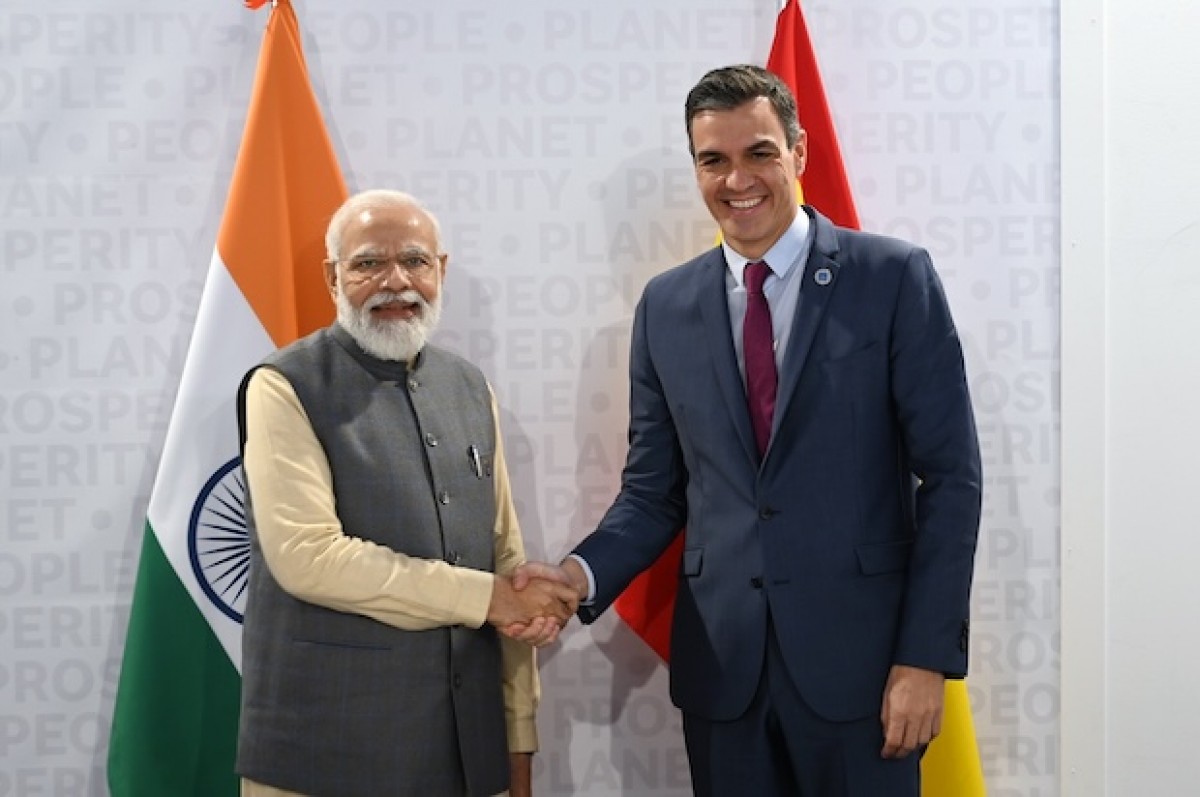
Power without oversight is the real risk.
New Delhi, February 2026.
From a distance, it looked like a routine press moment on a foreign trip. Up close, it read like a blueprint for the next regulatory confrontation between elected governments and the owners of global platforms. Speaking in New Delhi, Pedro Sánchez argued that social networks cannot remain a space where violent, pornographic, and hate content circulates at scale while responsibility stays diffuse. He placed the burden where he believes it belongs, on executives who design and profit from algorithms that amplify illicit material because outrage is efficient distribution. The core claim was simple: if democracies regulate other high impact sectors, platforms cannot be treated as an exception.
The message gained sharpness because it was delivered under provocation, not in a controlled domestic setting. Sánchez was asked about personal attacks posted on the platform X by Elon Musk, including language that framed the Spanish leader as a traitor and echoed a suggestion that he should be detained over migration policy. Instead of treating it as a personal insult story, Sánchez used it to widen the aperture and argue that the insecurity problem is not created by a demographic group, but by concentrated technological power operating without meaningful constraint. In his framing, the risk is a class of technooligarchs who can tilt attention, outrage, and political temperature with minimal accountability. That framing is designed to travel, because it speaks to governance rather than partisan identity.

Sánchez presented regulation as a coordinated project rather than a national impulse, insisting that the phenomenon is global and that the response must be built inside and outside the European Union. The intention is to push beyond isolated enforcement and toward a shared standard that forces platforms to remove illicit content when it is deliberately propagated through amplification systems optimized for reach. He stressed consequences, not moral appeals, signaling that removal obligations must be paired with sanctions that change corporate incentives. The rhetorical move is to reframe platforms as regulated infrastructure rather than neutral arenas, which is a decisive shift in how responsibility is assigned. It also positions the debate as rule setting, not content moderation preferences.
He also tried to preempt the standard counterattack that regulation equals censorship. Sánchez argued the initiative is not ideological, and that its center of gravity is protection of minors and other vulnerable groups, not the policing of opinions. The subtext is pragmatic: a government can lose legitimacy quickly if citizens perceive that rules are being written to protect incumbents rather than children. He drew a bright line around certain categories, including manipulated imagery generated with artificial intelligence that targets children, which he said should be treated as criminal conduct rather than as a grey zone of speech. That emphasis is not accidental, because child protection is one of the few areas where broad coalitions can form across political blocs. It is also one of the few arguments that can compete with the free speech absolutism that platforms often use as a shield.
The credibility of the posture depends on whether it is backed by tangible domestic policy. Spain has already signaled willingness to harden its approach to youth exposure, including discussion around restricting social media access for minors under a defined age and requiring stronger age verification. In that context, the New Delhi remarks function like an externalization of a domestic agenda, exported as international governance language to reduce the appearance of unilateralism. The strategy is to make platform accountability feel like a shared democratic necessity rather than a national cultural fight. It also helps Sánchez manage the perception that regulation is about controlling critics, by anchoring it to demonstrable harms. In a world where platform norms are set by the loudest actors, formal rules become a way to reclaim the tempo.
The same press appearance contained a second announcement that revealed how quickly governance narratives can collide. Sánchez confirmed that the government had been informed of a complaint against the Director Adjunct Operational of Spain’s Policía Nacional, José Ángel González, and that the executive acted immediately to remove him from his post while expressing support for the alleged victim. He framed it as a matter for competent authorities to investigate and for responsibilities to be clarified through due process. The institutional signal is speed: remove first to protect the integrity of the organization, then let the judiciary determine culpability. In political terms, this is damage containment, but it is also a statement about how power is expected to behave when credibility is at stake.
Put together, the two halves of the appearance read as one theme: accountability must be enforceable even when the actor is powerful. Sánchez’s platform argument is that executives should not enjoy immunity simply because the product is digital and globally distributed. The policing announcement is that senior security officials should not enjoy institutional protection when credible allegations surface. Both messages try to position the state as capable of disciplining authority rather than being captured by it, whether the authority is corporate or bureaucratic. That symmetry is useful rhetorically, because it reduces accusations of selective moralism. It also reflects an emerging governance reality: legitimacy increasingly depends on how institutions handle misconduct as much as on how they deliver policy.
There is a deeper tension that will define what happens next, because regulation and enforcement now compete with speed and scale. Platforms are engineered for frictionless distribution, while law is engineered for deliberation and procedural safeguards. If governments move too slowly, harms compound and public trust erodes; if they move too aggressively, they risk building rules that are overbroad, politically weaponizable, or technologically naive. Sánchez’s language suggests he wants to avoid both traps by focusing on clearly illicit content and on algorithmic amplification that can be measured and audited. Whether that balance is achievable will depend on technical definitions, enforcement capacity, and the political will to sustain the fight once platforms mobilize public opinion and lobbying power.
For now, the significance is less the novelty of the claims and more the choice of battlefield. By making the argument on an international stage, Sánchez is signaling that platform governance is entering the same diplomatic category as climate commitments and security coordination, a domain where national rules alone are insufficient. By pairing that argument with a domestic accountability move inside the security apparatus, he is also trying to project coherence, the state demanding responsibility from others while accepting it internally. The next phase will not be decided by speeches, but by whether law can be translated into incentives that change behavior without breaking open society’s communication channels. In the meantime, the New Delhi framing is clear: the question is no longer whether platforms should be regulated, but who has the authority to impose limits on those who shape the public sphere.
Phoenix24: claridad en la zona gris. / Phoenix24: clarity in the grey zone.