

 Phoenix 24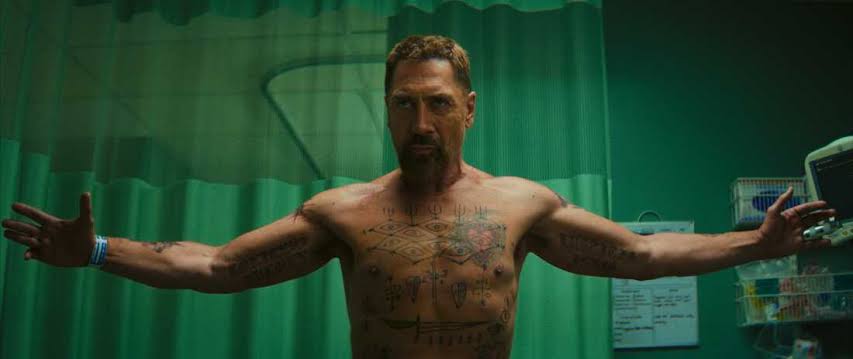
TikTok, drones and surveillance modernize psychological terror.
SAVANNAH, United States | June 2026
Apple TV’s new adaptation of Cape Fear brings one of cinema’s most unsettling villains into the digital age by giving Max Cady access to smartphones, drones, artificial intelligence and geolocated surveillance. Javier Bardem assumes the role previously played by Robert Mitchum in 1962 and Robert De Niro in Martin Scorsese’s 1991 remake. The ten-episode series preserves the core story of revenge and intimidation while expanding it into a prolonged examination of paranoia. Its creators describe the production as a contemporary nightmare built from the DNA of two classic thrillers.
The story follows a prosperous married couple played by Amy Adams and Patrick Wilson, both lawyers whose family life begins to collapse after Cady returns from prison. He was exonerated after spending 17 years incarcerated for the murder of his pregnant wife and now directs his anger toward the people he believes destroyed his life. His campaign does not rely only on physical intimidation. He studies the couple, their children and the secrets each family member wants to keep hidden.
Bardem presents Cady as a man who believes he has already lost everything. That absence of restraint gives him time, patience and freedom from ordinary social approval. He does not need to preserve a career, reputation or stable identity because revenge has become his principal purpose. The character’s danger comes from his willingness to remain close, observe carefully and exploit weaknesses gradually.

Showrunner Nick Antosca wanted the series to honor earlier versions without reproducing them scene by scene. He has described the adaptation as a nightmare remix in which familiar images return in altered order and context. Several recognizable moments from the 1991 film appear again, including Cady’s prison exercises, his tattoos, his psychological approach to the daughter and his disturbing behavior inside a movie theater. The difference lies in how those scenes are reframed through contemporary technology and family dynamics.
Martin Scorsese, who directed the 1991 film, serves as an executive producer alongside Steven Spielberg. Antosca said Scorsese encouraged the creative team to take risks and push the material beyond a cautious remake. That influence can be seen in the dynamic camerawork and increasingly feverish visual style used as the threat intensifies. The series also retains musical connections to the earlier films through themes associated with Bernard Herrmann and Elmer Bernstein.
The ten-episode structure allows the narrative to move differently from the two-hour films. Instead of racing continuously toward violence, the series slows the destruction of the family and allows distrust to accumulate. Antosca was interested in the devastation created when a household is dismantled little by little. The extended format gives the children their own storylines and makes the parents’ personal failures part of Cady’s strategy.
Patrick Wilson’s character is not simply defending his family from an external aggressor. He is also struggling to maintain relationships with rebellious teenage children and a wife whose emotional stability is deteriorating. The family’s internal fractures create openings that Cady can manipulate. His intrusion becomes more effective because the household is already carrying unresolved tension.
The 2026 setting changes the mechanics of fear. Cady can clone smartphones, monitor locations, use drones and exploit digital traces that earlier versions of the character could not access. Social platforms such as TikTok provide information about routines, preferences and relationships that once required physical surveillance. True-crime podcasts and the contemporary appetite for public exposure add another layer to the story’s obsession with guilt, judgment and reputation.

Amy Adams has emphasized that the new Cady uses surveillance in a more technical and invasive way. The tools may be contemporary, but the sensation they create remains timeless. Fear begins when a person no longer knows whether a private conversation, movement or habit has been observed. Technology intensifies that anxiety because surveillance can continue invisibly and at a distance.
The series uses artificial intelligence and geolocation not as decorative references, but as extensions of Cady’s psychological method. A drone can watch without approaching, a copied phone can expose private communications and location data can reveal where a target will be before they arrive. These technologies allow the villain to create the impression that escape is impossible. His physical presence becomes less necessary because the threat can enter through devices already inside the family’s home.
That update also reflects a wider cultural change in the meaning of privacy. Earlier versions of Cape Fear depended on the terror of being followed in public or watched from outside a house. The new adaptation imagines a world in which surveillance is partly enabled by the victims themselves through connected devices and constant digital participation. The tools designed to simplify daily life become channels of vulnerability.
The series does not abandon the physical menace associated with Max Cady. Bardem’s performance still depends on controlled aggression, unpredictability and the sense that violence may erupt at any moment. Technology expands his reach, but it does not replace his personal presence. The contrast between digital precision and bodily threat gives the character a different kind of power.

The production also recognizes that Cape Fear has become a durable cultural franchise. Beyond the two films, the story has been parodied by series including The Simpsons and Family Guy. Max Cady has remained recognizable because he embodies a fear broader than any single period. He represents the person who studies a family until every weakness becomes usable.
By placing that villain inside a world of social media, drones and intelligent surveillance, the new series argues that modern life has made his methods easier rather than obsolete. The instruments have changed, but the objective remains control through fear. Cady no longer has to stand outside the window because the family’s own technology can open the door for him. That shift turns a familiar thriller into a story about the dangers hidden inside everyday connectivity.
Fear evolves with the tools that carry it. / El miedo evoluciona con las herramientas que lo transportan.