

 Phoenix 24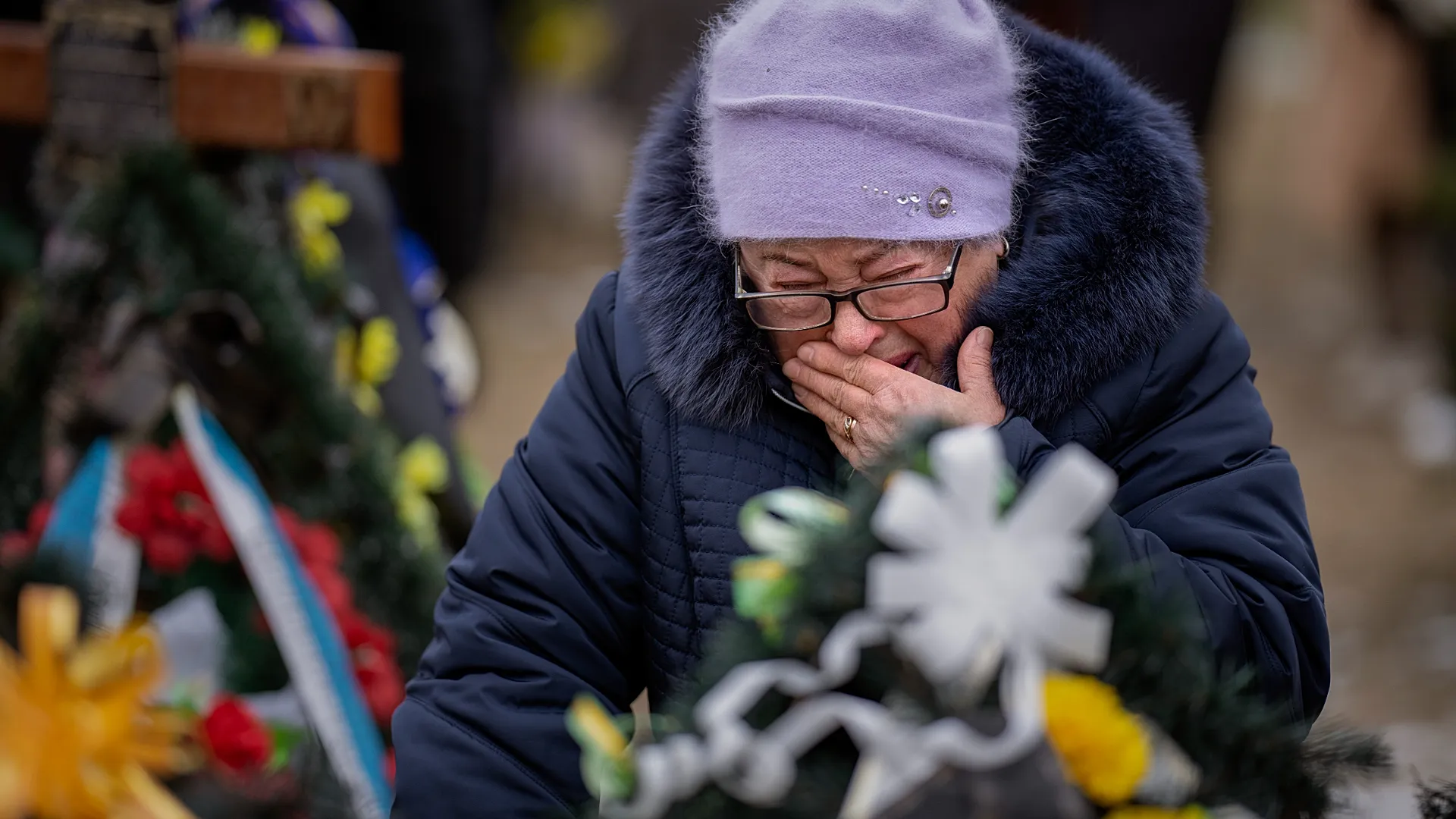
Numbers can be hidden, delayed, or contested, but names have weight and once spoken they resist erasure.
Kyiv, December 2025.
Independent researchers and journalists have compiled the most extensive nominal record to date of Russian military personnel killed in the war in Ukraine, identifying more than 158,000 individual names since the start of the full scale invasion in February 2022. The list, built through open source investigation and cross verification, challenges official narratives that continue to downplay the scale of human losses and offers a granular view of a conflict defined by prolonged attrition rather than decisive breakthroughs.
The database has been assembled through the systematic collection of publicly available information: death notices published by local administrations, obituaries in regional media, social media posts by relatives, cemetery records, and official but localized acknowledgements of fallen soldiers. Each entry requires multiple points of confirmation before inclusion, a methodology designed to minimize duplication and false attribution in an environment saturated with misinformation and propaganda.
What distinguishes this effort from aggregate estimates is its insistence on restoring identity. Rather than projecting casualties through battlefield models or intelligence extrapolation, the project documents names, ranks, and places of origin whenever possible. Researchers involved in the compilation stress that the figure represents confirmed deaths only and should be understood as a floor, not a ceiling. In areas of intense fighting or limited connectivity, fatalities may go unreported for months or never enter public record at all.
The contrast with official Russian reporting is stark. Moscow has released only sporadic and partial casualty figures since 2022, maintaining strict control over military information under wartime legislation. Analysts of Russian information policy note that silence around losses serves multiple functions: preserving morale, limiting domestic backlash, and sustaining recruitment pipelines that would be strained by transparent disclosure. Independent casualty tracking undermines this strategy by making loss visible at the community level.
The geographic distribution of names points to a broad national impact. Soldiers listed come from major urban centers as well as remote regions, including economically marginalized areas that have supplied disproportionate numbers of contract soldiers and mobilized reservists. This pattern has been documented by European and Eurasian conflict researchers, who argue that regional inequality has shaped recruitment practices throughout the war, concentrating losses among populations with fewer economic alternatives.
From a military perspective, the scale of fatalities reflects the character of the conflict itself. Since late 2022, the war has settled into phases of grinding offensives, defensive fortification, and heavy artillery exchange. Tactical gains have often come at high human cost, particularly in battles over urban ruins, trench networks, and strategically symbolic locations. Defense analysts in Europe and North America have described the conflict as one of the most casualty intensive conventional wars of the twenty first century.
The list also illustrates the diversification of Russia’s fighting force over time. Early casualties were dominated by professional soldiers and airborne units. Later entries increasingly include mobilized reservists, volunteers, and personnel recruited through unconventional channels. This shift mirrors changes in Russian manpower policy as the war extended beyond initial planning horizons, forcing adaptations that carried their own social and political consequences.
The human impact of these losses extends well beyond the battlefield. Local reporting within Russia has documented funerals occurring daily in some regions, often framed in patriotic language but accompanied by quiet signs of strain within communities. Sociologists studying wartime societies note that such cumulative loss, even when officially unacknowledged, reshapes family structures, labor markets, and long term demographic trends.
Comparable efforts exist on the Ukrainian side, where independent and official mechanisms attempt to document military fatalities despite ongoing hostilities. Together, these records form the early scaffolding of a historical archive that will shape how the war is understood long after the guns fall silent. Human rights organizations emphasize that accurate documentation is essential for future accountability processes, reparations, and collective memory.
Internationally, casualty documentation has become an arena of information warfare. Competing actors seek to inflate, suppress, or discredit figures depending on strategic objectives. In this environment, methodologies that emphasize transparency, cross regional verification, and restraint in claims carry particular weight. Analysts at global security research centers argue that credibility now rests less on institutional authority and more on methodological rigor.
As the war approaches its fourth winter, the number of identified Russian military deaths is expected to continue rising. Each additional name deepens the gap between official silence and lived reality. Whether state narratives adapt to this accumulation of evidence remains uncertain, but the record itself is increasingly difficult to dismiss.
Beyond strategy and geopolitics, the list stands as a quiet counter narrative to abstraction. It asserts that wars are not only fought by units and systems, but by individuals whose absence reshapes households and communities. In that sense, the act of naming becomes a form of resistance against the normalization of mass loss.
Cada silencio habla. / Every silence speaks.