

 Phoenix 24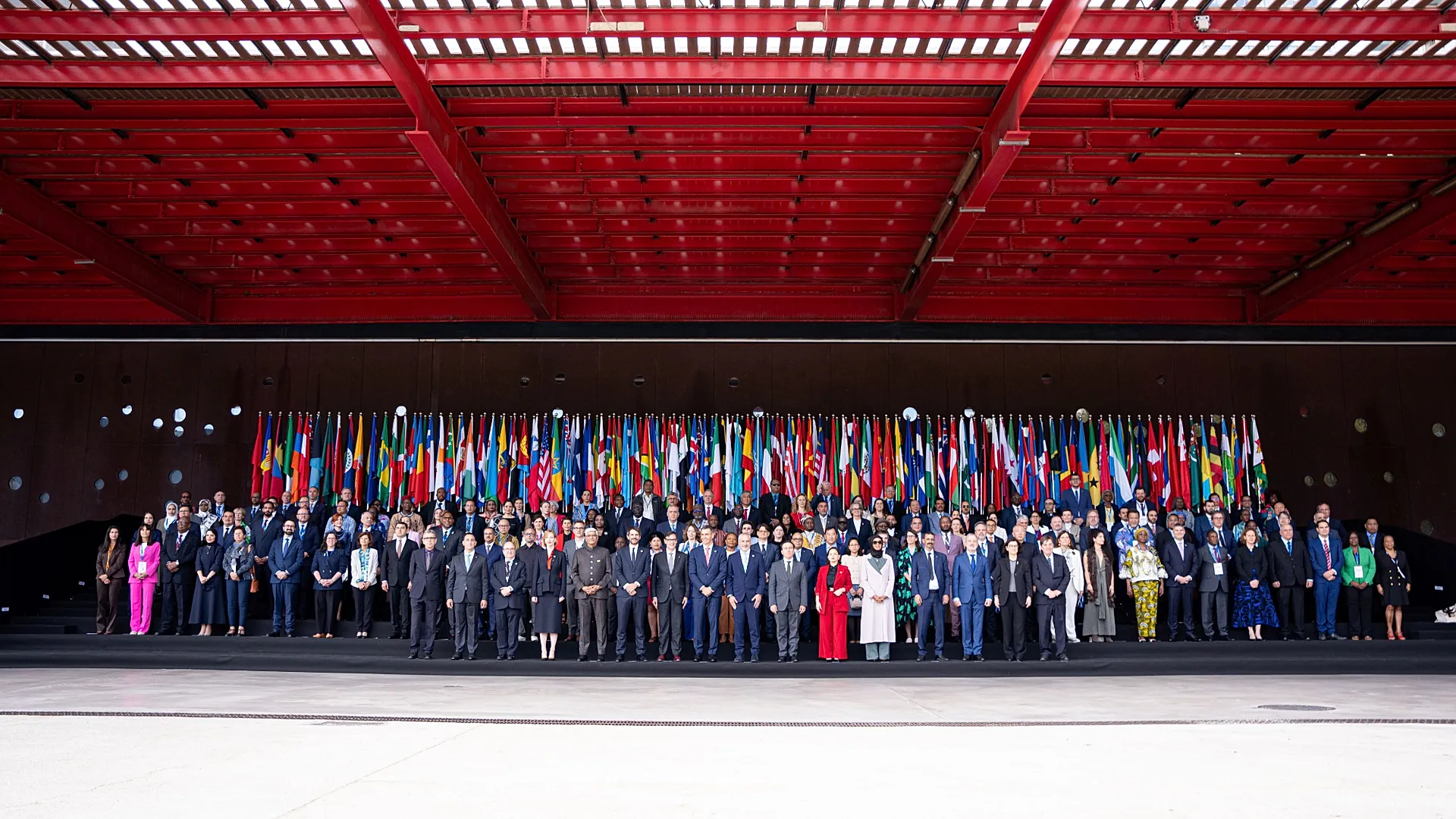
Mondiacult Opens Without U.S. or Israel, Elevating Culture as a Tool of Peace
Culture takes center stage in a world awash in conflict, yet absence speaks as loudly as presence.
Barcelona, September 2025.
The 2025 Mondiacult conference opened in Spain under an uneasy silence as neither the United States nor Israel chose to participate. Organized by UNESCO, the gathering brings together nearly 194 member states and more than 150 ministers of culture, aiming to shape global cultural policy for the years ahead. The absence of Washington and Jerusalem transforms this summit into both a cultural forum and a geopolitical statement.
Spain hosts the assembly in Barcelona after Mexico organized the previous edition. The agenda covers a wide range of topics such as digital culture, climate-linked heritage, indigenous knowledge, and the protection of cultural expression under pressure. From the opening speech, however, the issue of Gaza and the ongoing violence in the Middle East echoed throughout the hall. The Spanish foreign minister stressed that conflicts target not only territories but also the symbols of identity embedded in language, art, and collective memory. He described culture as a frontline in the defense of dignity.
The United States is absent as part of its previously announced withdrawal from UNESCO, set to take effect in late 2026, a move that continues to strain the institution’s cultural diplomacy. Israel’s decision not to participate has fueled speculation that its government sees Mondiacult as a space where its policies could face critical scrutiny. UNESCO officials had left the door open for U.S. representation, but none materialized.
During the opening session, Ernesto Ottone, UNESCO’s Assistant Director General for Culture, highlighted the growing gap in cultural investment between the Global North and South. He referred to the “cultural divide” as a reflection of deeper inequalities and announced the launch of the first Global Report on Cultural Policies, which will benchmark levels of public funding, legal protection, and citizen access to creative sectors, particularly in conflict zones.
As part of the event, Mondiacult will inaugurate a cultural center in Lviv, Ukraine, symbolizing the intersection of culture and soft power amid geopolitical crisis. The center will serve as both a hub for Ukrainian artists abroad and a repository of cultural memory under threat.
Mexico’s Secretary of Culture, Claudia Curiel de Icaza, called for “repair through recognition.” She urged the restitution of artifacts displaced during colonial and wartime periods and argued that cultural repair must become part of transitional justice. Her remarks framed culture not as a luxury but as an essential component of dignity and reconstruction.
Catalan leadership also emphasized Barcelona’s strategic importance in hosting future cultural initiatives, pointing to the city’s legacy of resilience and creativity.
Tensions over artistic participation illustrated the ethical weight of the gathering. Ahead of a planned concert, conductor Jordi Savall faced criticism for considering the exclusion of two Israeli musicians who had remained silent on Gaza. His deliberation raised a central question: can neutrality exist in the face of mass suffering? The final lineup had not been confirmed, but the debate itself reflected Mondiacult’s mission to force cultural actors to confront the moral implications of their platforms.
UNESCO described this edition of Mondiacult as occurring at a “critical conjuncture.” Its central themes, including cultural rights, climate justice, technology, and heritage under threat, converge at a moment of rising global tension. The summit also highlights an often overlooked dimension: the use of culture as an instrument of diplomacy and resistance.
The conference may not heal deep geopolitical fractures, but it reasserts culture’s potential as a civilizational language that can affirm identity, rebuild trust, and resist erasure. In a world where military power dominates the headlines, the absence of certain states at Mondiacult sends a clear message. It shows that peace and cultural dialogue are often feared by those who understand their transformative power.
The visible and the hidden, in context. / Lo visible y lo oculto, en contexto.